Microlab
®
STAR User Manual
Page 12 of 225 610766/02
7KH$UWRI3LSHWWLQJ
In this chapter the process of pipetting with the Microlab STAR is described. Pipetting means
transfer of small quantities of liquid from one container to another. A pipetting operation is
achieved by aspirating (drawing) liquid from a source container, then transferring and
dispensing (dropping) it into a target container.
7KH$LU'LVSODFHPHQW3LSHWWLQJ3ULQFLSOH
The Microlab STAR is based on the DLUGLVSODFHPHQWSLSHWWLQJ principle, comparable to the
functioning of hand pipettes. Air displacement means that the liquid is aspirated into and
dispensed from a disposable tip or needle by the movement of a plunger. Between the
plunger and the liquid surface is air. No system liquid of any kind is involved in the Microlab
STAR.
7KH$LU'LVSODFHPHQW3LSHWWLQJ3ULQFLSOH
The air displacement principle has the following advantages:
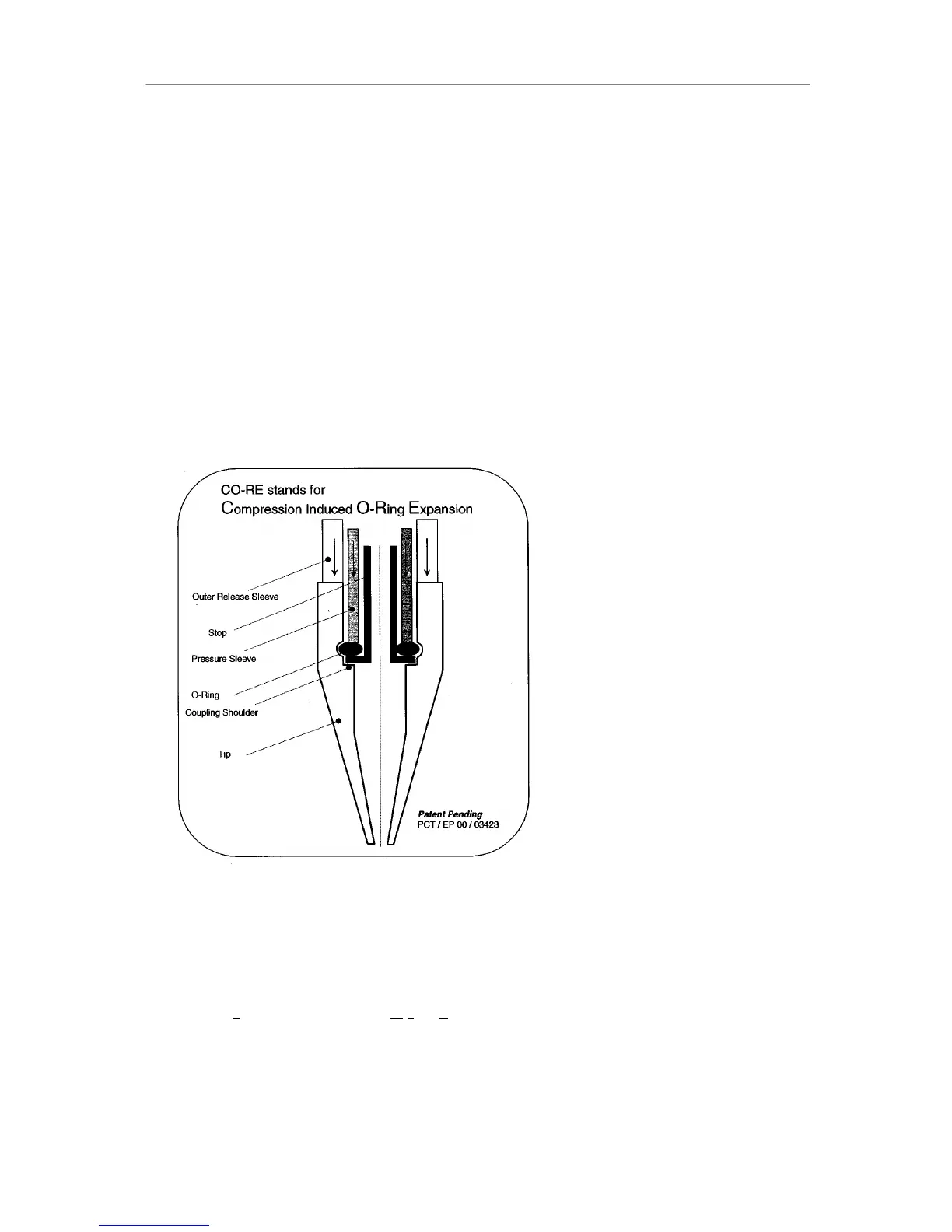
• Independent and modular design of pipetting heads for most flexible assay programming.
• CO-RE (compression-induced O
-ring expansion) technology for the flexible coupling of
tips or needles to the pipetting channel.
• Tips or reusable needles of three sizes on the same head in the same run.



 To Next Page