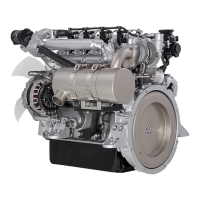
This document is a manual for the HATZ 1B30E and 1B50E diesel engines, designed for installation in machines or assembly with other machines. It provides comprehensive information on commissioning, operation, and maintenance to ensure safe and reliable use.
Function Description
The HATZ 1B30E and 1B50E are air-cooled, four-stroke diesel engines with direct injection. They are intended to serve as power units for various machinery. The manual emphasizes that the engine is exclusively for the purpose specified and tested by the manufacturer of the machine in which it is installed. Any other use is considered unintended and not permitted, potentially compromising safety. The operational safety is guaranteed only when used as intended, which includes adhering to the instructions in this manual.
The engine can be equipped with an electric start mechanism, and an emergency hand start system (recoil start) is available as an option, primarily for situations where electric start is not possible (e.g., weak battery).
Important Technical Specifications
The manual provides detailed technical data for both 1B30E and 1B50E models:
- Type: Air-cooled, four-stroke diesel engine
- Combustion system: Direct injection
- Number of cylinders: 1 for both models
- Bore/Stroke:
- 1B30E: 80/69 mm
- 1B50E: 93/76 mm
- Displacement:
- 1B30E: 347 cm³
- 1B50E: 517 cm³
- Tank capacity: 5 L for both models
- Engine oil capacity:
- Without oil sump: 1B30E: approx. 1.1 L; 1B50E: approx. 1.5 L
- With oil sump: 1B30E: approx. 2.5 L; 1B50E: approx. 3.2 L
- Difference between "max" and "min" marking:
- Without oil sump: 1B30E: approx. 0.5 L; 1B50E: approx. 0.8 L
- With oil sump: 1B30E: approx. 1.5 L; 1B50E: approx. 2.2 L
- Engine oil consumption (after running-in period): Max. 1% of fuel consumption, pertaining to full load
- Engine oil pressure at oil temperature of 100 °C: Approx. 2.5 bar at 3000 rpm
- Sense of rotation on power take-off side: Left
- Tappet clearance at 10-30 °C inlet/outlet: 0.10 mm for both models
- Weight (incl. fuel tank, air filter, silencer and electric start):
- 1B30E: approx. 41 kg
- 1B50E: approx. 58 kg
- Battery capacity: Max. 12 V – 55 Ah / 420 A (EN) / 450 A (SAE)
- Maximum permissible inclination during continuous operation:
- 1B30E and 1B50E without additional oil pan: 35° (front/rear), 35° (left), 25° (right)
- 1B30E with additional oil pan (max 2500 rpm) and 1B50E with additional oil pan (all speeds): 35° (front/rear), 35° (left), 25° (right)
- 1B30E with additional oil pan (above 2500 rpm): 15° (front/rear), 15° (left), 15° (right)
- Oil quality: ACEA E6 or E8 (recommended), ACEA E9 or E11, ACEA C3 / C4 (HTHS ≥ 3.5 mPas), API CK-4 or CJ-4. Only "low SAPS" oils are suitable to protect the diesel oxidation catalyst (DOC).
- Fuel type: Diesel fuel meeting EN 590 (Europe), BS 2869 A1 / A2 (UK), or ASTM D 975-09a 1-D S15 or 2-D S15 (USA). Winter diesel fuel is recommended for temperatures below 0 °C.
- CO2 emissions (g/kWh) according to EU Regulation 2016/1628, Article 43 Paragraph (4):
- 1B30E/1B50E-cs: 1066.24 (NRSC-D2 test cycle, 1B50E parent engine, 3600 speed)
- 1B30E/1B50E-vs: 918.00 (NRSC-C1 test cycle, 1B50E parent engine, 3600 speed)
- 1B50E-vs: 914.46 (NRSC-C1 test cycle, 1B50E parent engine, 3600 speed)
Usage Features
The engine is operated via an instrument box, which can be standard (attached to the engine) or an external option. Key indicators include:
- Starting key: Positions for Off (0), Operation (I), and Start (II).
- Pre-glow indicator (option): Lights up below 0 °C, engine starts after it goes out.
- Engine fault indicator: Lights up or flashes for engine faults. Depending on specification, the engine controller may react with emergency operation (reduced power/speed, indicator lights up) or engine stop (engine switches off automatically, indicator flashes).
- Engine temperature indicator: Signals impermissibly high temperature, requiring immediate engine shutdown.
- Oil pressure indicator: Signals low oil pressure, requiring immediate engine shutdown and oil level check.
- Charge control: Indicates a fault in the alternator or charging circuit.
- Operating indicator: Lights up during operation when no engine fault is present.
Starting the engine:
- Perform pre-start checks: secure machine, ventilated location, sufficient fuel and oil, no persons in danger zone, all safety equipment in place.
- Insert starting key to position "I". Oil pressure and charge control indicators light up.
- Wait for the electrical fuel feed pump to switch off (approx. 10 seconds).
- Turn key to "0" and repeat steps 2-3 several times to vent the fuel system if necessary.
- Turn key to "II" to start. Release key once engine is running; it springs back to "I". Oil pressure and charge control indicators should go out, operating indicator lights up.
- Emergency hand start (recoil start) is an option if electric start fails, provided the battery has residual voltage for indicators. Requires a sturdy operator and ambient temperature of 5 °C or higher.
Switching off the engine:
- Turn starting key to "0". The engine switches off after a few seconds.
- Remove starting key and close ignition lock with protective cap to prevent unauthorized access and protect against dirt/moisture.
Refueling:
- Only refuel with the engine switched off and cooled down.
- Do not refuel near open flames or sparks, and do not smoke.
- Do not spill fuel or overfill the tank.
- Never run the tank completely empty to prevent air from entering the fuel system.
Maintenance Features
The manual outlines a comprehensive maintenance plan with daily checks and interval-based tasks to ensure longevity and reliability.
- General maintenance instructions: Emphasizes adherence to safety instructions, use of qualified technicians, Hatz original spare parts, and proper disposal of waste. Maintenance should only be performed when the engine is switched off, with the starting key protected from unauthorized access, and the negative battery terminal disconnected for electrical work.
- Maintenance notice label: An illustrated label provided with every engine, to be mounted in a visible location, detailing maintenance intervals.
Daily checks (every 8-15 operating hours or daily before starting):
- Check the oil level: Unscrew, clean, reinsert dipstick, then unscrew again to check. Add oil to max. mark if needed. Engine must be horizontal and off for several minutes.
- Check the intake area of the combustion air and cooling air: Inspect for coarse contamination (leaves, dust). Clean cooling air area and dry air filter if heavily contaminated.
- Check the air filter warning indicator (option): Bring engine to max speed. If rubber bellow contracts and covers green field, check air filter system.
Initial maintenance (after the first 25 operating hours):
- Change the engine oil: Drain warm oil into a suitable container. Replace drain screw with new sealing ring and tighten (50 Nm).
- Check and set the tappet clearance: Performed when the engine is cold (10-30 °C). Requires removing air filter cover and sound protection hood, then cylinder head cover. Turn engine to fully open outlet/intake valve and check clearance with a feeler gauge. Adjust if necessary.
- Check the screw connections: Retighten any loose connections.
Routine maintenance:
- Weekly: Check the water separator. Drain collected water/fuel mixture.
- Every 250 operating hours or every 12 months:
- Diagnosis of engine management (by trained technicians).
- Change the engine oil.
- Check and adjust the tappet clearance.
- Clean the cooling air area: Remove recoil start, clean fan blades, cooling ribs of cylinder head, and check air gap.
- Check the screw connections.
- Clean the exhaust screen: Remove exhaust manifold, pull out screen insert, clean with wire brush, check for damage, and reassemble.
- Change the fuel prefilter and main fuel filter.
- Maintain the dry air filter: Clean filter cartridge if maintenance display appears at max speed. Renew after 250 operating hours.
- Every 500 operating hours: Clean the diesel particulate filter (DPF) (by trained technicians). Hatz offers an EasyClean program for DPF overhaul.
- Every 1000 operating hours or every 4 years: Clean the oil filter: Loosen screw, pull out filter, blow out with compressed air from inside to outside, check gaskets for damage, oil gaskets, reinsert filter, ensure tension springs are against filter, tighten screw. Check oil level.
Storage:
For periods of 3-12 months:
- Drain fuel tank, fill with FAME-free fuel, run engine for a few minutes.
- Change engine oil.
- Change fuel filter.
- Let machine cool down.
- Remove battery and store at ambient temperature.
- Close and seal all engine openings to prevent foreign bodies, allowing some air exchange to prevent condensation.
- Cover machine and store in a dry, clean place.
Max storage temperature: -25 °C to +60 °C. Max humidity: 70%. Protect from direct sunlight.
Disposal:
Dispose of the machine and its components (oil, fuel, plastics, batteries) according to local environmental regulations, preferably through an approved specialist company. Do not dispose of batteries with household trash.

 Need help?

 To Next Page
 General