MAINTENANCE WORK ON CHASSIS AND ENGINE
- 32 -
ENGLISH
BASIC SUSPENSION SETUP FOR THE WEIGHT OF
THE DRIVER
To achieve maximum handling performance and to prevent the
fork, shock absorber, swing arm and frame from being damaged,
the basic setup of the suspension components must be suitable for
your weight. At delivery, Husaberg's offroad motorcycles are set to
accommodate a driver weighing 70 - 80 kg (wearing full protective
clothing). If your weight exceeds or falls short of this range, you will
need to adjust the basic setup for the suspension components
accordingly. Minor deviations in weight can be compensated by
adjusting the spring preload. Different springs must be installed for
larger deviations.
CHECKING THE SHOCK ABSORBER AND SPRING
You can establish whether or not the shock absorber spring is suita-
ble for your weight by checking the riding sag. The static slag must
be correctly adjusted before the riding sag can be determined.
DETERMINING THE STATIC SAG OF THE SHOCK
ABSORBER
The static sag should be as close as possible to 35 mm. Deviations
of more than 2 mm can strongly influence the motorcycle's perfor-
mance.
Procedure:
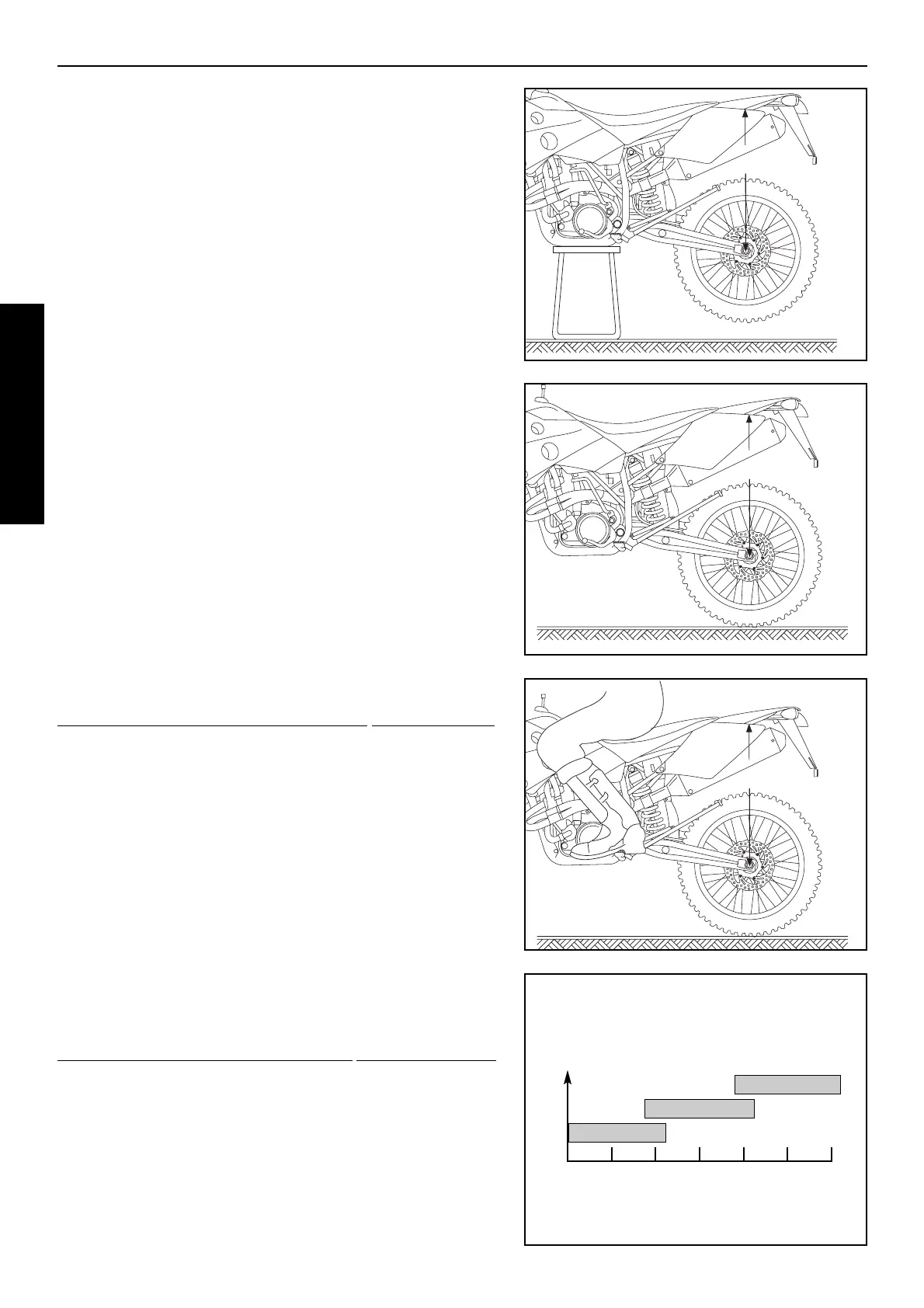
– Jack up the motorcycle until the rear wheel no longer touches
the ground.
– Measure the vertical distance between the rear wheel axle and a
fixed point (e.g. a mark on the side cover) and write it down as
dimension A.
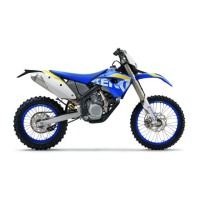
– Place the motorcycle on the ground again.
– Ask a helper to hold the motorcycle in vertical position.
– Measure the distance between the rear axle and the fixed point
again to establish dimension B.
– The static sag is the difference between dimensions A and B.
EXAMPLE:
Motorcycle jacked up (dimension A) . . . . . . . . . . . . . . . . . .600 mm
Motor
cycle on ground, unloaded (dimension B) . . . . . . .– 565 mm
Static sag . . . . . . . . . . . . . . . . . . . . . . . . . . . . . . . . . . . . . . . .35 mm
If the static sag is lower, the spring preload of the shock absorber
must be reduced, if the static sag is higher, the spring preload must
be increased. See chapter "Changing the spring preload of the
shock absorber."
DETERMINING THE RIDING SAG OF THE SHOCK
ABSORBER
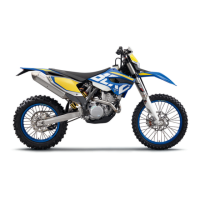
– Have a helper hold the motorcycle while you sit on the bike in a
normal seating position (feet on the footrests) wearing full pro-
tective clothing and bounce up and down a few times to allow
the rear wheel suspension to become level.
– Stay on the bike and have another person measure the distance
between the same two points and write it down as dimension C.
– The riding sag is the difference between dimensions A and C.
EXAMPLE:
Motorcycle jacked up (dimension A) . . . . . . . . . . . . . . . . . .600 mm
Motor
cycle on ground, loaded (dimension C) . . . . . . . . .– 510 mm
Riding sag . . . . . . . . . . . . . . . . . . . . . . . . . . . . . . . . . . . . . . .90 mm




 To Next Page