3
1 – IntroductionIB Pulse
Description
The IB Pulse provides a complete analysis of 12-volt and 6-volt
vehicle batteries and 12-volt and 24-Volt starting/charging
systems. Using patented conductance technology, the IB
Pulse will display battery condition (Good, Replace, Good-
Recheck Soon, etc.) as well as voltage and available cranking
power based on the temperature of the battery. The IB Pulse
can perform battery tests on Automobile, Group 31 , Lawn &
Garden, Marine, Powersports and Commercial 4D/8D batteries.
The IB Pulse integrates the in-vehicle battery test along with the
starting and charging system test. The charging system analysis
takes multiple measurements while the charging system is
exercised under varying conditions to determine if it can charge
the battery while supplying the necessary power for the electrical
system. Test results can be displayed on the full-color screen,
printed, or via email.
Personal Precautions
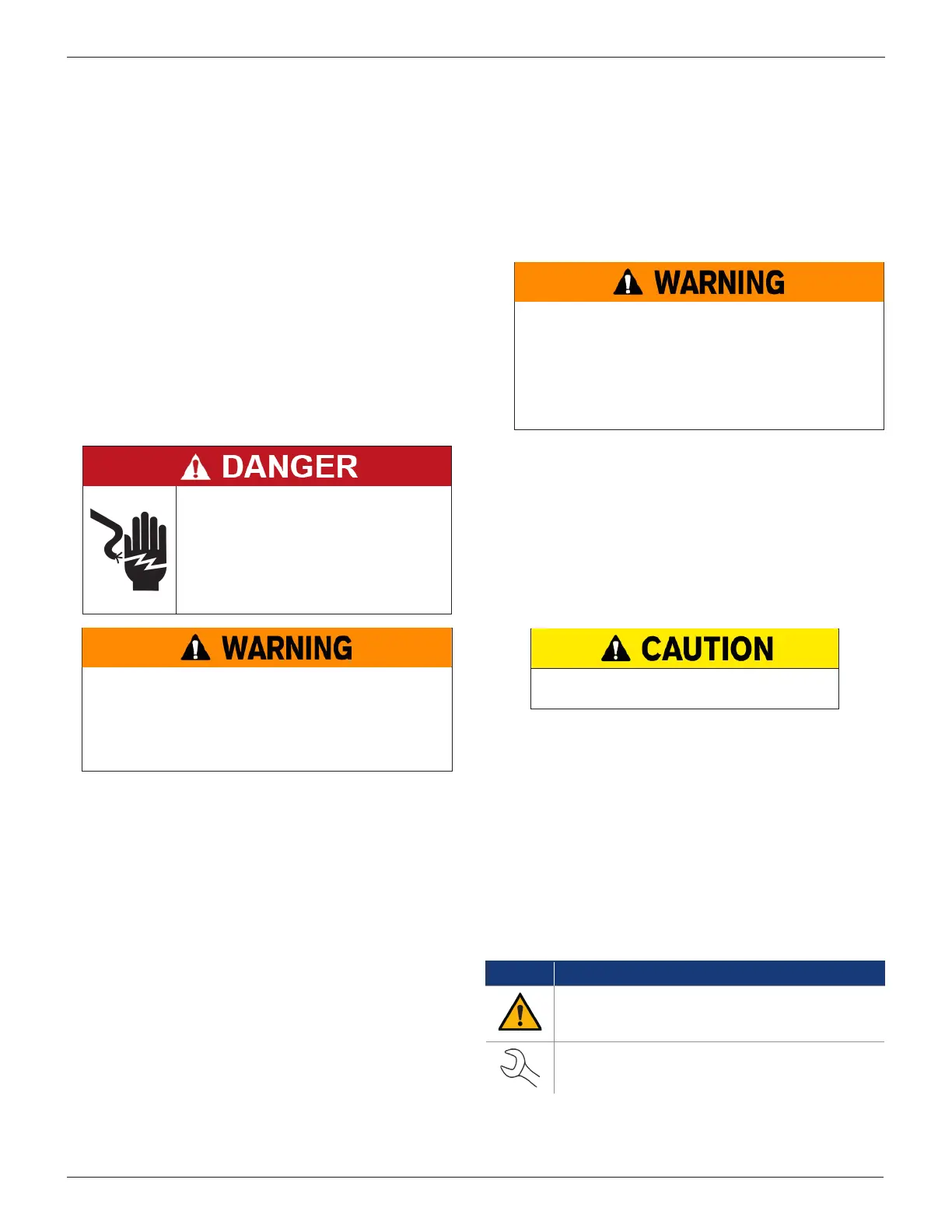
Risk of explosive gases.
Never smoke or allow a spark or ame
in the vicinity of a battery.
Batteries can produce a highly explosive
mix of hydrogen gas and oxygen, even
when the battery is not in operation.
Always work in a well-ventilated area.
PROPOSITION 65 WARNING: Battery posts, terminals
and related accessories contain lead and lead com-
pounds, chemicals known to the state of California to
cause cancer and reproductive harm. Batteries also
contain other chemicals known to the state of California
to cause cancer. Wash hands after handling.
Inspect the battery for damage and check the electrolyte
level. If the electrolyte level is too low, replenish it and fully
charge the battery. Always use the necessary safety precautions
when working with batteries to prevent severe injury or death.
Follow all manufacturers’ instructions and BCI (Battery Council
International) safety recommendations, which include the
following precautions:
• Battery acid is highly corrosive. If acid enters your eyes, im-
mediately ush them thoroughly with cold running water for
at least 15 minutes and seek medical attention. If battery
acid gets on your skin or clothing, wash immediately with a
mixture of water and baking soda.
• Always wear proper safety glasses or face shield when work-
ing with or around batteries.
• Keep hair, hands, and clothing as well as the tester cords
and cables away from moving engine parts.
• Remove any jewelry or watches before you start servicing
the battery.
• Use caution when working with metallic tools to prevent
sparks or short circuits.
• Never lean over a battery when testing, charging, or jump
starting.
Testing Out-of-Vehicle
The preferred battery test location is in the vehicle. However
when testing out of the vehicle:
• Always disconnect the negative cable from the battery rst
and reconnect it last.
• Always use a carry tool or strap to lift and transport the battery.
Failure to properly install lead terminal adapters,
or using adapters that are dirty or worn, may cause
false test results.
When testing side-post or Group 31 batteries, always use
lead terminal adapters provided with the tester—do not
test at the battery’s steel bolts. To avoid damage, never
use a wrench to tighten the adapters more than ¼ turn.
Testing In-Vehicle
The preferred test position is at the battery posts. If you must
test at a remote-post location, it should have both a positive
and negative post. Otherwise, you must remove the battery and
perform an out-of-vehicle test.
At the start of the test, make sure all vehicle accessory loads are off,
the key is not in the ignition, and the doors are closed.
Connecting To A Battery
Do not connect the tester to a voltage source
greater than 30 Vdc.
Connect the clamps to the tester: the red clamp to the positive
(+) terminal and the black clamp to the negative (–) terminal.
If you connect the clamps in the wrong polarity (positive to
negative or negative to positive), the tester displays CLAMPS
REVERSED! Reconnect the clamps.
To make sure both sides of the clamps are gripping the
terminals,
rock each clamp back and forth. A poor connection will
prevent
testing, and the tester will display the message CHECK
CONNECTION. If the message reappears after you have correctly
reconnected the clamps, clean the terminals and reconnect.
Symbols Conventions
Symbol Description
The safety symbol with the words CAUTION, WARNING,
or DANGER indicates instructions for avoiding hazardous
conditions and personal injury.
The wrench symbol indicates procedural notes and
helpful information.
1 – Introduction



 To Next Page