53
DECORATIVE STITCHES
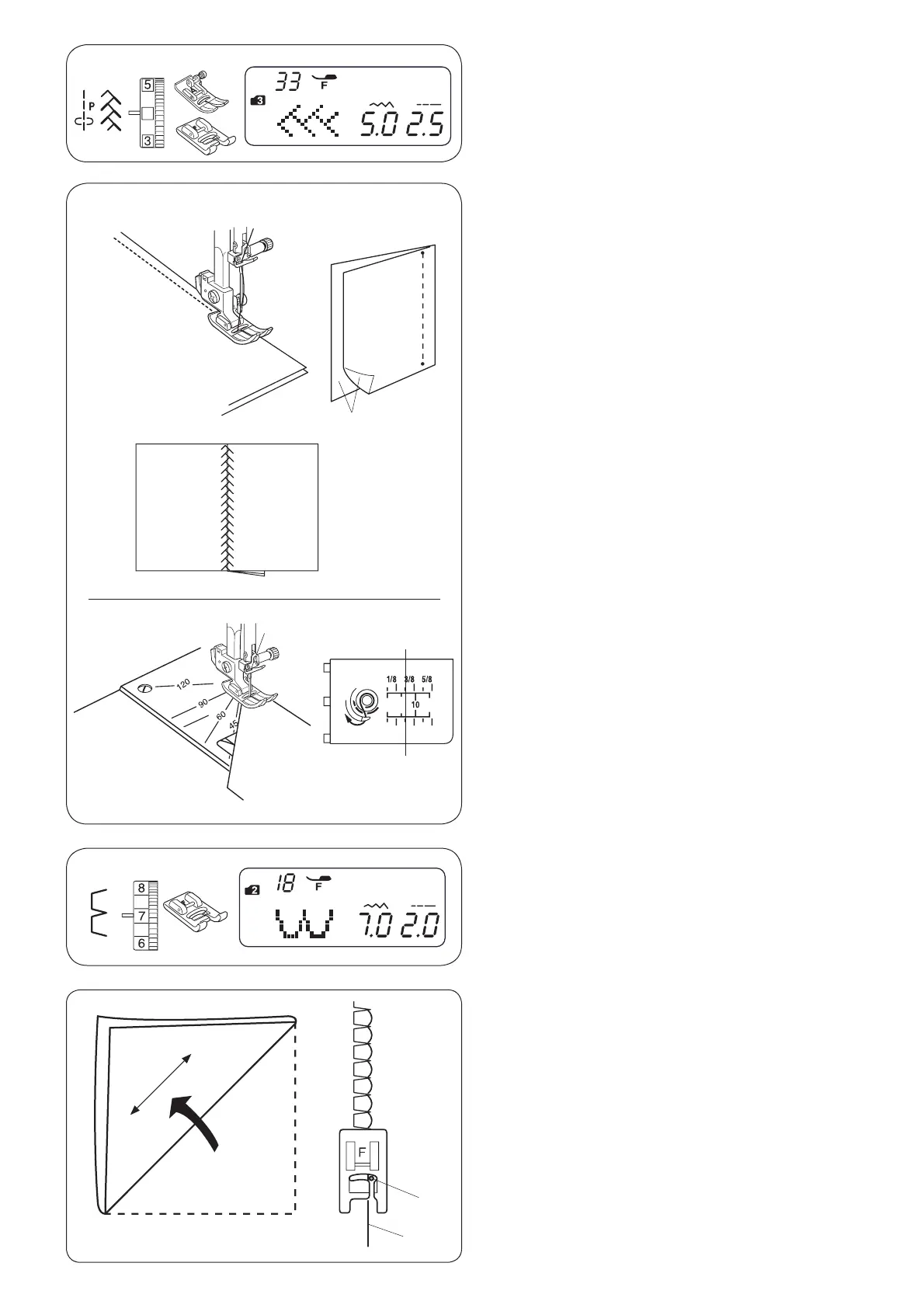
Patchwork
q6WLWFKSDWWHUQ 02'( DQG
w Thread tension dial: 3 to 6
e Presser foot: Zigzag foot A
6DWLQVWLWFKIRRW)
w
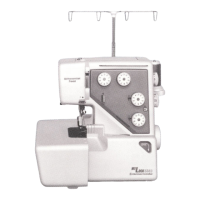
z Attach the zigzag foot A.
Place the patchwork pieces right sides together.
6HOHFWVWLWFKSDWWHUQLQPRGH6HZZKLOHJXLGLQJ
WKHHGJHRIWKHIDEULFWRNHHSDSUHFLVHßVHDP
allowance.
q Wrong side of fabric
w Right side of fabric
q
z
x c
x Replace the presser foot with satin stitch foot F.
6HOHFWWKHSDWFKZRUNSDWWHUQLQPRGH
The stitch patterns 29-34 in mode 3 can also be used.
c 3UHVVWKHVHDPDOORZDQFHWRRSHQ6HZWKHVWLWFK
pattern on the right side of the garment centering over
the seam line.
4
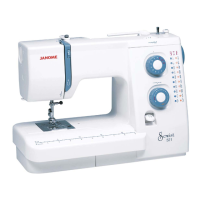
Shelltuck
q6WLWFKSDWWHUQ 02'(
w Thread tension dial: 6 to 8
e3UHVVHUIRRW 6DWLQVWLWFKIRRW)
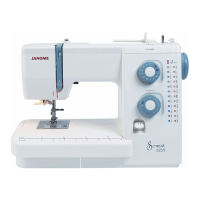
Use a lightweight fabric (tricot, for example).
Fold the fabric in bias as shown and stitch on the fold.
Allow the needle to barely clear the folded edge to create
a shelled edge.
q Bias
w Folded edge
e Right needle drop position
,I\RXVHZURZVRIVKHOOWXFNVSDFHWKHURZVDWOHDVWß
(1.5 cm) apart.
You can also sew shell tuck on knits or soft silky woven
fabrics, in any direction.
e
w
weq
weq
Angle scale on the needle plate
You can easily seam patchwork pieces at the desired
DQJOHVZLWKRXWPDUNLQJE\XVLQJWKHXQLTXHDQJOHVFDOHV
on the needle plate.
The angle scales are marked at 45°, 60°, 90° and 120°
degrees.
Attach Zigzag foot A when using the angle scale.
$OLJQWKHHGJHRIWKHIDEULFWRWKHßVHDPJXLGHOLQH
e ßVHDPJXLGHOLQH
q
e
w
w


 To Next Page