EasyManua.ls Logo

Janome Sewing Machine - User Manual

Janome Sewing Machine
92 pages
Print Icon
To Next Page IconTo Next Page
Loading...
INSTRUCTION MANUAL

Table of Contents

Other manuals for Janome Sewing Machine

Questions and Answers

  • C
    Christopher PittmanAug 28, 2025
    What to do if my Janome Sewing Machine is not running?
    • E
      Elizabeth ClementsAug 28, 2025
      If your machine isn't running, consider the following possibilities: * The machine may not be plugged in correctly. * Threads might be jammed in the hook or around the take-up lever; follow the message to turn it off. * A confirmation or error message might be displayed; in this case, turn the power off and on again. * The control system might not be working correctly.
  • L
    Latasha TuckerAug 27, 2025
    Why does my Janome Sewing Machine needle thread keep breaking?
    • J
      John GonzalesAug 28, 2025
      The needle thread may break due to several reasons: * The needle thread might not be threaded properly. * The needle thread tension may be too tight. * The needle could be bent or blunt. * The needle might not be inserted properly. * The stitch density may be too dense; in this case, modify the pattern using embroidery software. * You might be using poor-quality threads; switch to high-quality threads. * The bobbin thread might not be threaded properly.
  • C
    Chad WilliamsAug 27, 2025
    Why my Janome Sewing Machine does not work?
    • R
      Riley Williams PhDAug 27, 2025
      Your machine may not be working because: * It is not plugged in. * A thread is caught in the hook race. * The clutch knob is pulled away for bobbin winding. * The bobbin winder spindle is in the winding position.
  • M
    Megan VangSep 5, 2025
    Why is my Janome Sewing Machine cloth not feeding smoothly?
    • L
      Lisa BurchSep 6, 2025
      The cloth may not feed smoothly because the feed dog is packed with lint, the presser foot pressure is too weak, the stitches are too fine (make stitches longer), the fabric is not fed when sewing is starting, or the feed dog is lowered.
  • D
    danielevansSep 8, 2025
    What causes improper buttonhole sewing on a Janome ?
    • T
      Thomas HallSep 8, 2025
      Improper buttonhole sewing can be caused by: * The stitch density not being suitable for the fabric being sewn. * Suitable interface material has not been used for the stretch or synthetic fabric; if so, use an interfacing.
  • R
    Robert GarciaSep 12, 2025
    What causes seam puckering on my Janome Sewing Machine?
    • L
      lisa04Sep 12, 2025
      Seam puckering may be caused by: * The needle thread tension being too tight. * The needle thread not being threaded properly. * The needle being too heavy for the fabric being sewn. * The stitch length being too long for the fabric; in this case, make the stitches shorter.
  • J
    Jacqueline LopezSep 15, 2025
    Why is the thread forming loops on my Janome Sewing Machine?
    • R
      Ricky BrewerSep 15, 2025
      Thread loops can form if: * The needle thread tension is too loose. * The bobbin is not inserted properly. * A poor quality thread is used; in this case, use a high quality thread.
  • D
    Derek ColemanSep 23, 2025
    What to do if the buttonhole is not sewn well on my Janome ?
    • T
      Timothy BirdSep 23, 2025
      A poorly sewn buttonhole on your Janome Sewing Machine can result from: * The stitch density not being suitable for the fabric being sewn. * Not using interfacing with stretch fabrics; use an interfacing.
  • N
    Nicholas WashingtonAug 25, 2025
    Why is the fabric not feeding through my Janome ?
    • M
      Melissa GarciaAug 26, 2025
      If the fabric isn't feeding through your Janome Sewing Machine, it may be because the fabric is too thick.
  • J
    Justin NixonAug 25, 2025
    Why is my Janome Sewing Machine so noisy?
    • J
      Jennifer PenaAug 26, 2025
      Your Janome Sewing Machine might be noisy if: * There is thread caught in the bobbin holder. * Lint has built up in the bobbin holder.

Summary

Important Safety Instructions

General Safety Precautions

Covers intended use, supervision for children, and general electrical appliance safety guidelines.

DANGER and WARNING Statements

Details specific hazards like electric shock, burns, fire, and injury, along with required precautions.

Grounding Instructions

DANGER: Improper Grounding Connection

Explains the risk of electric shock from improper grounding and proper connection procedures.

Section 1. Setting Up the Machine

Machine Installation and Placement

Instructions for placing the machine on a stable surface and ensuring adequate surrounding space.

Adjusting Machine Feet

Steps for leveling the machine by adjusting its feet for stability.

Identifying Machine Parts

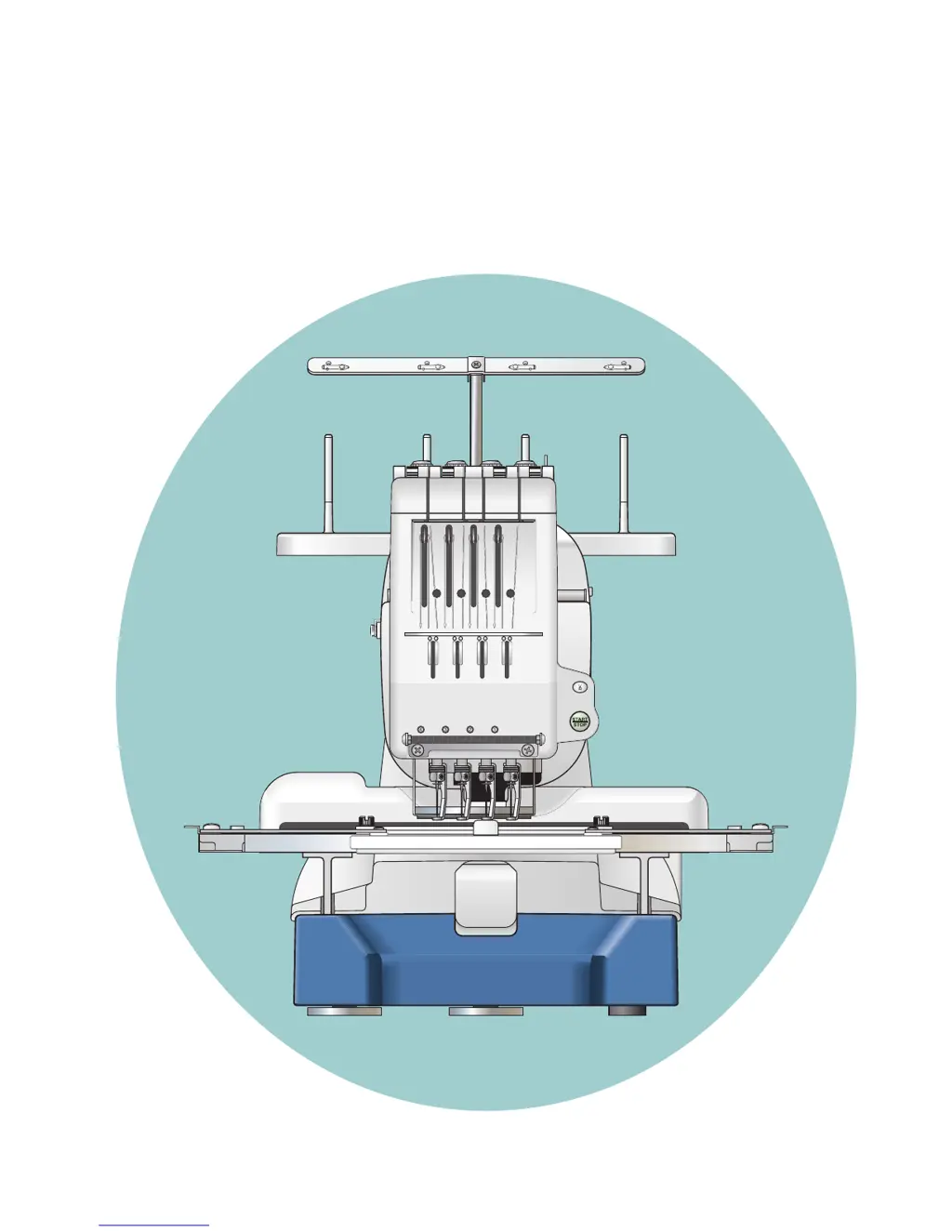
Diagram and list identifying key components of the embroidery machine.

Control Panels and Optional Units

Overview of the Sub Control Panel and the optional RCS Unit.

Standard Accessories

Lists and illustrates all standard accessories included with the machine.

Spool Stand Assembly

Step-by-step guide for assembling the spool stand.

Setting Up Thread Spools and Cones

Instructions on how to properly place and secure thread spools or cones.

Installing Hoop Supporter and RCS Unit

Procedures for installing the hoop supporter and the optional RCS unit.

Connecting Power Supply and PC Link

Guidance on connecting the machine to a power source and a PC.

Threads, Needles, and Stabilizers

Information on thread types, needle specifications, and stabilizer usage for embroidery.

Section 2. Basic Operation

Sub Control Panel Operations

Details on machine operating buttons and function keys for basic control.

LCD Screen Display

Explanation of the LCD screen's initial display and Ready to Sew mode information.

Machine Settings and Pattern Selection

How to adjust machine settings and select embroidery patterns.

Starting Embroidery Process

Steps to begin the embroidery process, including pattern selection and needle drop check.

Hoop Handling and Tension Adjustment

Procedures for removing the hoop and adjusting needle and bobbin thread tension.

Needle Replacement and Maintenance

Instructions for checking and replacing the needle.

Optional RCS Unit Basic Operations

Overview of machine operating buttons and function keys for the RCS unit.

On-screen Help and RCS Disconnection

Using the on-screen help movie and how to disconnect the RCS unit.

Section 3. Advanced Operation with the Optional RCS Unit

Selecting Embroidery Patterns

Guide to selecting embroidery patterns, including built-in designs and hoop types.

RCS Unit Function Keys for Patterns

Using circle keys for color options, settings, and assignments.

Manual Color Assignment

Procedure for manually assigning thread colors to needle bars.

Monogramming Features

Introduction to monogramming capabilities and font selection.

Monogramming Function Keys

Using function keys for font selection, size, orientation, and case.

Entering, Saving, and Correcting Monograms

Steps for entering characters, saving monograms, and correcting text.

Monogram Placement and Multi-color

Adjusting monogram placement and setting up multi-color monograms.

Pattern Editing Functions

Overview of editing capabilities, including deleting and saving patterns.

Pattern Manipulation: Move, Resize, Rotate

How to move, resize, and rotate embroidery patterns on the editing screen.

Pattern Manipulation: Duplicate, Flip, Arc

Functions for duplicating, flipping, and creating arc shapes for patterns.

Customizing Color Settings

Modifying background and pattern colors for better simulation.

Combining and Grouping Patterns

How to combine multiple patterns, group them, and utilize color grouping.

Zooming and Scrolling the Editing Window

Using zoom and scroll functions to navigate the editing screen.

Starting Embroidery with RCS Unit

Steps to start the embroidery process using the RCS unit.

Customizing Settings with Sub Control Panel

Buzzer, Eco Mode, and Machine ID

Adjusting buzzer sound, eco mode timer, and machine ID number.

Memory Formatting and Defaults

Procedures for formatting memory and resetting settings to factory defaults.

Sewing Speed and Thread Selection

Setting maximum sewing speed and selecting thread brand.

Message, Stitch, and Thread Breakage Settings

Configuring reminder messages, ignoring short stitches, and thread breakage sensor.

Thread Trimming and Position Settings

Adjusting trim tail length, jump thread trimming, and thread trimming position.

Resume and Locking Stitch Settings

Enabling resume mode and locking stitches for color changes or thread trimming.

Unit Options and Hoop Adjustment

Setting mm/inch units and hoop position adjustment.

Customizing Settings with Optional RCS Unit

RCS Unit Display and Control Customization

Adjusting screen brightness, buzzer sound, and inch/mm units on RCS unit.

RCS Unit Mode and Screen Settings

Configuring resume mode, eco mode, and screen saver for the RCS unit.

RCS Unit Calibration and Machine ID

Performing touch screen calibration and setting machine ID and name.

RCS Unit Memory and Defaults

Formatting memory and resetting RCS unit settings to defaults.

RCS Unit Grid, Speed, and Hoop Settings

Adjusting grid size, sewing speed, and hoop selection for monogramming.

RCS Unit Thread and Screen Color Options

Selecting thread brands and customizing screen color options.

RCS Unit Reminder and Color Reservation

Managing reminder messages and reserving thread colors for needle bars.

RCS Unit Short Stitch and Trimming Settings

Configuring short stitch handling and thread trimming parameters.

File Management

Saving Patterns as Files

Instructions for saving embroidery patterns as data files.

Creating and Managing Folders

Steps for creating new folders and renaming existing ones.

Opening Embroidery Files

How to open embroidery data files from various memory sources.

Deleting Folders and Files

Procedures for deleting unnecessary folders and files.

Section 4. Optional Items

PC Design Cards

Using the RCS unit with PC Design cards.

USB Memory Usage

Connecting and using USB memory for file transfer.

CD-ROM Drive Operation

Connecting and opening patterns from a CD-ROM drive.

Section 5. Care and Maintenance

Cleaning Machine Components

Instructions for cleaning the hook, bobbin case, and tension leaves/disks.

Cleaning Auto Thread Cutter Mechanism

Steps for cleaning the auto thread cutter mechanism.

Oiling Machine Parts

Guide on where and how to oil the machine's internal parts.

Error Messages and Signals

Error Code Descriptions and Remedies

List of error codes, their descriptions, and suggested remedies.

Audible Signal Meanings

Explanation of the different buzzer sounds and their meanings.

Troubleshooting Common Issues

Machine Operation and Performance Issues

Troubleshooting common problems like machine not running, noise, thread breaks, and puckering.

Display, Input, and Communication Problems

Resolving issues with the LCD screen, touch panel, PC/USB, and communication.

Thread Breakage Warnings and Motor Messages

Addressing false thread breakage warnings and DC motor replacement messages.

Janome Sewing Machine Specifications

General IconGeneral
BrandJanome
ModelSewing Machine
CategorySewing Machine
LanguageEnglish

Related product manuals