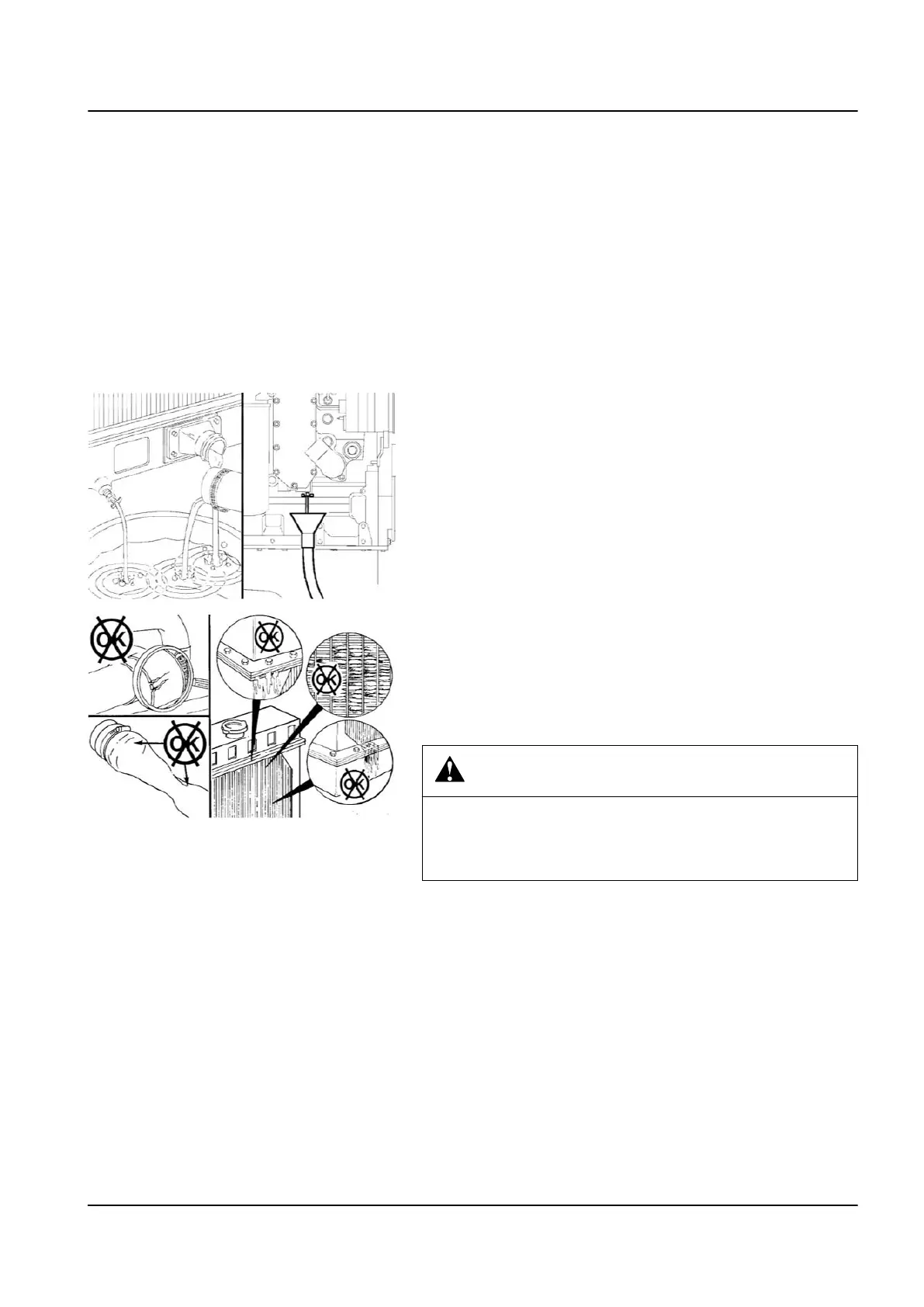
the fill process. See equipment manufacturer service informa‐
tion for system isolation valve locations.
NOTE
If the coolant is being changed, or if the cooling system is being
flushed, it is desirable to leave the coolant flow valves to the equip‐
ment heating systems open, in order to completely drain the system.
3 See equipment manufacturer service information for any spe‐
cial coolant drain and fill requirements.
4 Remove all cooling system fill caps to allow the coolant to
drain completely.
5 Drain the cooling system by opening the drain valve on the
radiator and by opening the drain valve on the bottom of the
engine oil cooler housing. A drain pan with a capacity of 57 lit‐
ers (15 gal) is adequate in most applications.
6 After the cooling system is completely drained, close the drain
valves. See equipment manufacturer service information for
complete cooling system drain information.
7 Examine for damaged hoses and loose or damaged hose
clamps. Replace as required.
8 Examine the radiator for leaks, damage, and buildup of dirt.
Clean and replace as required.
Flush
CAUTION
The system must be filled properly to prevent air locks or serious
engine damage can result. During filling, air must be vented from
the engine coolant passages. Wait 2 to 3 minutes to allow air to be
vented; then add mixture to bring the level to the top.
To make sure air is vented during the fill process:
•
Some thermostats have check balls that allow air to vent
through the thermostat when the thermostat is closed
•
An air vent port connection, which connects to the top tank/
coolant recovery tank of the cooling system, is located next to
the water outlet
This provides adequate venting for a maximum fill rate of 19 liters (5
gal) per minute.
1 Engine – 1.7 Cooling system 25
TL2 Maintenance Manual
591 003 Default



 To Next Page