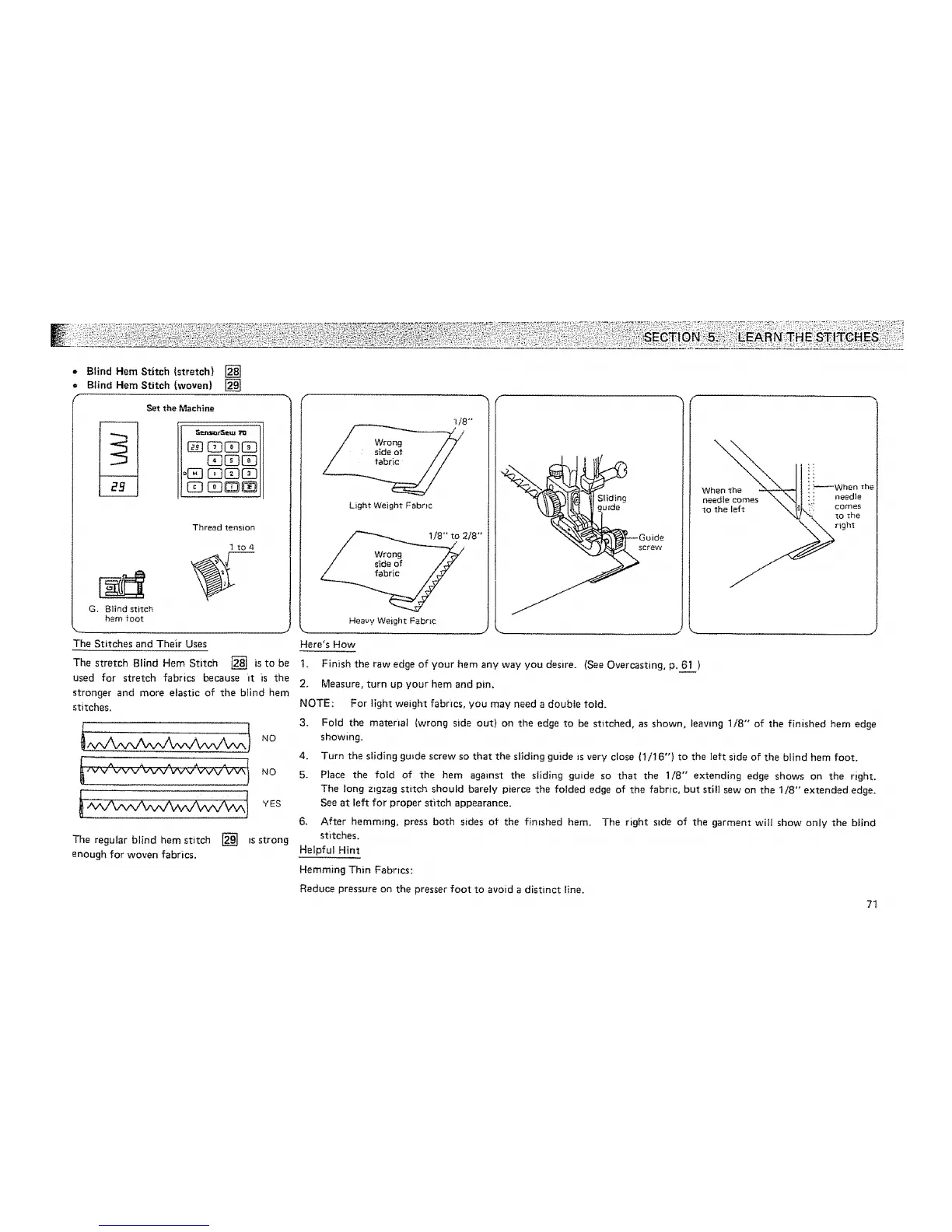
- Blind Hem Stitch (stretch) []
Blind Hem Stitch {woven) []
Set the Machine
oD C D/I
G. Blind stitch
hem foot
Thread tension
lto4
The Stitches and Their Uses
The stretch Blind Hem Stitch [] is to be
used for stretch fabrics because it is the
stronger and more elastic of the blind hem
stitches,
I I No
lVv_/vv_vv_P_ NO
I
The regular blind hem stitch [] mstrong
enough for woven fabrics.
l/8"
Light Weight Fab¢_c
2/8"
Heavy Weight Fabric
Here's How
Sliding
Whenthe i_:--_-When the
needle comes :: needte
to the left :_ comes
to the
"_ r_ght
J
1. Finish the raw edge of your hem any way you desire. (See Overcasting, p. 61)
2. Measure, turn up your hem and pin.
NOTE: For light weight fabrics, you may need a double told.
3. Fold the material (wrong side out) on the edge to be stitched, as shown, leaving 1/8"' of the finished hem edge
showing.
4. Turn the sliding guide screw so that the siiding guide zs very close (1/16") to the left side of the blind hem foot.
5. Place the fold of the hem agmnst the sliding guide so that the 1/8" extending edge shows on the right.
The long zigzag stitch should barely pierce the folded edge of the fabrrc, but still sew on the 1/8" extended edge.
See at left for proper stitch appearance.
6, After hemming, press both sides of the fimshed hem. The right s_de of the garment will show only the bfind
stitches.
Helpful Hint
Hemming Thin Fabrics:
Reduce pressure on the presser foot to avoid a distinct line.
71



 To Next Page