Page 84
8.3 Draining and Cleaning
1. Disconnect electrical power to the combination boiler.
2. Close the external manual gas shut-o valve near the appliance. Remove top left access panel.
Have a few towels handy to mop up any water.
3. Close water supply valve on the inlet to the appliance. If there is no valve, turn o main water valve.
4. Open the hot water faucets completely.
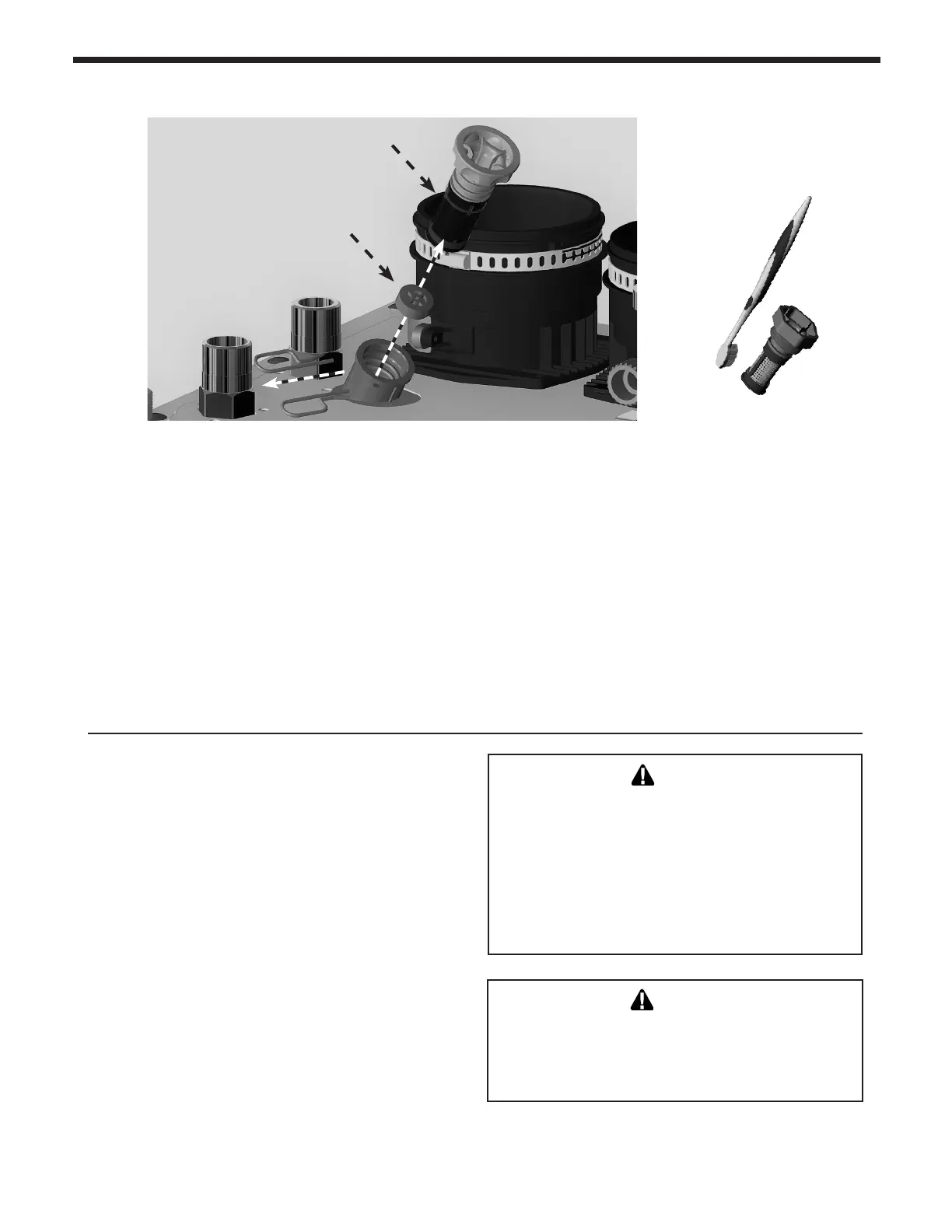
5. Remove the Cold Water Inlet lter by removing the two small pins and then pulling the lter upward at
an angle. If your system is using a ow restrictor, be sure that the ow restrictor is also cleaned and
placed back into the system during re-assembly.
6. Clean them with a toothbrush and clean running water.
7. To rell the combination boiler, reassemble the lters back into the combination boiler and reverse steps 5
back to 1.
FTCF199
Flow Restrictor
The cold water inlet lter.
8.4 Freeze Protection
FT Boilers are certied for indoor use only, and are not
design-certied for placement outdoors.
Proper precautions for freeze protection are
recommended for boiler installations in areas where
the danger of freezing exists.
Power outage, interruption of gas supply, failure of
system components, activation of safety devices, etc.,
may prevent a boiler from ring. Any time a boiler
is subjected to freezing conditions, and the boiler
is not able to re, and/or the water is not able to
circulate, there is a risk of freezing in the boiler
or in the pipes in the system. When water freezes,
it expands which may result in bursting of pipes, or
damage to the boiler, which could result in leaking or
ooding conditions.
NOTICE
Not all pumps are capable of maintaining the
reduced temperature rise required with glycol
concentrations greater than 35%.
NOTICE
Dierent glycol products may provide varying
degrees of protection. Glycol products must
be maintained properly in a heating system, or
they may become ineective. Consult the glycol
specications, or the glycol manufacturer, for
information about specic products, maintenance
of solutions, and set up according to your particular
conditions.



 To Next Page