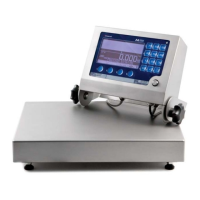
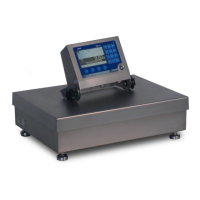
The scale also has five grading memories, each with nine grades. The
memories can be programmed with:
• Unit of weight (kg, g, lb, oz)
6
• Lower grade limit
• Grading method (normal, reverse, positive).
To change from packing to grading (and vice versa)
♦ Use the arrow keys to scroll through the memories to change from
packing to grading and vice versa.
The Packing and Grading indicators will light up to show which mode,
packing or grading, is currently active.
Initial start of the scale
1
Plug in the scale.
2 The scale is now ready for simple weighing.
3 If, however, you wish to use the packing or grading
memories, you must first
• enter the settings for the packing or grading memories
you intend to use, and then
• select the appropriate memory with the arrow keys.
See “Editing a Memory” on page 27 for more details.
Marine Calibration
The motion compensation of the M1100 marine scale must be calibrated
every once in a while to ensure the weighing results are accurate and
stable.
IMPORTANT! For optimum marine calibration results, always
calibrate the scale in the physical environment where it will be used for
weighing, i.e. at sea and not on land or in the shelter of harbour.
Figure 15 Calibration message
The scale must be calibrated at initial start-up. After that the scale submits a
warning, the message
flashes in the Config Display, whenever a
calibration should be performed.
The scale must also be calibrated
• when the scale is unstable without the weighing platform being
touched.
6
Depending on platform size and market area.
16 • Basic Operation M1100, U2 & C2-3.3



 To Next Page