S8600, S8610, S8660, S8670 INTERMITTENT PILOT MODULE
69-0463—01 14
3. Connections to the ignition module and to the
igniter or igniter-sensor are clean and tight.
4. Ignition cable provides good electrical continuity.
STEP 2: Check ignition system grounding. Nuisance
shutdowns are often caused by a poor or erratic ground.
1. A common ground, usually supplied by the pilot
burner bracket, is required for the module and the
pilot burner/igniter-sensor.
a. Check for good metal-to-metal contact between
the pilot burner bracket and the main burner.
b. Check the ground lead from the
GND(BURNER) terminal on the module to the
pilot burner. Make sure connections are clean
and tight. If the wire is damaged or deteriorated,
replace it with No. 14-18 gauge, moisture-
resistant, thermoplastic insulated wire with 221°
F (105° C) minimum rating.
(1) Check the ceramic flame rod insulator for
cracks or evidence of exposure to extreme
heat, which can permit leakage to ground.
Replace pilot burner/igniter-sensor and pro-
vide shield if necessary.
(2) If flame rod or bracket are bent out of posi-
tion, restore to correct position.
STEP 3: Check spark ignition circuit. You will need a short
jumper wire made from ignition cable or other heavily
insulated wire.
1. Close the manual gas valve.
2. Disconnect the ignition cable at the SPARK terminal
to the module.
Electrical Shock Hazard.
Can cause severe injury, death or property
damage.
When performing the following steps, do not touch
the stripped end of jumper or SPARK terminal.
The ignition circuit generates over 10,000 volts
and electrical shock can result.
3. Energize the module and immediately touch one
end of the jumper firmly to the GND terminal on the
module. Move the free end of the jumper slowly
toward the SPARK terminal until a spark is estab-
lished.
4. Pull the jumper slowly away from the terminal and
note the length of the gap when sparking stops.
Check Table 5 below.
Table 5. Checking Arc Length.
STEP 4: Check pilot and main burner lightoff.
1. Set the thermostat to call for heat.
2. Watch the pilot burner during the ignition sequence.
See if.
a. Ignition spark continues after the pilot is lit.
b. The pilot lights and the spark stops, but main
burner does not light.
c. S8600B,H,M; S8610B,H; S8660D; S8670D
only: The pilot lights, the spark stops and main
burner lights, but the system shuts down.
3. If so, ensure adequate flame current as follows.
a. Turn off furnace at circuit breaker or fuse box.
b. Clean the flame rod with emery cloth.
c. Make sure electrical connections are clean and
tight. Replace damaged wire with moisture-
resistant No. 18 wire rated for continuous duty
up to 221° F (105° C).
d. Check for cracked ceramic insulator, which can
cause short to ground, and replace igniter-
sensor if necessary.
e. At the gas control, disconnect main valve wire
from the TH or MV terminal.
f. Turn on power and set thermostat to call for
heat. The pilot should light but the main burner
will remain off because the main valve actuator
is disconnected.
g. Check the pilot flame. Make sure it is blue,
steady and envelops 3/8 to 1/2 in. (10 to 13
mm) of the flame rod. See Fig. 13 for possible
flame problems and their causes.
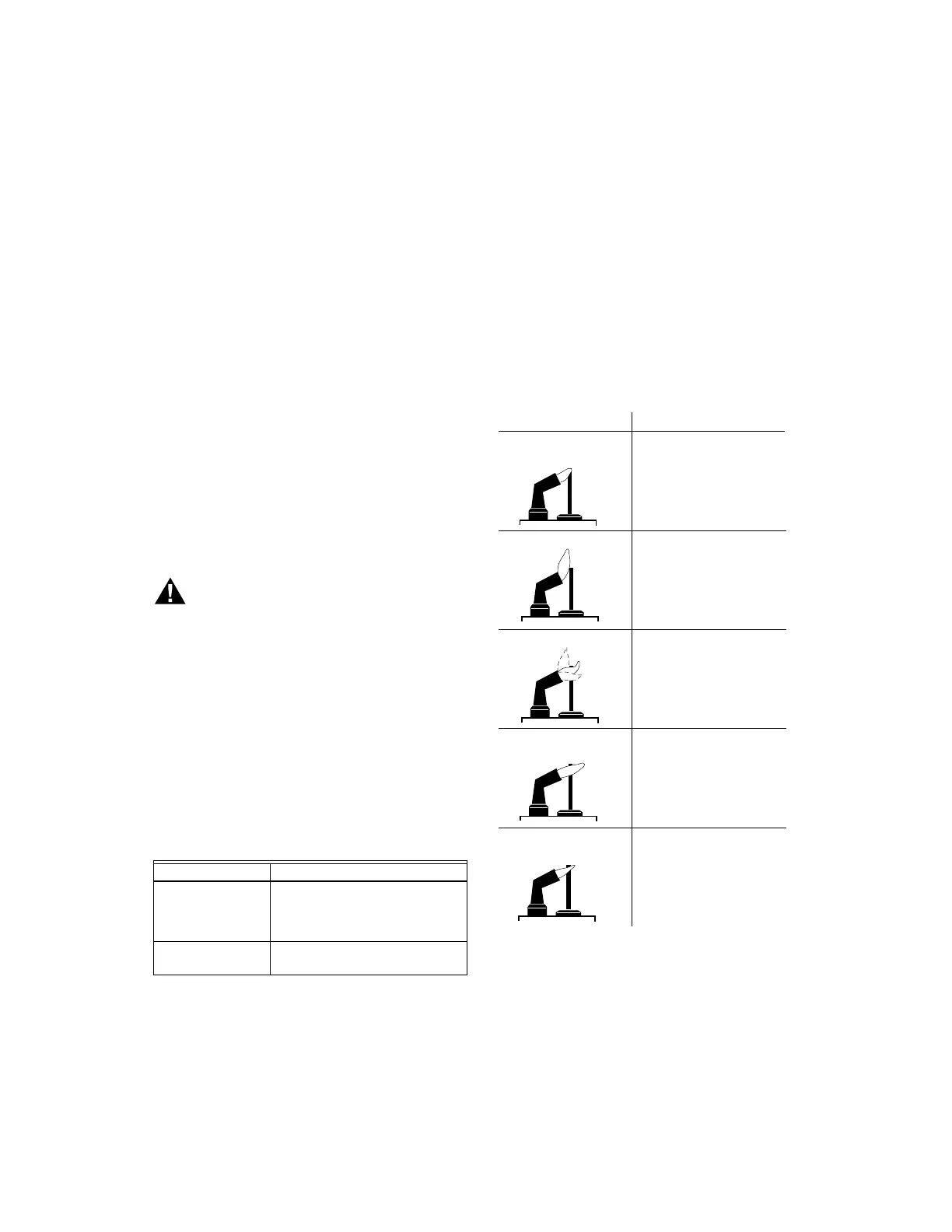
Fig. 13. Examples of Unsatisfactory Pilot Flames.
h. If necessary, adjust pilot flame by turning the
pilot adjustment screw on the gas control
clockwise to decrease or counterclockwise to
increase pilot flame. Following adjustment,
always replace pilot adjustment cover screw
and tighten firmly to assure proper gas control
operation.
i. Set thermostat below room temperature to end
call for heat.
Arc Length Action
No arc or arc less
than 1/8 in. (3 mm)
Check external fuse, if provided.
Verify power at module input
terminal. Replace module if fuse
and power okay.
Arc 1/8 in. (3 mm) or
longer.
Voltage output is okay.
LAZY YELLOW FLAME
WAVING BLUE FLAME
NOISY LIFTING
BLOWING FLAME
HARD SHARP FLAME
SMALL BLUE FLAME
CHECK FOR LACK OF GAS FROM:
• CLOGGED ORIFICE FILTER
• CLOGGED PILOT FILTER
• LOW GAS SUPPLY PRESSURE
• PILOT ADJUSTMENT AT MINIMUM
CHECK FOR LACK OF AIR FROM:
• DIRTY ORIFICE
• DIRTY LINT SCREEN, IF USED
• DIRTY PRIMARY AIR OPENING,
IF THERE IS ONE
• PILOT ADJUSTMENT AT MINIMUM
CHECK FOR:
• EXCESSIVE DRAFT AT PILOT
LOCATION
• RECIRCULATING PRODUCTS
OF COMBUSTION
CHECK FOR:
• HIGH GAS PRESSURE
THIS FLAME IS CHARACTERISTIC
OF MANUFACTURED GAS
CHECK FOR:
• HIGH GAS PRESSURE
• ORIFICE TOO SMALL
M3272A
69-0463-1.fm Page 14 Wednesday, December 19, 2007 1:22 PM



 To Next Page