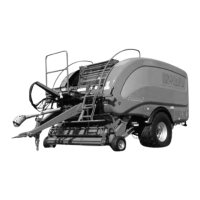
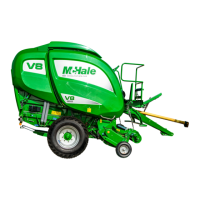
McHale F5500 Baler
106
Every day
Check wheel nuts
Check all guards and safety devices
Check road traffic equipment
Check for any oil leaks and damaged pipes
Grease 3 x heavy duty grease points on PTO shaft
Fill chain oil reservoir (300 bales approx.)
Replace grease cartridge (300 bales approx.)
Grease chamber door hinge points
Check all chain adjustments, and adjust as necessary
(See ‘Chain adjustments’)
Clear away crop or debris built up around brake-hubs several times per day.
Check bearings for early warning signs of wear or damage and replace if
necessary. Always be on alert for bearings that are squeaky or noisy despite
being well lubricated or bearing housings running very hot, especially with paint
discolouration or burning smell. Carry out these checks daily, immediately after
using the machine, with the tractor shut down and the handbrake applied.
Every week
Grease pick-up reel bearings
Check for correct air pressure in the tyres
Grease 5 x standard duty grease points on PTO shaft (See ‘PTO shaft
adjustment & maintenance’)
Check the belt tension on the netter unit (See ‘Net tension adjustment’)
Every month
Grease pick-up reel shaft bearings
Grease pick-up cam clutch
Check sufficient oil level in the gearbox (See ‘Gearbox oil’)
Every year
Clean and lubricate all moving parts of the netter unit
Drain and change gearbox oil (See ‘Gearbox oil’)
At the end of the season the machine should be washed and cleaned.
Carefully clean all machine sections, inside and out. Dirt and foreign objects are likely
to draw moisture and cause rusting of steel components. McHale recommend that the
machine be blown down with an air line, as opposed to a pressure washer, due to the
dangers involved with pressure washing and to protect the overall paint work on the
machine. If, despite our advice, a pressure washer is used then take extreme caution
and operate from ground level only. Do not point pressurized water at or near electrical
components, pivots points, valves or bearings. Never climb onto any part of the
machine, while pressure washing, due to the fact that all metal surfaces become
extremely wet and slippery and always ensure that the tractor has been shut down, with
the ignition key removed.



 To Next Page