A prompt displays telling the operator to change the amount of Dry Flo. Repeat the process
beginning with chamber/medium weight.
HOW STORED BLANK DATA ARE USED
l Volume Calibration on page2 - 4
l Sample Run on page2 - 9
Perform a sample or calibration run. For blank data source, indicate which stored data set to use
l Specify the number of consolidation cycles for the current run. The analyzer uses that number of
stored blank run cycles, even if more were stored in the set.
l The number of preparation cycles, consolidation force, and conversion factor from the stored data
set are used for the current run. The default conversion factor may be changed to the calibrated
conversion factor for the type of sample being analyzed.
l Enter the Chamber/Medium weight when prompted. The analyzer interpolates the corresponding
stored blank data from that set. Entering an extremely accurate weight is critical.
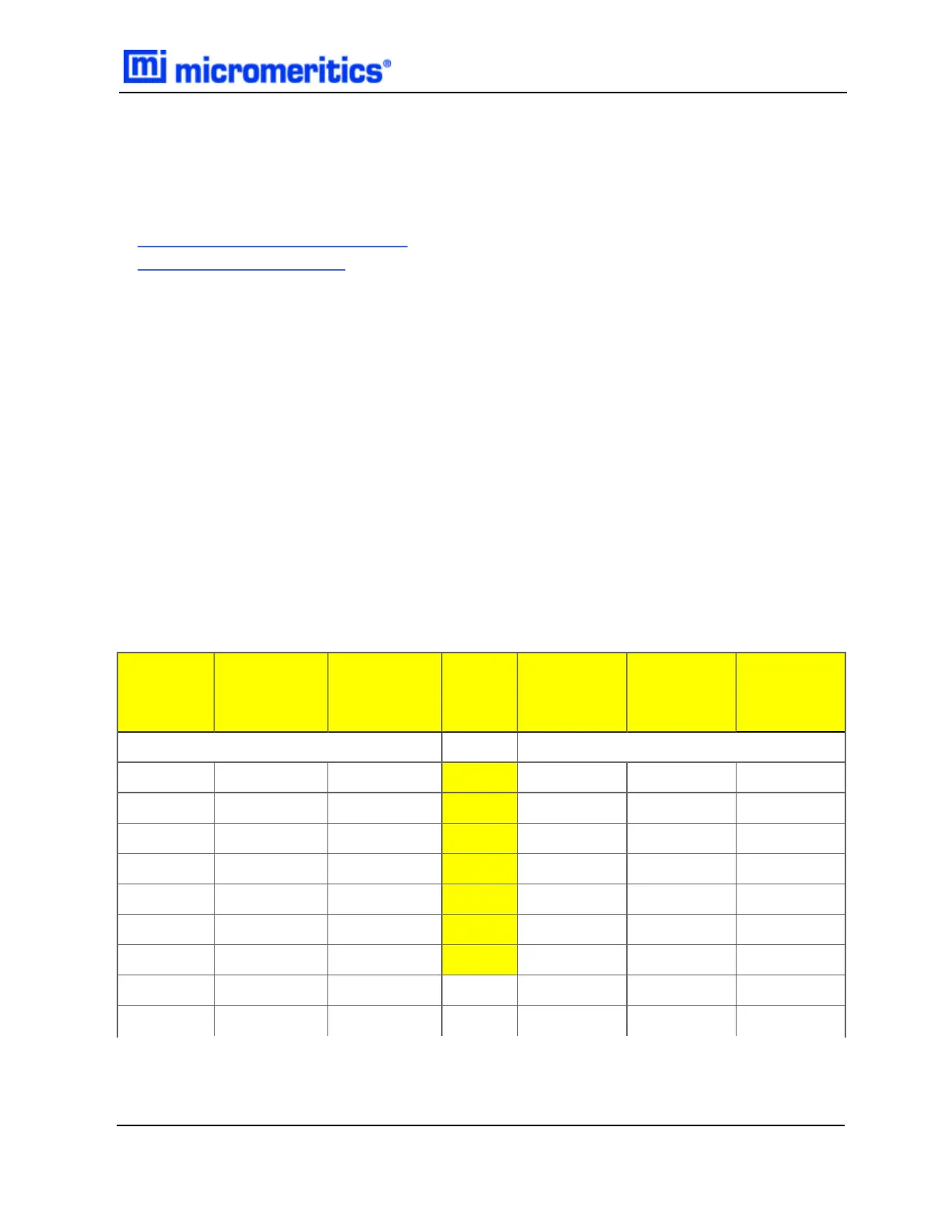
The following table is an example of some of the data stored in a blank data set. If Chamber/Medium
weight Y were entered during a sample run using this data set, analysis data would be interpolated
between points 2 and 3 (highlighted). The number of cycles specified in the sample run in this
example is 7.
XXXXX represents analysis data in counts
Number
of Cycles
Stored
Chamber,
Medium
Wt 1
×
1 g
Stored
Chamber,
Medium
Wt 2
×
2 g
Stored
Chamber,
Medium
Wt 3
×
3 g
Stored
Chamber,
Medium
Wt 4
×
4 g
Stored
Chamber,
Medium
Wt 5
×
5 g
<Y
Y g >Y
1
XXXXX XXXXX XXXXX XXXXX XXXXX
2
XXXXX XXXXX XXXXX XXXXX XXXXX
3
XXXXX XXXXX XXXXX XXXXX XXXXX
4
XXXXX XXXXX XXXXX XXXXX XXXXX
5
XXXXX XXXXX XXXXX XXXXX XXXXX
6
XXXXX XXXXX XXXXX XXXXX XXXXX
7
XXXXX XXXXX XXXXX
8
XXXXX XXXXX
9
XXXXX XXXXX
Example of Stored Blank Data
How Stored Blank Data are Used
GeoPyc 1365 Operator Manual
136-42800-01 (Rev -) — Dec 2016
2 - 7


 To Next Page