1-2 GENERAL MDS 05-2415A01, Rev. A
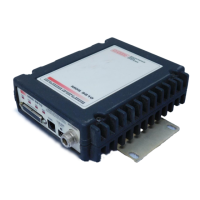
As a component of point-to-multipoint data telemetry systems, the MDS 4310 Transceiver is
well suited for such applications as:
• Supervisory Control and Data
Acquisition (SCADA)
• Telemetry Systems
• Energy Distribution Automation
• Information Systems
• Oil Fields and Pipelines
• Alarm Monitoring
• Security
MDS 4000 Series radio systems offer the advantage of a frequency band which in many areas
is specially coordinated to provide protection from co-channel interference. Because these are
primarily data-only channels, voice users are not likely to interfere with data transmission
and reception.
TERMS “ANALOG” AND “DIGITAL”
In all MDS literature, the terms “analog” and “digital” are commonly used to describe the
modulation modes and other signal characteristics of various products. The following are
examples of how these terms are commonly used in this manual.
Analog Modem, Analog Radio, Analog Mode—
These terms relate to equipment or operating modes using linear frequency modulation
and detection techniques. The circuitry handles analog communication signals, such as
audio frequency shift keying (AFSK) or analog voice frequency signals through the
system. Generally, these products or modes operate in the 50 to 1200 bits per second
(bps) data range in non-voice applications. Modulation sources include an internal MDS
brand 1200 bps modem or external 4-wire audio sources such as AFSK modems.
Digital Modem, Digital Radio, Digital Mode—
These terms relate to equipment or operating modes using non-linear frequency shift
keying modulation and detection techniques. The signal may alternate between two or
three discrete frequencies (FSK) depending on equipment configuration. Generally, these
products or modes operate in the 4800 and 9600 bps range.
MDS 4310 MODULATION TECHNIQUES
The MDS 4310 Transceiver can be modulated by either audio frequency shift keying (AFSK)
or frequency shift keying (FSK) controlled directly by the digital output of the MDS internal
modems. Alternatively, an external modem can be used for controlling AFSK transmission.
The MDS 4310 is capable of interfacing with data equipment at standard rates between 50
and 4800 bits per second (bps) with an asynchronous interface to the local terminal unit. The
MDS 4310 provides a synchronous or asynchronous interface at data speeds of 1200, 4800
and 9600 bps with one of the optional FSK modems installed internally.
MICROCONTROLLER FEATURES
The MDS 4310 Transceiver features an internal microcontroller that allows user
programming and control of operating parameters and interrogation of diagnostic data.
Programming of radio settings and monitoring of operating parameters can be done with a
terminal unit connected through the transceiver’s DB-25 INTERFACE connector, eliminating
the need to remove the radio from its mounting position or open its top cover. The terminal
can be either an MDS-supplied Hand-Held Terminal (HHT), or an IBM PC (or compatible)
personal computer running MDS-supplied software, or other PC-based communications


 To Next Page