76347-385 • 06-15
2.3
The Chipping Cycle • Preparation
Foreign material (metal, stones, glass) in the chipper will
cause damage and potentially shatter the cutting blades
resulting in property damage, serious injury, or death.
Vines left on the wood may cause entanglement of operating
personnel, or hide foreign material resulting in equipment
damage, serious injury, or death. Always remove vines from
the material to be chipped. Do not leave vines in the work
area or place vines in the chipper.
Brush Preparation
Lifting heavy objects may cause serious back injury. Always use proper
lifting technique or the winch (optional feature) designed for
the machine.
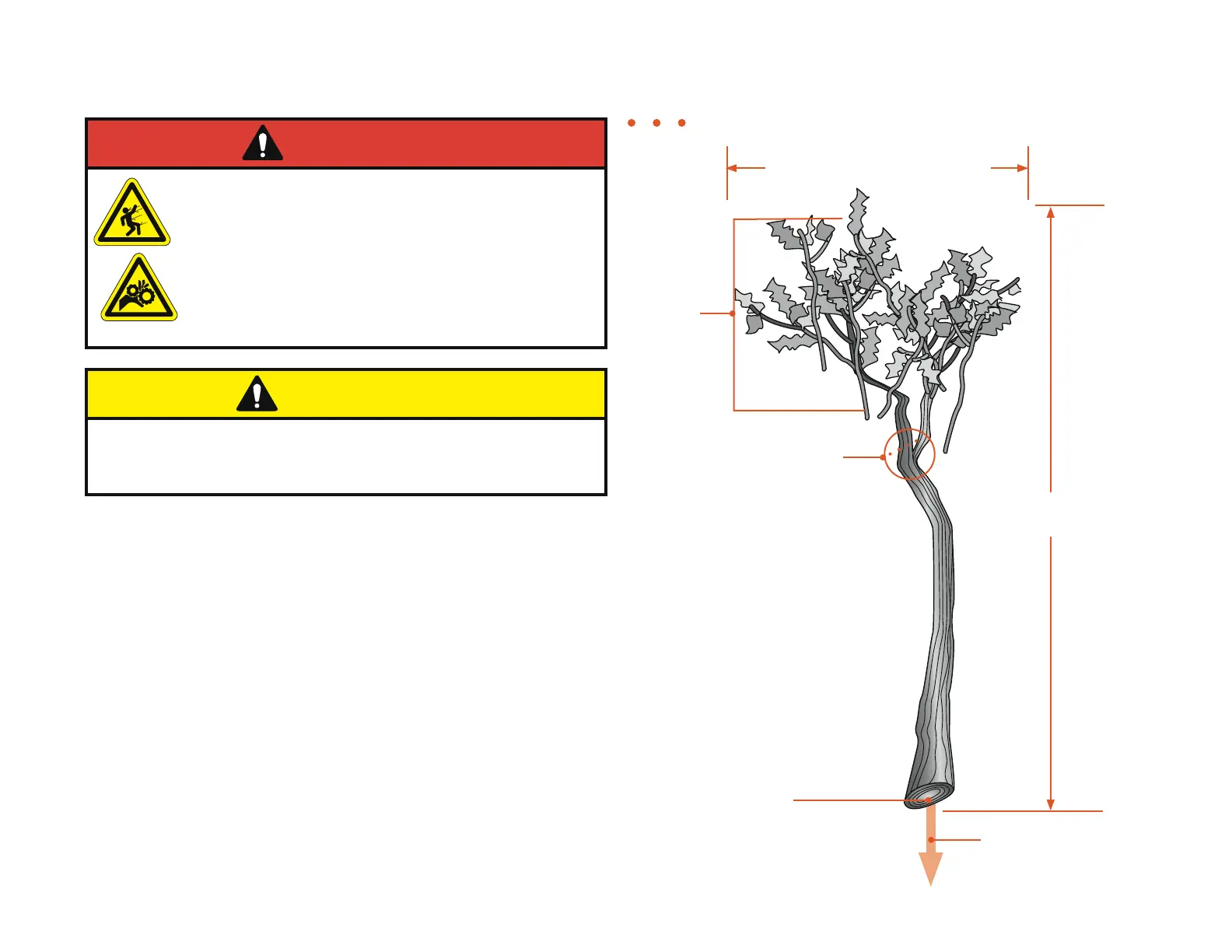
Figure 2.1
Cut lead end at
an angle
No shorter than 4 ft.
in length
Cut end should be facing
the chipper infeed
Trimming the “V” areas off of
the brush can reduce down
time in having to stop and clear
away jammed material
No wider than infeed opening
Place short
pieces on
top of long
pieces
DANGER!
CAUTION
Proper preparation and organization of the brush and branches will
provide an efficient chipping process, as well as creating safe working
conditions and reducing the possibility of unexpected maintenance
expenses.
To prepare the wood and brush:
• Cut the lead end of the brush at an angle. This will help ease the feed
rollers open and facilitate feeding
• Cut the brush into lengths long enough to be safely fed into the chipper
without the operator hands entering the infeed. The average length
should be no shorter than 4 feet
NOTE: Place short pieces on top of longer pieces.
• Cut the wood into a weight that can be easily lifted without injury to
the operator
• The chipper is designed to process clean wood. Brush and wood should
be clear of debris and dirt, or any items that may damage the machine


 To Next Page