EasyManua.ls Logo

OCULUS Myopia Master Advanced - User Manual

OCULUS Myopia Master Advanced
98 pages
Print Icon
To Next Page IconTo Next Page
Loading...
OCULUS Myopia Master
®
®
INSTRUCTION MANUAL

Table of Contents

Questions and Answers

OCULUS Myopia Master Advanced Specifications

General IconGeneral
Device TypeOphthalmic diagnostic device
CategoryMedical Equipment
Target UsersOphthalmologists, optometrists
Measurement MethodOptical biometry
Data OutputDigital
Power SupplyMains electricity
DimensionsNot specified in publicly available data
Measurement ParametersAxial length, anterior chamber depth, pupil diameter, white-to-white distance
Anterior Chamber Depth Measurement TechnologyOptical measurement
Axial Length Measurement Range14 - 30 mm
Data ExportUSB, network
TechnologyOptical biometry
PurposeDiagnosis and monitoring of myopia and other ocular conditions
FeaturesComprehensive

Summary

Scope of Delivery

Graphic Symbols

Structure of the Documentation

Documentation Components

Details the Instruction Manual and Software Installation guides.

Safety Instructions

About this Manual

Provides guidance on reading the manual and safety precautions.

Safety Instructions for Use

Outlines essential safety guidelines for operating the device.

Intended Use

Contraindications

Lists any conditions or situations where the device should not be used.

Transport to Installation Location

Device Description

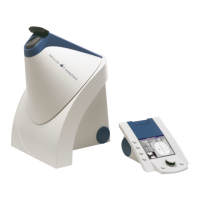
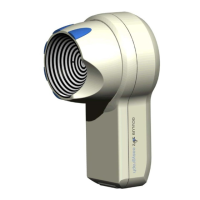
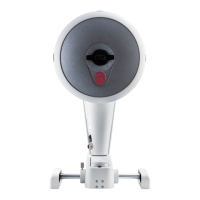
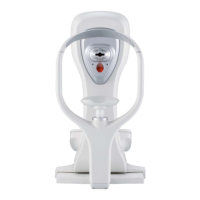
Overview of Device Components

Identifies and labels the main physical parts of the Myopia Master®.

Mode of Operation of the Myopia Master

Explains the different measuring functions and technologies used by the device.

Set up and Connection

Electrical Connection

Details the procedures and precautions for connecting the device to a power source.

Integrate into IT Network for Service Purposes

Explains how to connect the device to a computer and IT network for service.

Operation

Switching On

Instructions for powering the device on.

Switching Off

Instructions for powering the device off.

Daily Operation

Describes routine procedures for using the device daily.

Functions of the Control Pad

Touch Screen

Explains how to use the touch screen for data management.

Function Keys on the Touch Screen

Details the specific function keys available on the touch screen interface.

Preparing Patients Data

Entering new Patients (touch screen)

Guides on inputting new patient information using the touch screen.

Entering new Patients (touch screen deactivated)

Guides on inputting new patient information without the touch screen.

Selecting existing Patients

Covers selecting existing patient records.

Rename a Patient

Explains how to rename a patient record.

Delete a Patient or an Examination

Explains how to delete patient or examination data.

Load an Examination

Explains how to load a saved examination.

Measuring Procedure

Selecting a Measurement Mode

Explains how to choose the appropriate measurement mode for the examination.

Preparing a Measurement

Details the steps for positioning the patient and adjusting the device before measurement.

Myopia measurement and results

Covers obtaining and interpreting myopia measurement results.

Refraction Results

Details the interpretation of refraction measurement results.

Axial length results

Details the interpretation of axial length measurement results.

AR + K measurement and results

Describes how to perform and interpret the AR + K measurement.

P + AR + K measurement and results

Describes how to perform and interpret the P + AR + K measurement.

PARK + AXL and results

Describes how to perform and interpret the PARK + AXL measurement.

Axial length and results

Describes how to perform and interpret the axial length measurement.

Printing and Saving Examinations

Instructions on how to print and save the collected examination data.

Complete measurement

Final steps after a measurement, including saving data to patient records.

Chronology of Different Measuring Processes

Enter Patient + Measure

Describes the process of entering patient data before conducting a measurement.

Saving an Examination Retroactively

Explains how to save a measurement to a patient's record after it has been performed.

Measuring Without Saving the Patient Data

Details how to perform a measurement without associating it with patient data.

Reference Measurement

Measuring with the reference tool

Guides on performing a reference measurement to ensure device accuracy.

Settings

Settings 1

Configures measuring modes, display options, units, and eye-tracking.

Settings 2

Adjusts clock, date, display, language, keyboard, and interface settings.

Settings 3

Sets communication parameters for connecting to compatible phoropters.

Settings 4

Configures printout details for refraction, AXL, keratomy, and footer information.

Settings 5

Accesses status, calibration, testing, and system information settings.

Display Options

Display of Pachymetry

Details how to view pachymetry data, including corneal thickness progression.

Calculated correction of tonometrically measured IOP

IOP correction based on central corneal thickness

Explains formulas for correcting IOP based on central corneal thickness.

Post-LASIK IOP correction

Discusses IOP estimation for post-LASIK patients using the Kohlhaas formula.

IOP correction based on central corneal thickness and corneal curvature

Covers IOP correction formulas that consider both corneal thickness and curvature.

Performing IOP correction with the Myopia Master

Steps for performing IOP correction and saving the resulting data.

Cleaning, Disinfection and Maintenance

Cleaning

Guidelines for cleaning the device, including required materials and intervals.

Disinfection

Procedures for disinfecting the device, including required materials.

Maintenance

Information on device maintenance, recommended checks, and handling faults.

Attaching Paper to the Chin Rest

Instructions for replacing the paper on the chin rest.

Inserting a New Roll of Printer Paper

Guide on how to load a new roll of paper into the printer.

Troubleshooting

Dismantling, Transport and Storage

Disassembly

Steps to safely dismantle the device for transport or storage.

Transport and Storage Information

Specifies the environmental conditions required for safe transport and storage.

Disposal

Terms of Warranty and Servicing

Terms of Warranty

Details the terms and conditions of the product warranty.

Assumption of Liability for Functions and Damage

Outlines OCULUS's liability policy regarding device safety and usage compliance.

Manufacturer and Service Address

Provides contact information for OCULUS headquarters and USA service.

Technical Data

Measuring modes and range

Lists measuring modes, ranges, and technical specifications for key device functions.

Safety and Environmental Requirements

Outlines safety classification, operating, storage, and transport environmental conditions.

Power adapter and computer specifications

Provides specs for the power adapter and recommended computer system.

Annex

Electromagnetic Compatibility

Information on EMC requirements and precautions for medical electrical equipment.

Guidance and Manufacturers Declaration - Electromagnetic Emissions and Immunity

Guidance and declarations regarding electromagnetic emissions and immunity.

Description of the Connection

Illustrates the typical connection diagram for the Myopia Master® system.

Data Sheet GSM60 B15-P1 J (05150725)

Technical specifications and features of the GSM60B15-P1J medical power adapter.

Related product manuals