100c User Manual
28
ch.4
CHAPTER 4: RESISTANCE WELDING
Using Tack Mode
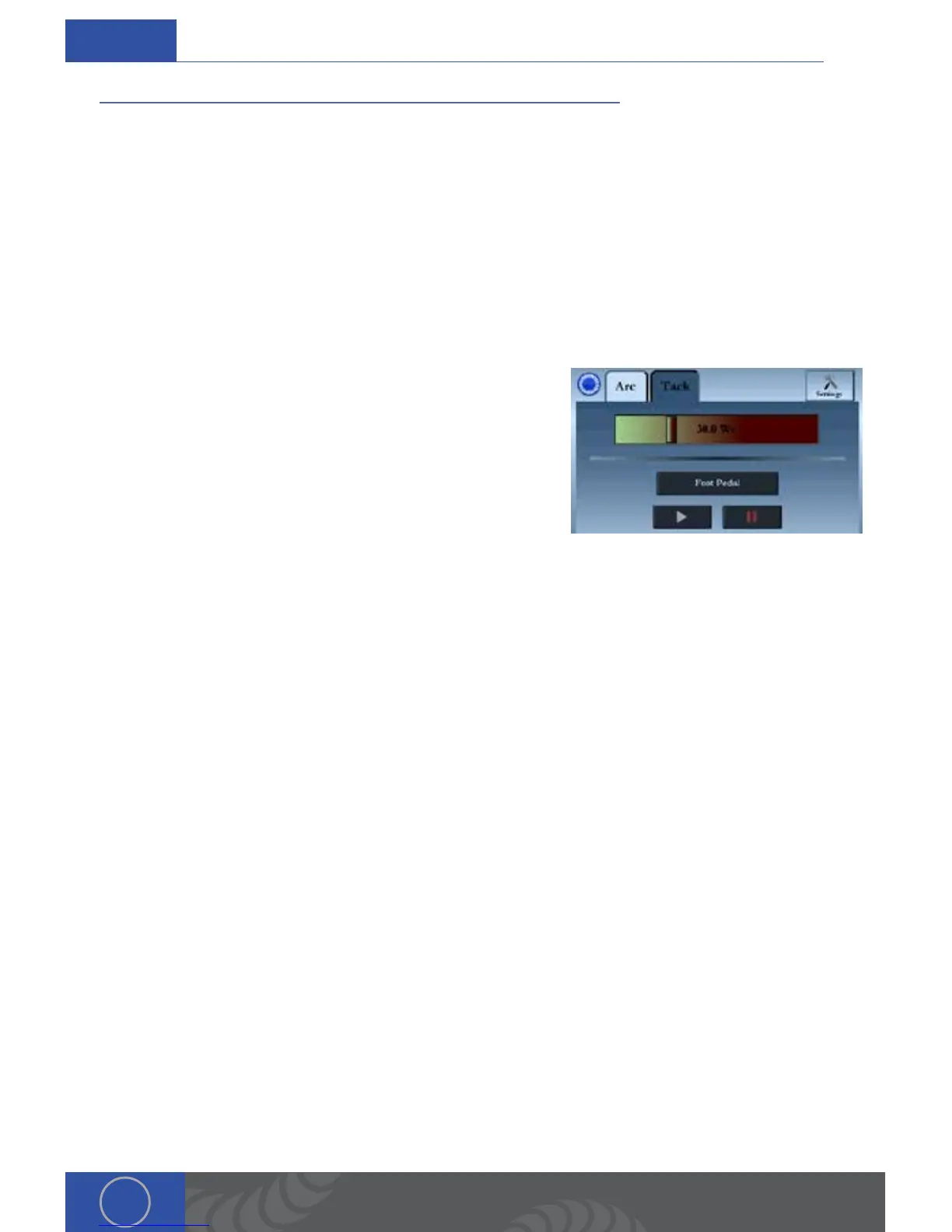
TACK TAB - CONTROL AREA
e Tack Screen controls the resistance welding aspect of the welder. Tack welding is typically
used to temporarily hold pieces together. Users will generally utilize this type of welding to
hold their work pieces together before soldering or performing a pulse arc weld. Tack welding
before pulse arc welding allows the user to verify the work pieces are placed together correctly.
en the user can return to the “Arc Screen” and place a permanent weld between the two work
pieces. *Tack welding can be used to permanently fuse the work pieces together if the energy
level is high and the work piece are not to thick. Tack welding does not work with resistive
metals like silver or high karat gold.
Energy Bar
is controls the overall energy that will be discharged
during the welding process. Slide your finger along the
Energy Bar to change the energy or touch the plus and
minus buttons on either side of the Energy Bar.
Trigger Type
Touch Detect – e weld will occur after the two work pieces touch each other.
Foot Pedal – is option will not weld unless the users presses the Foot Pedal after the two
pieces are touched together. is option allows the user to precisely position the work pieces
together and make sure they are aligned correctly before initiating the weld.
THINGS TO REMEMBER
It may be helpful to shape the tool for the application. Tools that clamp the parts (e.g. brass lined
pliers) should have as much surface as possible in contact with the part to allow more energy to
transfer to the weld location. Remember that the area between the work pieces should be small
to focus the energy if a strong weld is desired. A weldment or bump can be used to help focus
the energy if desired. If you are shaping an electrode to actually perform the weld then the tip
should be as small as is reasonable for the desired weld size (e.g. 1mm spot size or less is typical).
Remember that when using an electrode to perform the welding process, the pressure applied
by the electrode tip determines the weld pressure and the heat generated. A weldment or bump
between the two parts to be welded can still be used to focus the energy. Place the electrode
directly over the weldment location (remember the weldment is actually between the two sheets
etc, not on the electrode).
What is Resistance Welding (Tack Welding)?
Resistance welding, often called tack or fusion welding , takes place using a very different process
from that of TIG welding. In resistance welding a large electrical current is passed through two
work pieces to join them together. At the contact point between the two materials there is a
resistance to the flow of the electrical current. As electrical current is passed through this contact
point, resistive heating takes place. When enough current passes through the work pieces the


 To Next Page