Chapter 8 Crane operation
Load limits
Working position of the crane
Load capacity, component wear, and working life of the crane are among others dependent on the
working position.
In adverse working positions:
the bearings, joints and crane components are under higher stress and therefore wear out quicker;
the specified load may not be reached;
the component wear increases.
The crane must always be in an optimum working position for the task at hand.
Working range
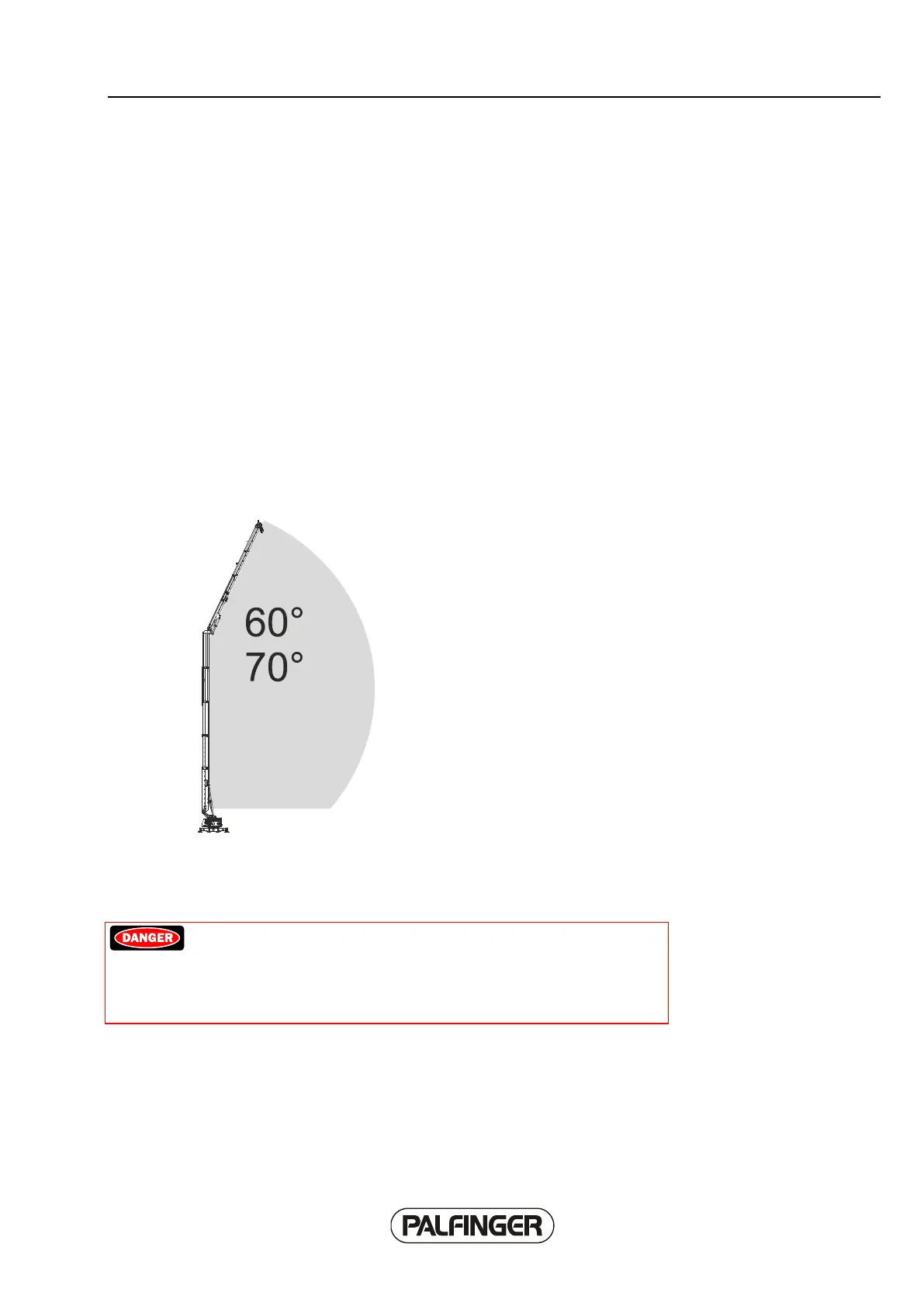
Optimum working range:
The optimum angle is reached, when the pitch line of the lifting cylinder has the biggest normal
distance to the pivot point. On this crane it is 49°, however the crane’s momentum is large, therefore it
is better to use an angle between 60° and 70° and keep the outer boom horizontal.
Danger!
Any working position with main boom completely lowered is
prohibited. In this position the crane may be overloaded.
Consequently the load may fall down. This creates an acute risk of
fatality for the operator and others.
Avoid to position the main boom near the lower limit stop. If the main boom is
completely lowered (at mechanical stop of cylinder), the overload protection system
is unable to act. Always use the outer boom to carry out work in this range.



 To Next Page