
 Need help?
Do you have a question about the Panasonic EVERVOLT Smart Box and is the answer not in the manual?
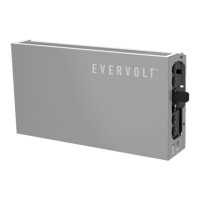
Packing list for the EV-BMS unit.
Packing list for a single battery module.
Details the specifications for inverter power terminals.
Details the specifications for inverter communication terminals.
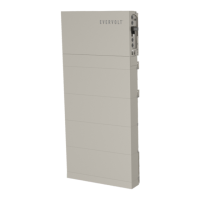
Instructions for mounting the battery module and base.
Details on connecting the AC power cable to the inverter.
Details on connecting the PV power cable to the inverter.
Step-by-step guide for connecting communication cables between inverters.
Step-by-step guide for connecting communication cables between inverter and EV-SB.
Connecting power and communication cables between inverter and battery.
Instructions for connecting the ground cable between inverter and battery.
Connecting inverter conductors to the EV-SB unit.
Information on the factory-installed neutral-ground bonding strap.
Connecting the AC power cable from the generator to the EV-SB.
Connecting communication cables for generator and EPO to the EV-SB.
Connecting the AC cable for smart loads to the EV-SB.
Connecting the AC cable for grid conductors to the EV-SB.
This document provides a comprehensive guide for the installation and maintenance of the EVERVOLT Home Battery System, which includes the Inverter, Battery Modules, and Smart Box (EV-SB). The system is designed to provide reliable energy storage and management for residential applications, supporting both floor and wall mounting configurations.
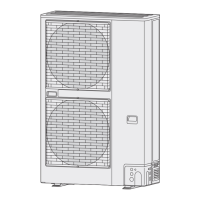
The EVERVOLT Home Battery System is an integrated energy storage solution that combines an inverter, battery modules, and a smart box to manage power flow. The inverter is the central component, converting direct current (DC) from the battery and solar panels into alternating current (AC) for household use. It also manages charging the battery from the grid or solar input. The battery modules store electrical energy, providing power during outages or when grid electricity is more expensive. The Smart Box (EV-SB) acts as a critical interface, connecting the inverter to various loads, the grid, and optional generators or solar conductors, ensuring seamless power distribution and backup functionality. The system supports different configurations, from a single battery module to multiple modules, allowing for scalable energy storage capacity based on household needs. It is designed to work in various scenarios, including partial-home backup and integration with solar equipment, offering flexibility in energy management.
The EVERVOLT system offers several features to enhance its usability and integration into a home energy setup. The installation process is detailed, with clear instructions for both floor and wall mounting of the battery modules, BMS, and inverter. For battery modules, the guide illustrates how to mount the base first, followed by securing the battery modules. Specific torque values and screw types are provided for secure installation. The system supports multiple battery modules, with diagrams showing configurations for two, three, and four batteries, along with their corresponding dimensions and weights, aiding in planning the installation space.
The inverter includes various terminals for power and communication, such as PV terminals, AC terminals, ground terminals, and an AUX terminal. These allow for connections to solar panels, the main electrical panel, grounding systems, and external communication devices. The communication terminals support RS485 and CAN protocols, enabling interaction with other system components and monitoring devices. The inverter also features a breaker and a power button for operational control, along with an emergency stop switch for safety.
The EV-SB, or Smart Box, further expands connectivity options. It includes terminals for ESS (Energy Storage System) connections, non-backup loads, backup loads, grid connections, and ground terminals. Communication terminals on the EV-SB allow for integration with generators and EPO (Emergency Power Off) conductors. The system also incorporates CT (Current Transformer) terminals for measuring load and generation, which is crucial for optimizing energy flow and ensuring compliance with local regulations. The guide specifies different CT configurations for various application scenarios, including those with solar equipment.
Wiring connections are meticulously detailed, covering AC, PV, GND, and communication cables for the inverter, as well as connections between the inverter and battery, and within the EV-SB. The instructions include strip lengths, cross-sectional area ranges, and torque values for each terminal, ensuring proper and safe electrical connections. Communication wiring diagrams illustrate how to connect multiple inverters and how to connect an inverter to the EV-SB, highlighting the use of terminating resistors for communication lines.
While the manual primarily focuses on installation, several aspects contribute to the system's maintainability and long-term reliability. The clear labeling of terminals and components simplifies troubleshooting and future servicing. The provision of specific torque values for screws and terminals helps prevent loose connections, which can lead to electrical issues or reduced performance over time. The inclusion of an emergency stop switch on the inverter and the requirement for UL certification for the emergency stop switch underscore the system's commitment to safety, which is a key aspect of maintenance.
The instructions for drilling holes and re-mounting dust covers during installation emphasize the importance of protecting internal components from dust and debris, thereby extending the lifespan of the device. The recommendation to clean the top of the nut and contact surfaces after locking the nut, along with the use of waterproof adhesive, ensures robust and weather-resistant connections, reducing the need for frequent repairs due to environmental factors.
The detailed wiring diagrams and terminal descriptions facilitate accurate diagnosis of any connection issues. The ability to connect external CTs for measuring load and generation allows for precise monitoring of system performance, which can help identify inefficiencies or potential problems early on. The modular design, with separate battery modules, inverter, and smart box, suggests that individual components can be serviced or replaced if necessary, rather than requiring a complete system overhaul. The comprehensive packing lists for each component ensure that all necessary parts are available for installation and potential future replacements.
 General
| Model | EVERVOLT Smart Box |
|---|---|
| Type | Hybrid Inverter |
| AC Nominal Output Voltage | 240 V |
| AC Output Frequency | 60 Hz |
| Frequency | 60 Hz |
| Efficiency | 97.5% (CEC) |
| Communication | Wi-Fi, Ethernet |
| Battery Compatibility | Li-ion, Lead-acid |
| Enclosure Type | NEMA 3R |
| AC Nominal Output Power | 5 kW |
| Smart Features | Remote Monitoring |
| Protection | Overvoltage, Overcurrent, Short Circuit |
| Cooling | Forced Air |
| Operating Temperature Range | -13°F to 122°F (-25°C to 50°C) |
| Operating Temperature | -13°F to 122°F (-25°C to 50°C) |



 To Next Page