Fatigue Technology Inc. 401 Andover Park East Seattle, WA • USA 98188-2868 Tel: (206)246-2010 Fax: (206)244-9886
6 358856-REV K
2.1 HYDRAULIC HOSE SAFETY
1. Inspect hydraulic hose for signs of wear (cuts, abrasions, or kinks) to the outer shell materials before each use.
Pump clean oil through the entire length. Pressurize the hose and check for leaks at the crimped connectors,
between the hose material and the fitting, and between the fitting and the coupler.
2. DO NOT attempt to disconnect the hydraulic hose while it is under pressure, without first disconnecting air
supply from pump.
3. DO NOT expose hoses to potential hazards such as extreme heat or cold, sharp surfaces, or heavy impact.
4. DO NOT allow hoses to kink, twist, curl, or bend so tightly that the oil flow within the hose is blocked or
reduced. Inspect the hose and fittings for wear or damage before use that could cause premature failure of the
hose or fittings and possibly result in injury. Damaged hoses must be replaced immediately.
5. DO NOT use the hose to move attached equipment.
6. DO NOT remove strain reliever from hoses. Hose strain relievers must be placed around hose fittings during
use. Hoses with damaged strain relievers must be replaced immediately.
Figure 2.1-1
Strain Reliever
7. Hose material and coupler seals must be compatible with hydraulic fluid that meets the requirements of U.S.
MIL-SPEC #5606.
8. Hoses must not come in contact with toxic materials such as creosote-impregnated objects and some paints.
Keep couplers and hoses clean and free of paint. Hose deterioration due to chemical degradation may cause the
hose to fail under pressure. Damaged hoses must be replaced immediately. To find specific chemical
compatibility information, first look at the hose to find the manufacturer and type. The hose manufacturer will be
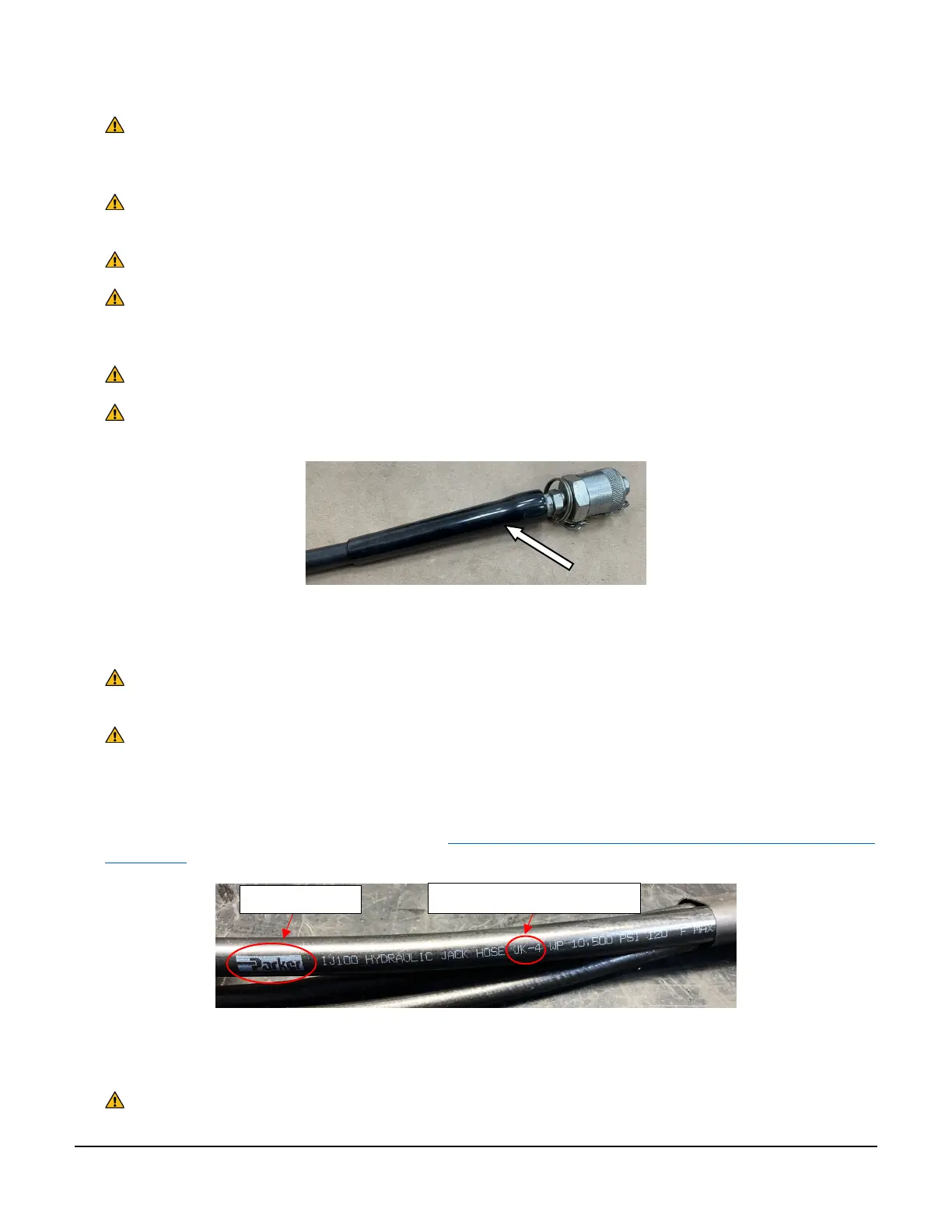
able to provide a chemical compatibility chart, typically on their website. For example, the hose below is from
Parker and is type JK; the chart can be found here:
https://www.mfcp.com/technical-in
fo/chemical-compatibility-
rubber-hose
Figure 2.1-2
Example Hydraulic Hose Identification
9. Hoses can be a trip hazard. Keep hoses clear of all walkways and footpaths.



 To Next Page