Peak Atlas DCA Pro User Guide June 2019 – Rev 1.7
Page 16
Base-Emitter Voltage Drop
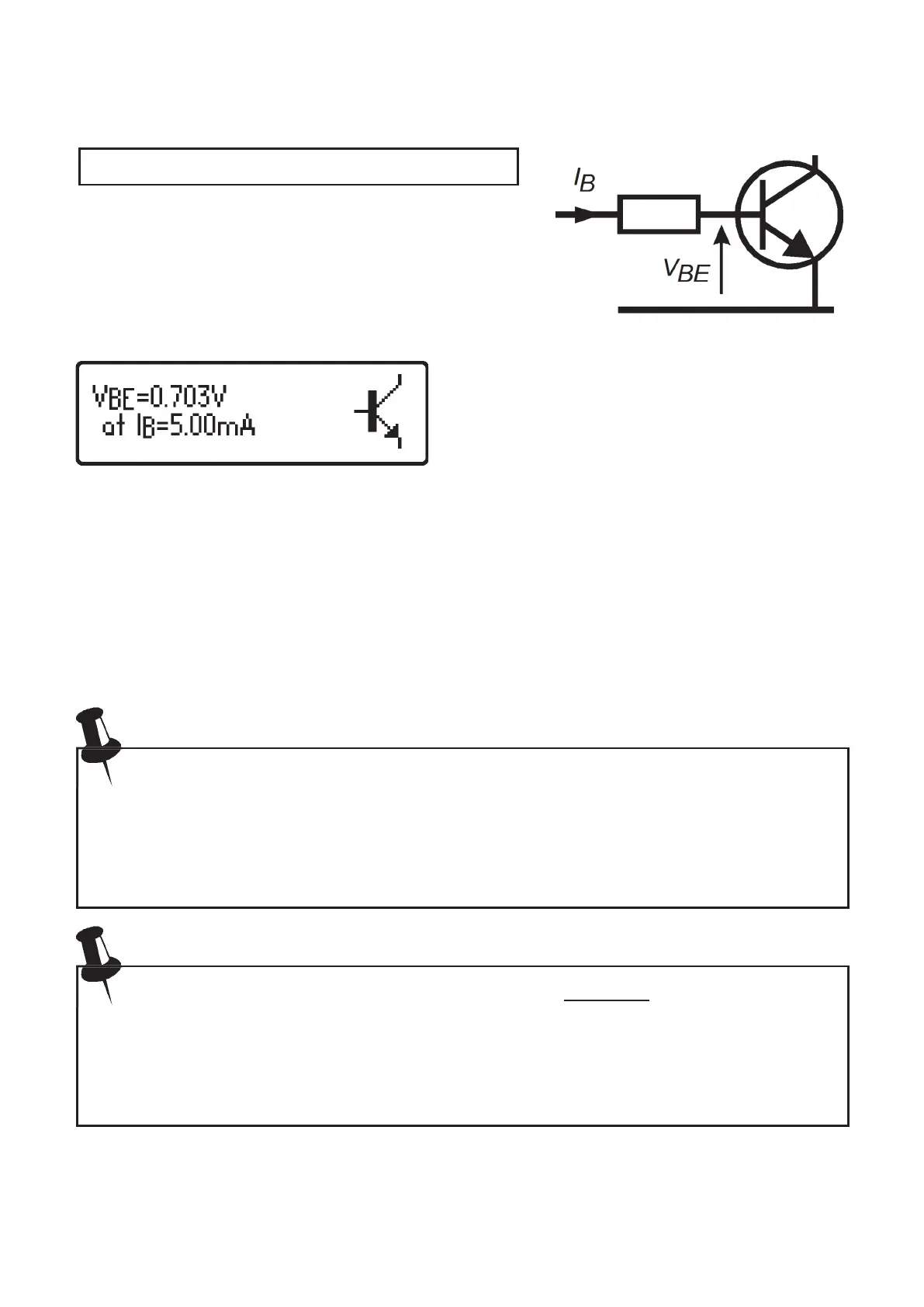
The DC characteristics of the base-emitter
junction are displayed, both the base-emitter
forward voltage drop (V
BE
) and the base
current (I
B
) used for that measurement.
This example shows an NPN base-
emitter voltage (V
BE
) of 0.703V for a
base test current (I
B
) of 5mA. If you
wish, you can test the base-emitter
junction at different currrents by performing a PN junction I/V graph using the
PC software.
The forward base-emitter voltage drop can aid in the identification of silicon or
germanium devices. Germanium devices can have base-emitter voltages as low
as 0.2V, Silicon types exhibit readings of about 0.7V and Darlington transistors
can exhibit readings of about 1.2V because of the multiple base-emitter
junctions being measured.
value to help it determine if your transistor is
Silicon or Germanium. There can be considerable overlap in V
BE
readings for Silicon and Germanium transistors. Don’t worry if the
decision is incorrect, it does not indicate a fault and no displayed
measurements are affected by the Silicon/Germanium decision.
is measured at a fixed base current of
nominally 5mA. The base current used during the gain measurement is
equal to I



 To Next Page