VisuNet FLX System
Chemical Resistance
2023-11
111
The chemical resistance of materials highly depends on various factors, including exposure
time, temperature, humidity etc. and can lead to different forms of product alterations including
discoloration, change in shore, tearing strength, volume etc.
The above listed materials have been assessed against following chemicals using an immer-
sion test (min. 48 h immersion @23 °C) and based on original manufacturer's material data-
sheet. Following test criteria have been defined for the assessment: visual parameters change
(e.g. color change, chalking, readability of texts) and degradation of mechanical properties.
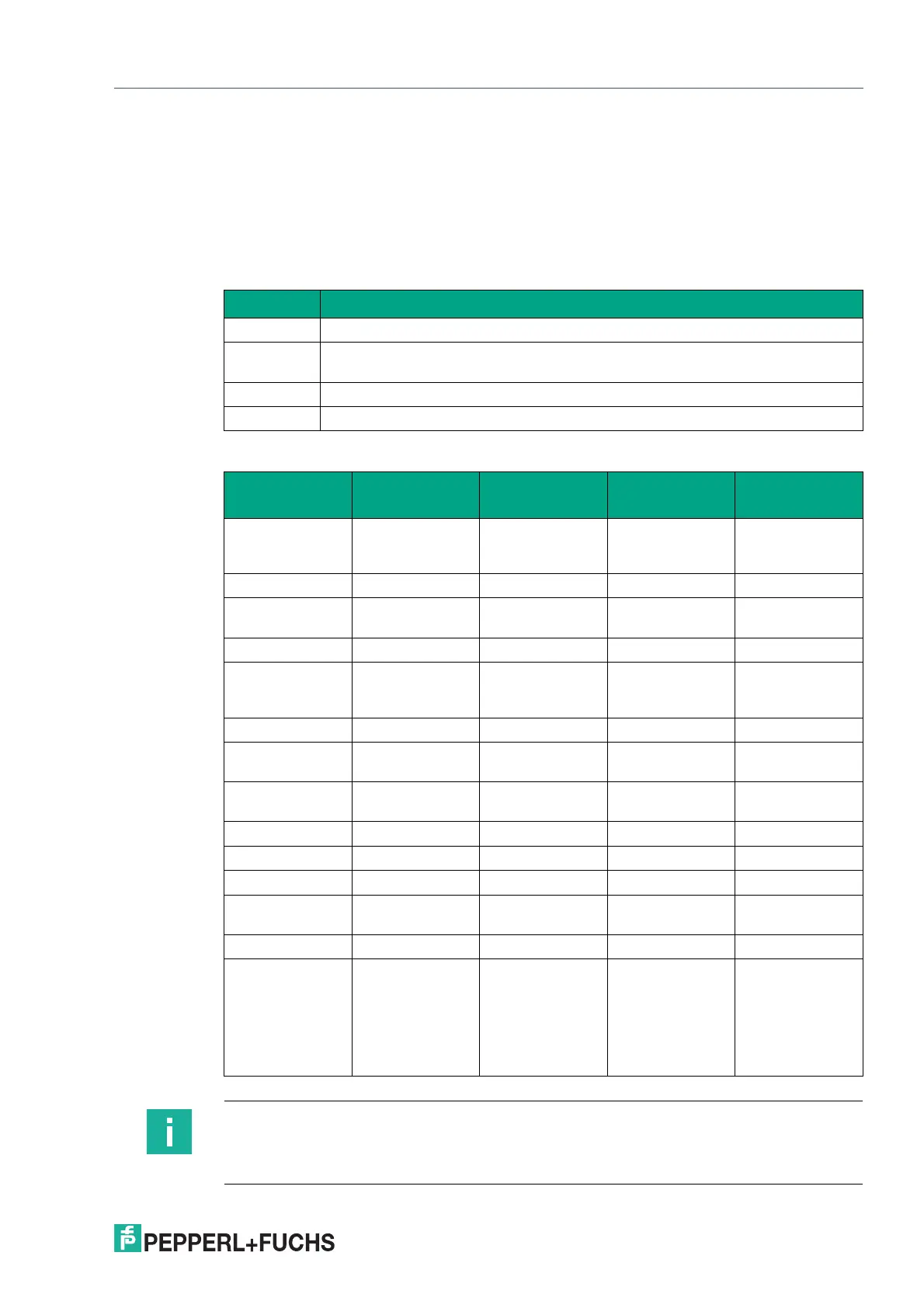
Symbol Meaning
++ very good resistance (no alterations) under given test requirements
+ good resistance (small and/or temporary alterations, without impact on
mechanical properties) under given test requirements
NR Strong, permanent alternations under given test requirements
NT Material not tested / resistance not defined
Panel Gasket Glass Sealing Radio Dome
Screw covers /
Blind Plugs
Acetic acid
(concentrated
50%)
++ ++ ++ +
Acetone ++ + ++ NT
Ammonia (con-
centrated)
+ ++ ++ NT
Ethanol ++ ++ ++ NT
Formic acid
(concentrated
50%)
+ ++ NR +
Glycol ++ + ++ NT
Hydrofluoric
acid, 5%
NR NT NT NT
Hydrogen per-
oxide (30%)
++ ++ ++ ++
Isopentanol NR NT NT NT
Isopropanol ++ ++ + NT
Methanol ++ NT ++ NT
Nitric acid (con-
centrated)
NR NR NT NT
n-Hexane NR NR NR NT
Concentrated
mineral
Acids, Concen-
trated alkaline
Solutions, High-
pressure steam
above 100°C
NR NR NR NT
Note
This list is not exhaustive! Other substances or parameters (e.g. exposure time, temperature,
humidity etc.) can have a negative impact on the resistance of the materials. Other chemicals
or parameters must be assessed individually and case by case.


 To Next Page