8382
6.5 | Flame Detection Troubleshooting Guide
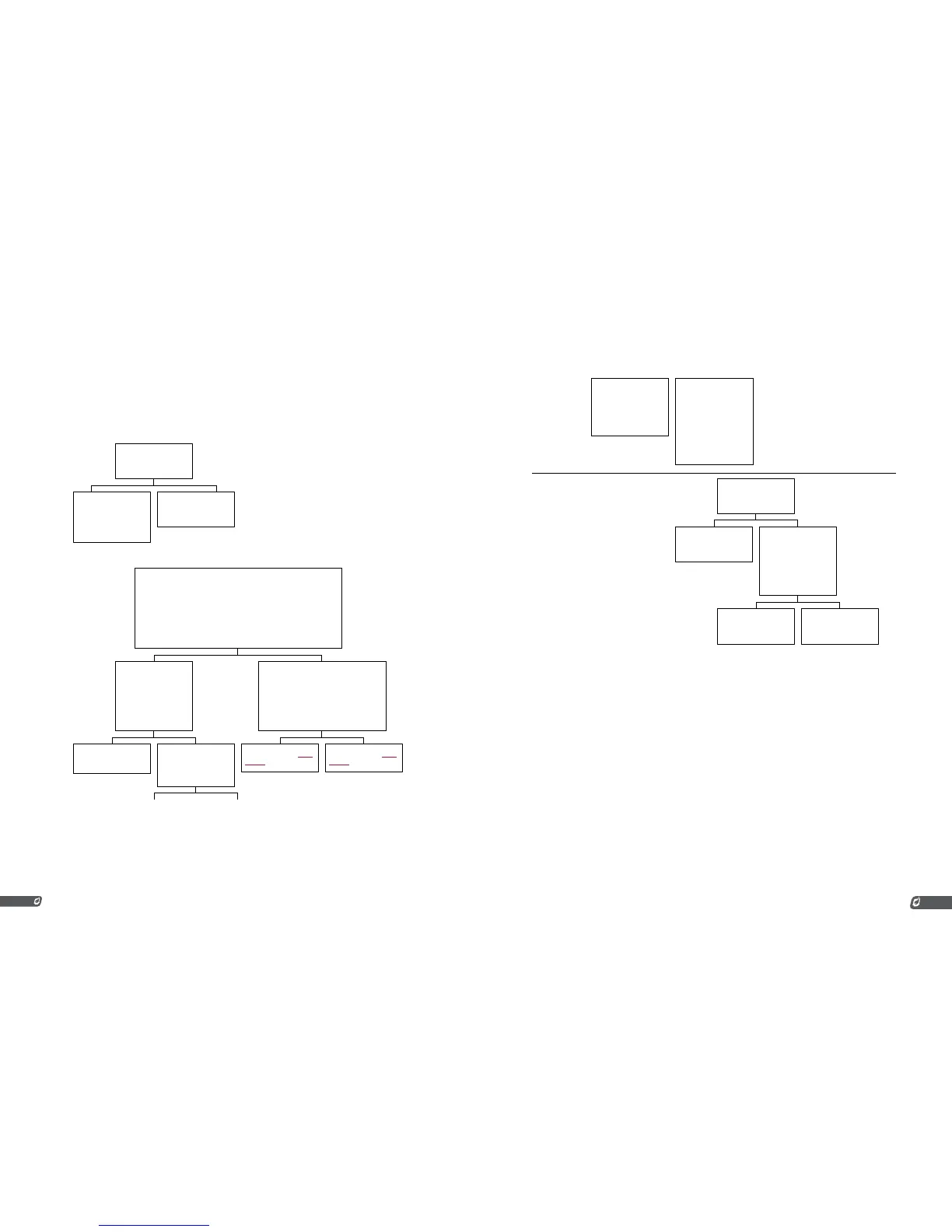
SYSTEM IS NOT DETECTING FLAME.
The flame quality drops from 100% (pilot) when the main comes on.
Does the system stay
running with the flame
arrestor open?
The draft from the main
could be pulling the pilot
flame away from the
flame rod. Reposition the
flame rod.
Clean the arrestor and
look for other air restric-
tions.
Flame quality remains 100% (pilot) when the main comes on.
Make sure that the pilot orifice is correct for
the gas used. (#54 for natural gas)
Make sure that there is a metal-on-metal connection from the pilot noz-
zle to the housing and a ground wire from the housing to the PF2100.
Make sure that the ignition rod is fully immersed in the flame.
Take note of the maximum voltage.
Is the voltage greater than 25VAC?
Remove the wire from
ION+ and measure the
AC voltage between
the ION + and ION
- terminals again.
Is the voltage above
35VAC?
Measure the AC voltage from the flame
rod to ground if the rod is accessible. If it is
not accessible, remove the wire from the
flame rod and measure on the connector.
Is the voltage measure at the rod close to
the voltage measure across the ION + and
ION - terminals?
It is possible that the
terminal card is faulty.
Is the wire run length
from the burner to the
PF2100 longer than 25
ft?
Please continue to Flow
Chart 1 below.
Please continue to Flow
Chart 2 below.
Something is loading
the signal. Make sure
that the wire type is not
shielded. Look for partial
ground shorts or nicked
wires.
The length loading on the
wire is too high. Using
ignition wire for ION +
will allow the signal to
be run up to 50 ft. Using
separate rods for flame
detection and ignition
can also reduce the ION
+ load by bypassing the
coil.
Flow Chart 1
Is the same rod being
used for both flame
detection and ignition?
Check the ION + wire
for shorts to ground or
nicks.
Measure the AC voltage
on the ION + wire where
it connects to the coil.
Is it close to the same
voltage that was mea-
sure across the ION +
and ION - terminals?
Replace the coil.
Check the ION + wire
for shorts to ground or
nicks.


 To Next Page