36
OPERATION
By using a brake lever or reverse pedaling a
fixed pad is pressed onto a rotating brak
-
ing surface and causes friction. This friction
causes the rotating wheel to slow. In addi
-
tion to the force with which the pad presses
against the surface, the so called friction
coecient between the fixed pad and the
braking surface is crucial. If water, dirt or oil
gets onto the braking surface, the friction
coecient is worsened. This is the reason
why a rim or disc brake does not respond as
well in the rain.
WEAR AND TEAR AT VBRAKES
The friction between the brake pads and the
rim leads to the wearing of both the pad and
the rim! Riding often in the rain increases the
wear. If the rim sidewall is abraded to a criti
-
cal level, the tire pressure will cause the rim
to burst. The wheel can jam or the tube may
burst, both of which can lead to an accident.
By the time you have worn through your
second set of brake pads, it is time to have
your dealer check the thickness of your rims’
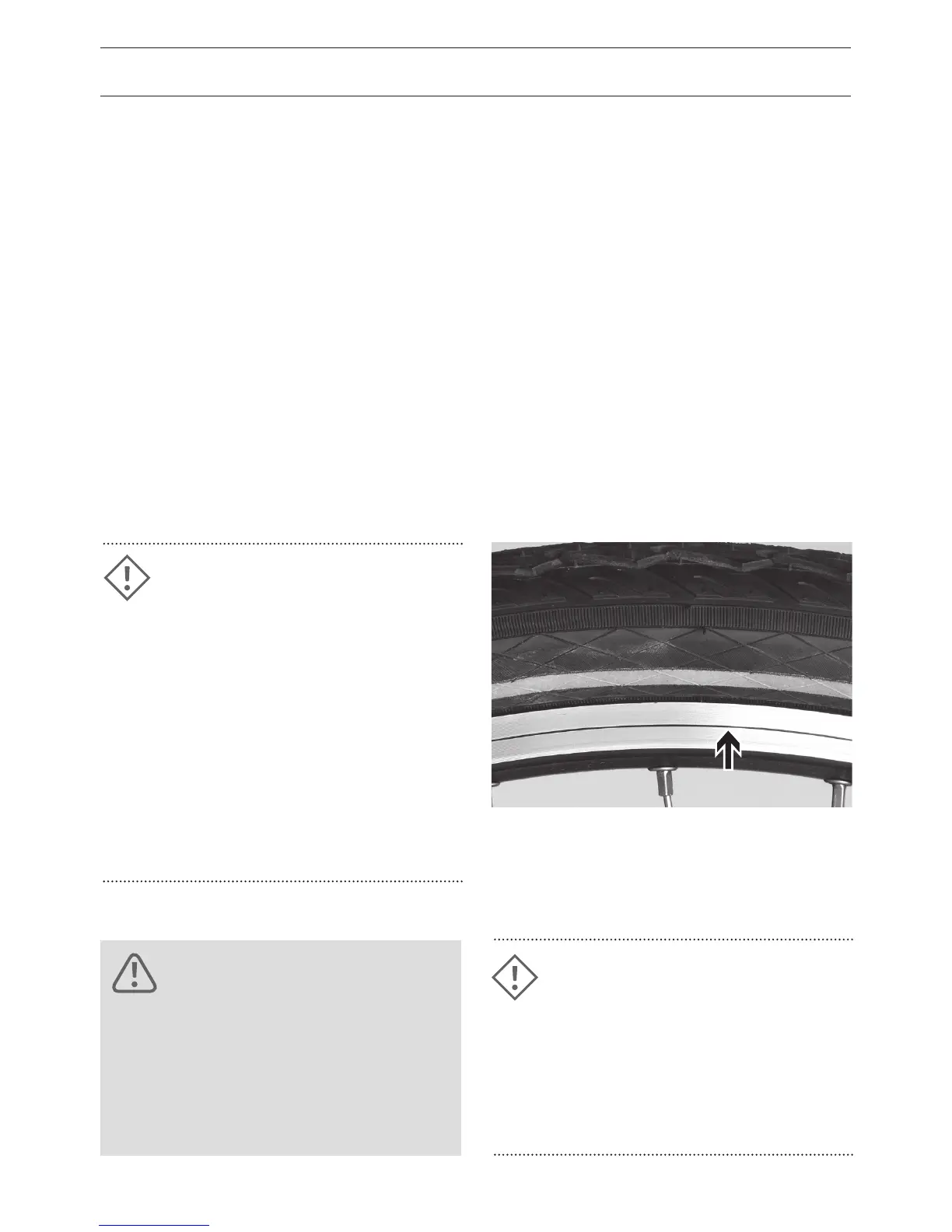
sidewalls. For rims with a wear indicator A,
the rim must be replaced when the indicator
is no longer visible.
Moisture decreases the braking
effectiveness. When riding in rainy
conditions expect longer braking
distances! When replacing brake
pads, you should only use pads that
have been specied for your system.
Your dealer can advise you in the
matter. The braking surface of rims
should be absolutely wax, grease
and oil free.
ATTENTION!
ATTENTION!
Have the rims checked at the latest
after the second set of brake pads.
Worn wheels can lead to material
failures and accidents.
DANGER!
Damaged brake cables in which
individual wires protrude must
be replaced immediately. Brake
failure and an accident can re-
sult. Ask your dealer for advice.
A
BRAKING SYSTEM


 To Next Page