- 26 -
Tiller CS
10. ROUTINE MAINTENANCE
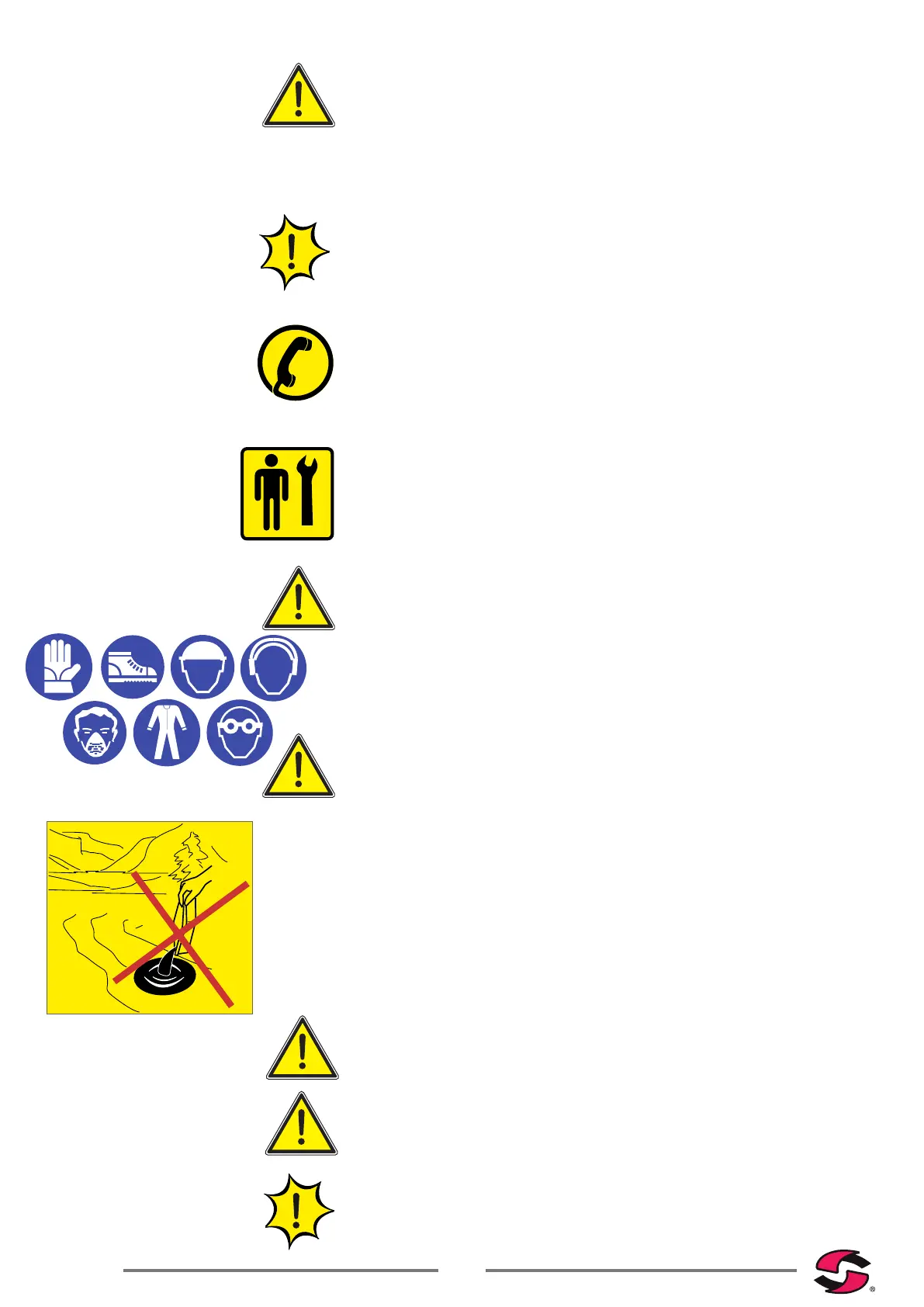
INJURY HAZARD TO OPERATORS AND DAMAGE TO THE STRUCTURE!
Only qualied operators that have read and fully understood the safety
prescriptions (chap. 2) can perform the operations described below.
Moreover, they must check that there are no exposed persons, animals or objects
in the hazardous area.
The operator must be familiar with and strictly observe the instructions described
and must have placed the Tiller into a “Zero Energy State”.
WARNING!
The periodic checks and the maintenance described in this chapter should
be performed at the intervals and using the methods established and are the
operator's responsibility.
Failure to comply with maintenance standards and schedule compromises the
proper operation of the machine and its service life, and voids the warranty.
For all other maintenance, see sec. 14.2 (“Troubleshooting”) or contact the
Manufacturer or its After-sales centres.
Given the complexity of the equipment, repairs, modications, non-routine
maintenance other than those listed below must NOT take place without consulting
the Manufacturer or their support centre. Depending on the circumstances, these
will provide authorisation and all necessary instructions, or alternatively they will
recommend an intervention by one of their own technicians.
Compliance with these precautions protects the operators and keeps the
equipment intact.
OVERTURNING HAZARD!
Ensure the stability of the equipment before attempting any maintenance.
The maintenance technician and any aids must have PPE available and wear
them as required.
Do not perform repairs whose outcome may be doubtful. Always follow the
instructions and, if they are lacking, contact the supplier or expert personnel.
POISONING HAZARD!
Do not leave the tractor engine on inside closed spaces not equipped with
ventilation system.
• Avoid prolonged and repeated skin contact with lubricants as they could
cause skin disorders or other types of syndromes.
• Do not swallow fuel/lubricants/uids. In case of accidental contact with eyes
rinse thoroughly with tap water.
• Do not weld in closed places or rooms that are not appropriately ventilated.
• Do not weld painted surfaces: rst remove the paint layer with suitable
products, then wash and allow to dry.
10.1 CHECK AND REPLACEMENT OF OIL IN THE
TRANSMISSION ASSEMBLY
BURN HAZARD!
Before touching the upper transmission unit, wait until it has cooled down
suciently.
CONTAMINATION HAZARD!
Check that there are no oil leaks and, if necessary, x them immediately. Do not
spill oil onto the ground during top-up or replacement.
WARNING!
Correctly recover the used oils and dispose of them at the appropriate collection
centres, as, according to current regulations, it must not be released to the
environment because it is classied as hazardous waste. It is therefore necessary



 To Next Page