EasyManua.ls Logo

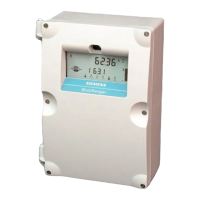
Siemens multiranger 100 - User Manual

Siemens multiranger 100
117 pages
Print Icon
To Next Page IconTo Next Page
Loading...
Quick Start Manual October 2003
multiranger
100 / 200

Questions and Answers

  • B
    barbara75Aug 16, 2025
    Why is my Siemens Measuring Instruments reading erratic?
    • A
      Andrew PadillaAug 16, 2025
      If your Siemens Measuring Instruments reading is erratic, with little or no relation to the material level, it could be that the true echo is too weak or the wrong echo is being processed. To resolve this, relocate and/or re-aim the transducer.
  • B
    brownmichelleAug 19, 2025
    What to do if Siemens Measuring Instruments displays EEEE?
    • J
      jeremy14Aug 19, 2025
      If your Siemens Measuring Instruments displays 'EEEE', it means the value is too large to display in 4 or 5 characters. To fix this, select larger Units (P005), or lower Convert Reading (P061).
  • C
    Clifford AlvaradoAug 22, 2025
    What to do if Siemens Measuring Instruments displays LOE?
    • F
      Frances SolomonAug 22, 2025
      If your Siemens Measuring Instruments displays 'LOE', it indicates a weak or non-existent echo. To resolve this, relocate and/or re-aim the transducer.
  • V
    vroseAug 25, 2025
    Why does Siemens Measuring Instruments reading fluctuate?
    • R
      russellhaynesAug 25, 2025
      If the reading on your Siemens Measuring Instruments fluctuates while the material level is still (or vice versa), it is likely due to incorrect measurement stabilization. You can adjust the Maximum Process Speed (P003) or damping (P704) to correct this.
  • S
    Steve BerryAug 28, 2025
    What does Error and tb:(#) mean on Siemens Measuring Instruments?
    • L
      lisa03Aug 28, 2025
      If your Siemens Measuring Instruments displays 'Error and tb:(#)', it could be due to several reasons: 1. The wrong transducer is selected (P004). Re-enter the correct transducer type. 2. The transducer is connected in a “two wire” method. Do not tie white and shield together; use all three terminal blocks. 3. The transducer is connected backwards. Reverse the black and white wires on the terminal block.
  • C
    Christopher JacksonAug 31, 2025
    What to do if Siemens Measuring Instruments reading is fixed?
    • I
      Isaiah LeeAug 31, 2025
      If the reading on your Siemens Measuring Instruments is fixed regardless of the actual material level, the transducer acoustic beam might be obstructed, the standpipe too narrow, or the transducer ringing (reads over 100%). Try relocating and/or re-aiming the transducer at the material level or object.
  • A
    austin78Sep 3, 2025
    What to do if Siemens Measuring Instruments displays Open and tb:(#)?
    • M
      Mark SnowSep 3, 2025
      If your Siemens Measuring Instruments displays 'Open and tb:(#)', it indicates that the transducer is either not connected, the connection is reversed, there is an open circuited transducer cable, or a defective transducer at the indicated terminal block number. Check the connection to the displayed terminal blocks and repair or replace components as necessary.
  • J
    joshuapetersonSep 5, 2025
    What to do if Siemens Measuring Instruments displays Short and tb:(#)?
    • C
      Christopher RoachSep 5, 2025
      If your Siemens Measuring Instruments displays 'Short and tb:(#)', it means there is a short-circuited transducer cable, or a defective transducer at the indicated terminal block number. Repair or replace as necessary.
  • S
    Sarah PatelSep 8, 2025
    Why is my Siemens Measuring Instruments display blank?
    • C
      Casey SimsSep 9, 2025
      If the display of your Siemens Measuring Instruments is blank and the transducer is not pulsing, the cause is likely no power. Check the power supply, wiring, or power fuse.
  • A
    Aimee MurphySep 12, 2025
    Why isn't Siemens Measuring Instruments responding to programmer?
    • S
      Sabrina GarrettSep 12, 2025
      If your Siemens Measuring Instruments is not responding to the programmer, it could be due to an obstructed infrared interface or a defective programmer. Check programmer usage: ensure it is 15 cm (6”) from the faceplate, pointed at the upper target.

Summary

Safety Guidelines

General Safety Precautions

Emphasizes the importance of following safety notices for personal and equipment protection.

Specifications

Power

Details AC and DC power requirements, including voltage, frequency, and fuse ratings.

Installation Conditions

Specifies environmental and site requirements for installation, including altitude and temperature.

Outputs and Inputs

Outlines available outputs (mA, relays) and inputs (mA, discrete) for the device.

Transducers and Cables

Lists compatible transducer series and specifications for transducer cables.

Installation

General Installation Notes

Provides critical notes for installation, including safety, grounding, and personnel qualifications.

Wall Mount Installation

Describes the steps for mounting the MultiRanger unit onto a wall surface.

Cable Entry Methods

Details procedures for conduit and exposed cable entry into the enclosure.

Panel Mount Installation

Panel Mount Dimensions

Provides dimensional drawings and specifications for panel mounting the unit.

Mounting the Enclosure

Outlines the step-by-step process for mounting the unit into a panel.

Wiring

General Wiring Notes

Offers important guidelines for wiring, including shield connections and noise reduction.

Terminal Board

Illustrates the terminal board connections for inputs, outputs, and DC power.

Transducer Wiring

Provides specific wiring instructions and warnings for transducer connections.

Relays and Output Configuration

Relay Configuration and Ratings

Explains relay models, ratings, control/alarm functions, and behavior during power failure.

mA Output Information

Directs users to the Instruction Manual for detailed mA output parameter configuration.

Power Connection Guidelines

Provides important safety and connection notes for AC power, including fusing and disconnects.

Operation and Programming

Display and Indicator Functions

Details the functions of the display and indicators in RUN and PROGRAM modes.

Programming the MultiRanger

Explains how to program the unit using its parameters and a hand programmer.

Activating and Changing Parameters

Guides on activating the unit and the step-by-step process for changing parameters.

Quick Start Parameters

P001 Operation

Configures the type of measurement required for the specific application.

P002 Material Type

Specifies the material type being measured, such as liquid or solid.

P003 Process Speed

Determines the device's reaction speed to level changes.

P004 Transducer

Specifies the type of transducer connected to the MultiRanger unit.

P005 Units

Defines the units used for dimensional values and readings.

P006 Empty

Sets the distance from the transducer face to the process empty point.

P007 Span

Configures the range levels to be measured by the device.

Troubleshooting

Display and Programmer Issues

Addresses problems like a blank display, no programmer response, or error messages.

Transducer and Reading Errors

Covers issues such as short/open circuits, weak echoes, or incorrect readings.

Accuracy and Stability Problems

Details solutions for fluctuating readings, fixed readings, and accuracy improvements.

Appendix A: Conduit Entry for Class 1, Div 2 Applications

Conduit Entry Information

Provides notes, warnings, and dimensional details for conduit entry in Class 1, Div 2 applications.

Siemens multiranger 100 Specifications

General IconGeneral
BrandSiemens
Modelmultiranger 100
CategoryMeasuring Instruments
LanguageEnglish

Related product manuals