Electrical connection
6.7 Connecting converters
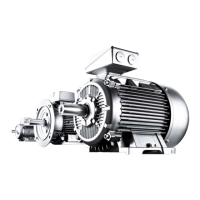
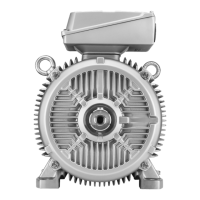
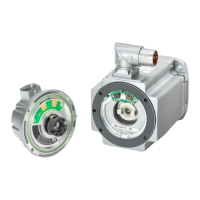
Standard motors SH 63 ... 355
72 Operating Instructions, 12/2018, A5E38483075A
6.6.2 Connecting aluminum conductors
If you are using aluminum conductors, then comply with the following:
● Use only cable lugs that are suitable for connecting aluminum conductors.
● Immediately before inserting the aluminum conductor, remove the oxide layer from the
contact areas on the conductor and/or the mating piece. Do this using a brush or file.
● Then grease the contact areas immediately using neutral Vaseline. This prevents a new
oxide layer from forming.
Aluminum flow due to contact pressure
Aluminum flows following installation due to the contact pressure. The connection using
clamping nuts can loosen as a result. The contact resistance increases, obstructing the
current from being conducted. This can result in fire and material damage to the
machine – or even in total failure, as well as material damage to the plant or system due
to machine failure.
• Retighten the clamping nuts after approximately 24 hours and then again after
approximately four weeks. Make sure that the terminals are de-energized before you
tighten the nuts.
6.7 Connecting converters
Excessively high supply voltage
Material damage can occur if the supply voltage is too high for the insulation system.
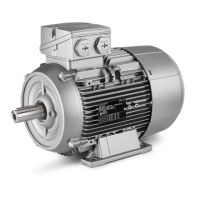
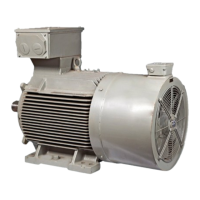
SIMOTICS machines can be operated with SINAMICS G converters and SINAMICS S
converters (uncontrolled and controlled infeed) when maintaining the permissible peak
voltages.
Carefully observe the values in the following tables.
Rise times t
r
> 0.1 µs.
The insulation system of SIMOTICS machines corresponds to the specifications laid down
in IEC 60034-18-41 according to voltage stress category C (IVIC C = high stress).



 To Next Page