22
EN 5675-L
10�3 Operation with frequency inverters
The stator design and the insulation grade of the motors from Sulzer means that they are suitable for usage
with frequency inverters. It is however essential that the following conditions are met:
• The guidelines for EMC (electromagnetic compatibility) are complied with.
• Speed/torque curves for motors driven by frequency inverters can be found in our product selection range.
• Explosion-proof motors must be equipped with thermistors (PTC temperature sensors) if operated in
hazardous areas (ATEX Zone 1 and 2).
• Machines designated as Ex machines may never, without exception, be operated using a mains frequency
that is greater than the maximum of 50 Hz or 60 Hz as indicated on the nameplate. Make sure that the rated
according to the motor datasheet may not be exceeded.
• Machines that are not designated as Ex machines may only be operated using the mains frequency indicated
on the nameplate. Greater frequencies can be used but only after consulting with and receiving permission
from the Sulzer manufacturing plant.
• For operation of Ex-motors on frequency inverters, special requirements in relation to the tripping times of the
thermo control elements must be observed.
•
• The maximum frequency must be set so that the rated power of the motor is not exceeded.
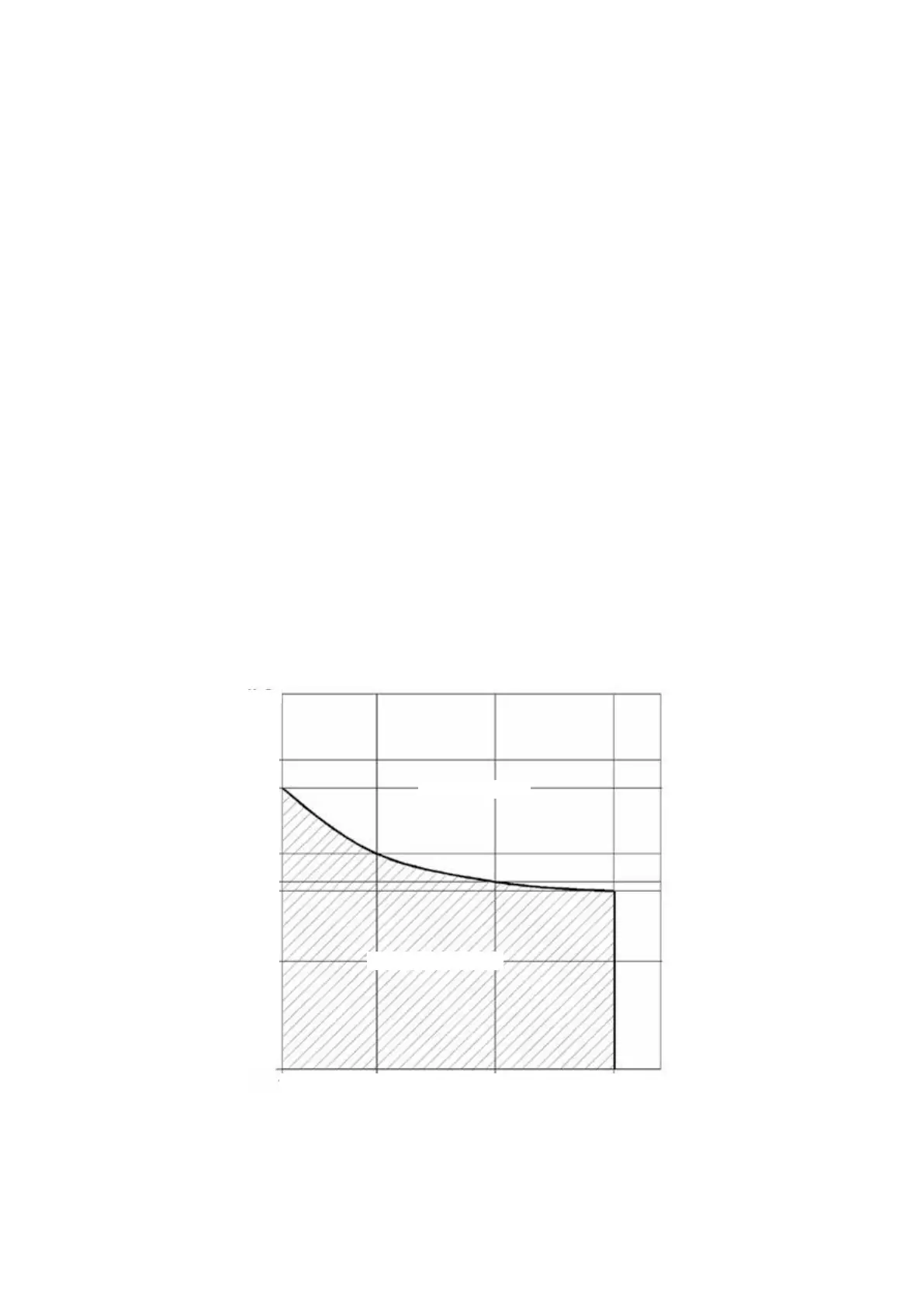
Modern frequency inverters use higher wave frequencies and a steeper rise on the edge of the voltage wave.
This means that motor losses and motor noise is reduced. Unfortunately these inverter output signals cause
higher voltage spikes in the stator. Experience has shown that, depending on rated voltage and the length of
current of the inverter, and maximum inverter output frequency. Make sure that the rated voltage is supplied to
the terminal board of the motor.
critical area
non critical area
L = total length (from frequency inverter to motor)
10 50 100 150 L[m]
U
N
[V]
660
600
460
400
380
230
Critical/noncriticalarea



 To Next Page