24
EN 5675-L
11 Commissioning
Before commissioning, the pump should be checked and a functional test carried out. Particular attention should be
paid to the following:
- Have the electrical connections been carried out in accordance with regulations?
- Have the thermal sensors been connected?
- Is the seal monitoring device correctly installed?
- Is the motor overload switch correctly set?
- Does the pump sit correctly on the pedestal?
- Is the direction of rotation of the pump correct - even if run via an emergency
generator?
- Are the switching ON and switching OFF levels set correctly?
- Are the level control switches functioning correctly?
-
-
- Has the volute been vented (see Sec. 10.11)?
11�1 Types of operation and frequency of starting
All pumps of the XFP series have been designed for continuous operation S1 when either submerged or
dry-installed.
The maximum allowable starts per hour is 15, at intervals of 4 minutes.
11�2 Checking direction of rotation
When checking the direction of rotation, the pump should be secured in such a manner that no danger
the hydraulic system!
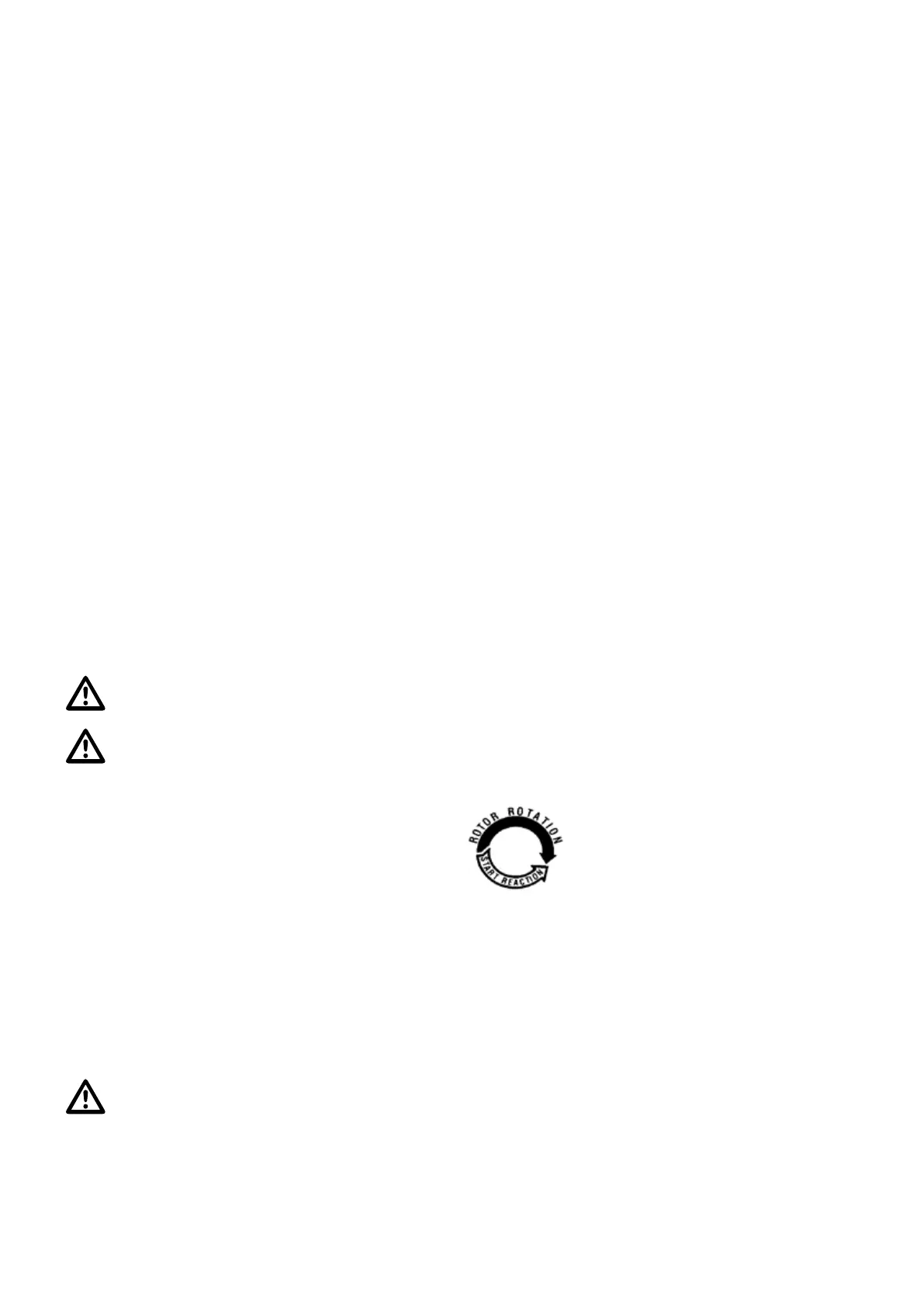
When checking the direction of rotation, or when starting the unit, pay attention to the START
REACTION. This can be very powerful and cause the pump to jerk in the opposite direction to the
direction of rotation.
ATTENTION:
When viewed from above, the
direction of rotation is correct
if the impeller rotates in a
clockwise manner.
NOTE:
The start reaction is
anti-clockwise.
ATTENTION! If a number of pumps are connected to a single control panel then each unit must be
individually checked.
ATTENTION! The mains supply to the control panel should have a clockwise rotation. If the leads
are connected in accordance with the circuit diagram and lead designations, the
direction of rotation will be correct.
11�3 Changing direction of rotation
If the direction of rotation is incorrect then this is altered by changing over two phases of the power
supply cable in the control panel. The direction of rotation should then be rechecked.



 To Next Page