Error messages/Troubleshooting
35
Low water level
The LED above key 4 (horn) illuminates if the water level is low. The
low water level is also registered via relay K3. Contacts M and Ö are
connected for this purpose.
Press key 4 (horn) or close the contacts of the “Delete externally”
input to confirm the alarm.
After confirmation, the LED extinguishes via key 4 and relay K3 is
reactivated (contacts M and S are connected).
The alarm is also deleted without it being acknowledged once the low
water level has been eliminated after the following analysis.
Measuring fault analysis
The red alarm LED above key 4 (horn) illuminates if the calculated
indicator quantity is between >0 and 10%. This message is only
output once and can be acknowledged by short pressing key 4
(horn) at the instrument or a contact via “Delete externally”.
Both the red alarm LED and the standby LED (via key 3) flash
when the calculated indicator quantity is zero. The external inputs
“Stop” and “Delete externally” are ignored. You now have to re-
place the indicator bottle (see the section entitled “Replacing the
indicator bottle” on page 37).
The LED above key 4 (horn) flashes and the instrument goes into
standby mode if the measuring fault is due to lack of indicator.
Damaged or bent lines can cause this error. The indicator bottle
may also be empty if the indicator level has been set incorrectly.
Further possible instrument errors
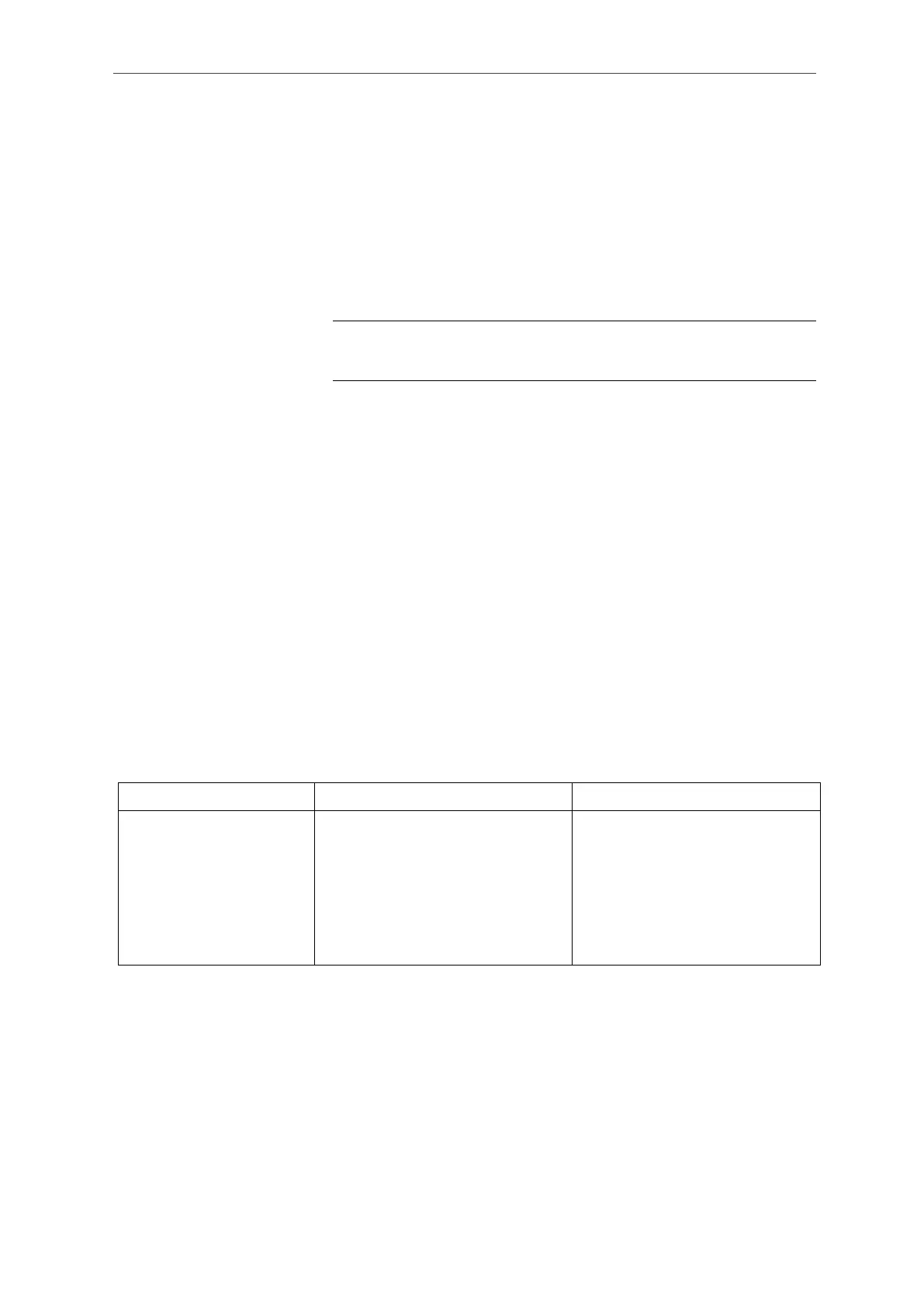
Instrument not functioning,
even though it is switched
on
Fuses F1, F2 or F3 defective
Power switch defective
Ribbon cable to controller board
or
base circuit board is loose
Error at controller board or base
circuit board
Replace fuses
Replace power switch
Reconnect ribbon cable
Replace controller or base cir-
cuit board
Response of a protective circuit
After a protective circuit (fuse) has been tripped, attempt to eliminate
the cause of malfunctioning (e.g. replace a defective valve) before
reactivating the protective circuit. Frequent tripping is always due to
an error which, in certain circumstances, may also cause damage to
the instrument.


 To Next Page