en-46
6 OPERATION
6.13 MOWING ON SLOPES __________________________________________________
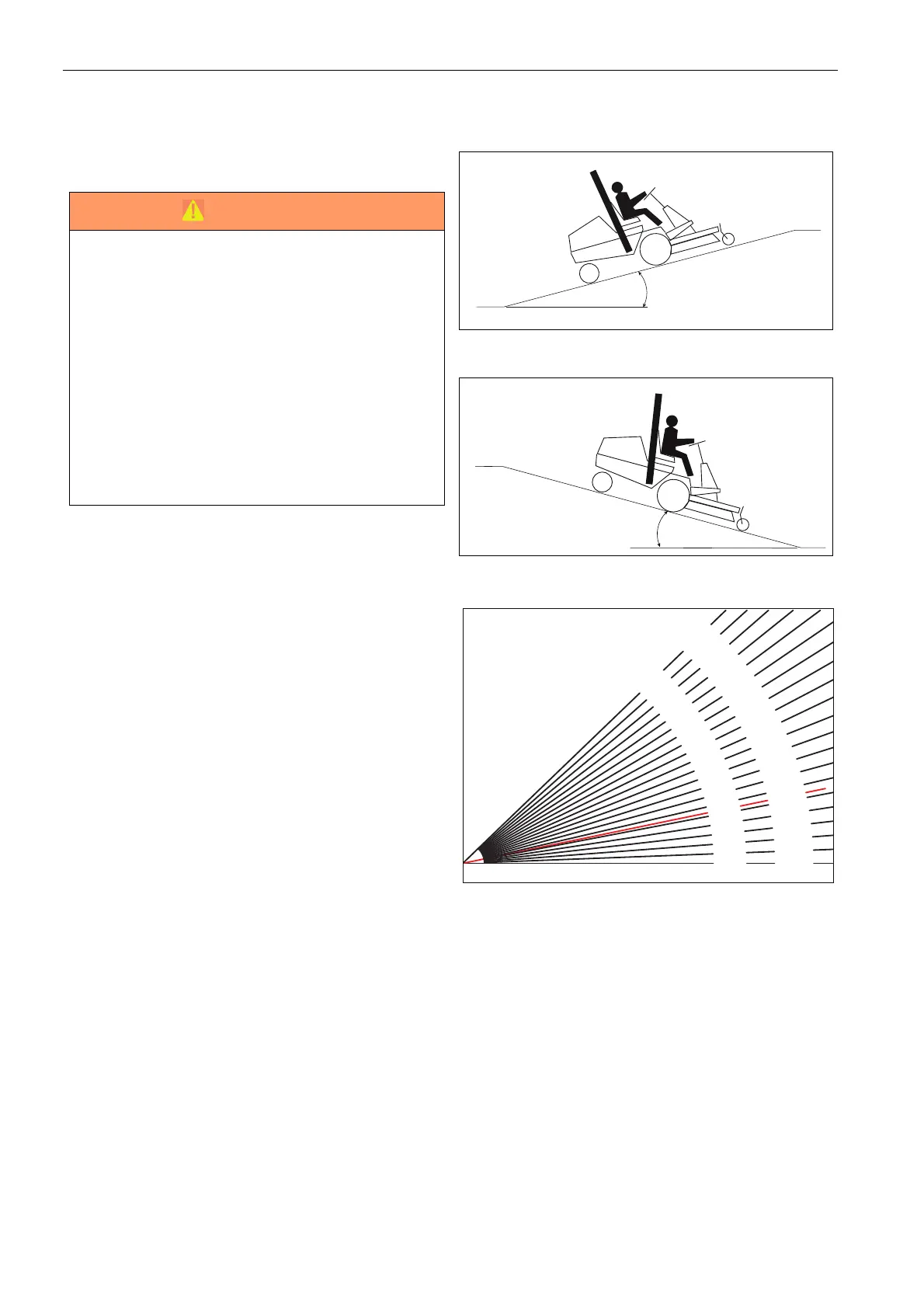
When you operate on wet grass, slopes or conditions
of decreased traction be careful.
.
1. Always mow with the engine at full throttle, control
forward speed with the traction pedal to keep the
correct-cutting speed.
2. Transfer the machine weight, use the weight
transfer control to improve the weight distribution
between cutter decks and mower.
3. If the machine traction decreases or the tyres
begin to mark the turf. Turn the mower to decrease
the angle on the slope, until traction is increased.
4. If, the machine traction does not improve, then the
angle or the conditions on the slope are not safe.
Do not operate the machine on this slope, slowly
reverse from this area to safety.
5. When you move down a slope, the angle of which
is near to the maximum permitted: Lower all
equipment to the ground to decrease the risk of a
machine turn over.
Correct tyre pressure is necessary for maximum
traction.
See Chapter 12 Specification
WARNING
To decrease the risk of over turning. The method
for safe use on any area with decreased traction
is.
1. To travel up and down the face of the slope
(vertically) but not across the face
(horizontally).
2. Operate the controls carefully, do not turn
suddenly, prevent large throttle input.
3.Travel at decreased speeds and look for
hazards.
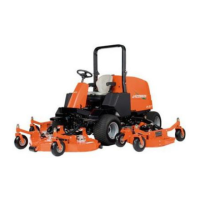
For maximum stability, always cut with all three
units.
0°
0%
2-3/4°
5%
5-3/4°
10%
8
-1/2°
15%
11-1/4°
20%
14°
25
%
16-3/4°
3
0
%
19-1/4°
3
5%
21-3/4°
40%
24-1/4°
45
%
26-1/2°
50%
28-3
/4°
55
%
31°
60
%
33°
65
%
35°
70%
36-3/4°
75%
38-3/4°
80%
40-1/4°
8
5%
42°
90%
43-1/2°
95%
45°
100%
Degrees
Grade
Degrees are shown to +/- 1/4 inch.
General slope of roadway embankment - 45°
Maximum angle for grass area - 31°
Slope of average roof - 19-1/4°
2nd class highway maximum grade 4-1/2°
Toll road or freeway - 1-3/4°
A = Maximum Slope
A = Maximum Slope
15° Maximum
15° Maximum



 To Next Page