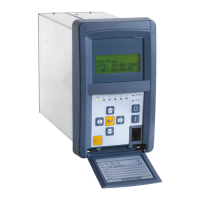
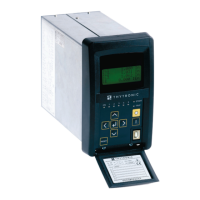
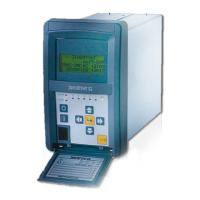
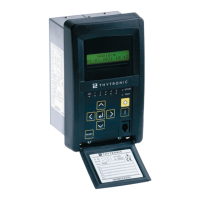
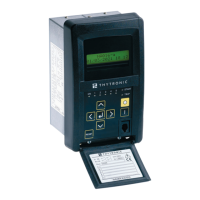
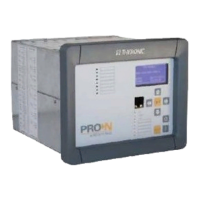
The Thytronic NC020 is a Filter & Capacitor Bank Protection Relay designed to provide reliable and cost-effective protection for capacitor banks, particularly in systems with significant harmonic content. It addresses the increasing presence of power electronics in modern electrical grids, which generate harmonics that can affect the safe operation of capacitor banks.
Function Description:
The NC020's primary function is to protect filter and capacitor banks from various electrical anomalies. It achieves this by continuously monitoring three-phase currents and one neutral current, measuring both RMS and fundamental components, including harmonics up to the 23rd order. A key feature is the calculation of peak capacitor voltages for each phase by integrating measured line currents, eliminating the need for direct voltage transformer (VT) measurements.
The device offers several protective elements:
- Undercurrent (37): Detects when phase currents drop below a set threshold, which can indicate a problem with the capacitor bank or its connection. It includes a fixed operation threshold and an adjustable one, both with definite time characteristics. The first threshold is linked to the Timer Discharge (TD) function.
- Neutral Unbalance Overcurrent (46N): Monitors the neutral unbalance current, which is crucial for detecting internal faults within the capacitor bank. It features one alarm and two operation thresholds, independently adjustable with definite time delays. The relay can compensate for inherent unbalance in un-faulted three-phase capacitor banks.
- Phase Overcurrent (50/51 RMS & Fundamental): Provides protection against excessive phase currents, based on both RMS values (including harmonics up to the 23rd order) and fundamental frequency components. These elements offer adjustable operation thresholds with definite or inverse time characteristics (IEC and ANSI/IEEE standard curves, as well as a specific CAPACITOR curve). A reset time delay can be set to reduce clearing time for intermittent faults.
- Residual Overcurrent (50N/51N): Detects overcurrents in the residual path, calculated from the vectorial sum of the three-phase currents. It includes two independently adjustable operation thresholds with definite time delays and a configurable reset time.
- Peak Overvoltage (59H): Protects the capacitor bank against peak overvoltage, which can lead to dielectric breakdown. The capacitor voltages are calculated from the three-phase line currents (fundamental frequency and harmonics up to the 23rd order) without requiring direct VT measurements. Three independently adjustable operation thresholds with definite time characteristics are available.
- Breaker Failure (BF): Initiates a back-up trip command to adjacent circuit breakers if the main circuit breaker fails to open after a trip command from an internal protective function. This function is enabled by associating it with the trip outputs of other protective elements.
- Discharge Timer (TD): When enabled, this timer starts upon detection of an undercurrent condition. It inhibits the reconnection of a charged capacitor bank to a live network, limiting inrush current and ensuring safe operation.
The NC020 also includes control and monitoring functions such as:
- Circuit Breaker Supervision: Monitors the circuit breaker's position (open/closed/fault) using auxiliary contacts, enabling safe issue of open/close commands and detecting incongruities in real-time.
- Oscillography (DFR - Digital Fault Recorder): Records fault events in COMTRADE format, capturing sampled measures (16 samples per cycle) in a circular memory buffer. It allows user-programmable pre-trigger time, selection of analog and digital channels, and various trigger setups (general start/trip, manual, output relay, binary input, or specific protection element start/trip).
- Measures: Provides real-time display of various electrical quantities, including RMS values of fundamental and total phase currents, neutral current, residual current, compensated neutral current, displacement angles, capacitor peak voltages, and the discharge timer status.
- Counters: Tracks the number of starts and trips for each protective element, with individual counters that can be cleared by the user.
- Fault Recording (SFR - Sequential Fault Recorder): Stores information for up to twenty fault events in a circular FIFO buffer, including fault counter, cause, date, time, and various current and voltage measurements.
- Event Recording (SER - Sequential Event Recorder): Records up to fifty events in a circular FIFO buffer, including power up/down, element start/trip, and binary input switch operations.
- Self-test: Continuously monitors the main hardware and software functions, classifying anomalies into minor, major, or fatal, and indicating them via LEDs and messages.
Important Technical Specifications:
- Mechanical Data:
- Mounting: Flush, Rack
- Dimensions: 177 x 107 x 105 mm (H x W x D)
- Mass: 1.2 kg
- Degrees of Protection: IP52 (front), IP20 (terminals)
- Insulation:
- High Voltage Test (50 Hz 60 s): 2 kV (auxiliary power, input, output circuits), 1 kV (output contacts), 500 V (communication interfaces)
- Impulse Voltage Withstand Test (1.2/50 µs): 5 kV (auxiliary power, input, output circuits), 2.5 kV (output contacts)
- Insulation Resistance: >100 MΩ
- EMC Tests for Interference Immunity: Complies with EN 50263, EN 61000-6-2, EN 60255-26, ENEL REMC 02/01 standards for various tests including damped oscillatory waves, electrostatic discharge, fast transient burst, high energy pulse, power frequency immunity, and radiated radio-frequency fields.
- Voltage Dip and Interruption: Complies with EN 61000-4-29, IEC 60255-22-11 for voltage dips, short interruptions, and variations on DC input power port.
- Emission: Complies with EN 60255-25, EN 61000-6-4, EN 55011 CISPR 11 for electromagnetic emission tests.
- Climatic Tests:
- Operating Temperature: -25°C to +70°C
- Storage Temperature: -40°C to +85°C
- Permissible Relative Humidity: 10-95%
- Atmospheric Pressure: 70-110 kPa
- Auxiliary Power Supply (Uaux):
- Nominal Voltage: 24-230 Vac/dc
- Operative Range: 19-265 Vac/19-300 Vdc
- Frequency: 45-66 Hz (for AC supply)
- Power Consumption: Max 4.5 W (24 Vdc) / 9 VA (230 Vac)
- Input Circuits:
- Phase Current (In): 1 A or 5 A selectable by DIP-switch
- Neutral Current (IEn): 1 A or 5 A selectable by DIP-switch
- Binary Inputs: 3 optocoupler inputs, 24-265 Vac/dc operative range, 18 V min activation voltage, 3 mA max consumption.
- Output Circuits:
- Trip Relays (K1, K2, K4): 4 changeover (SPDT) contacts, 8 A nominal current, 250 V~/400 V~ nominal/max switching voltage.
- Signalling Relay (K3): 1 changeover (SPDT) contact, 8 A nominal current, 250 V~/400 V~ nominal/max switching voltage.
- Minimum Pulse Width: 0.01-0.50 s (step 0.01 s)
- MMI: 16x2 LCD backlight module, 8 LEDs (ON/Fail, Start, Trip, Trip I>, Trip 46N/50N, Trip 59H, 52b CB position, TD state), 8 keys.
- Communication Interfaces:
- Local Port: RS232 (RJ10 connector), 19200 bps, None parity, ModBus®RTU protocol.
- Remote Port: RS485 (screw terminals), 1200-57600 bps, None parity, ModBus®RTU protocol.
Usage Features:
- User-Friendly Interface: Programming and parameter setting can be done via the front panel keys and alphanumeric display, with a guided selection procedure that eliminates the need for coding tables.
- ThyVisor Software: Remote setting, programming, and reading operations are possible using a Personal Computer with ThyVisor software via the RS232 front port or RS485 rear port. The ThyVisor software is a "browser" of data and implements an engine to rebuild menus and relationships from XML files.
- Flexible Output Relay Configuration: Each of the four output relays (K1-K4) can be independently programmed for operating mode (latched/no-latched) and logic (energized/de-energized), with an adjustable minimum pulse width.
- LED Indicators: Eight LEDs provide clear visual feedback on the device's operational status, including ON/Fail, Start, Trip, and specific protection element trip indications.
- Cold Load Pickup (CLP) Function: Allows blocking or changing protection thresholds for an adjustable time interval after circuit breaker closure, preventing nuisance tripping during cold load pickup.
- Compensation for Neutral Unbalance: Provides a suitable compensation method to account for inherent unbalance neutral current in un-faulted capacitor banks.
- Non-Volatile Memory: All preset values and event data are permanently stored in non-volatile memory, ensuring data retention even after power loss.
- Real-time Clock: Equipped with a real-time clock with super capacitor backup for accurate time stamping of events.
Maintenance Features:
- Self-Test Function: The device continuously performs self-tests, monitoring hardware and software functions, including reference voltage levels, output relay coil continuity, program flow, stack area occupancy, and data consistency in EEPROM. Anomalies are classified and indicated.
- Automatic Zeroing Function: Dynamically corrects measuring errors due to offset, heat-dependent drifts, and component aging.
- Watch-Dog Circuit: Ensures correct firmware operation in case of a fault.
- Data Restoration: In case of corrupted configuration data, factory default settings can be restored using "Set default PAR" (calibration data) and "Set default REE" (updated variables and communication parameters) commands.
- Remote Monitoring: All data available on the display can be checked and processed via the central control unit (if connected), enabling continuous monitoring and maintenance.
- Packaging and Storage: Devices should be stored in their original packaging within specified temperature and humidity limits to prevent condensation or frost. For long storage, it's recommended to power the device for several hours before commissioning to stabilize components.
- No Client Repair: Repair of faults by the client is not foreseen. In case of operational irregularities, the device must be sent to the factory for repair and checks.

 Need help?

 To Next Page
 General