Need help?
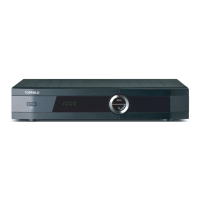
Do you have a question about the Topfield TF 520 PVRt and is the answer not in the manual?
Lists the key features of the digital receiver, including storage capacity and service capabilities.
Explains operation via front panel buttons and remote control for basic functions.
Details on using subscription cards for pay TV services and conditional access.
Guidance on checking the contents of the digital receiver package upon arrival.
Essential safety guidelines and warnings for the proper and secure operation of the receiver.
Diagrams and explanations of all ports and connectors on the back of the receiver.
Step-by-step instructions for connecting the receiver to antennas, TVs (HDMI, SCART, Composite), and video recorders.
Initial setup procedures for powering on and configuring the receiver for first use.
Guide to scanning for available TV and radio channels using automatic or manual modes.
Procedures for restoring the receiver to its original default configuration and clearing data.
Configuration options for menu, subtitle, and audio track languages.
Adjusting video resolution, aspect ratio, colour format, and sound modes for optimal viewing.
Configuring the receiver's clock and time zone for accurate timer events.
Setting program rating restrictions and managing PIN codes for access control.
Customizing the transparency and display duration of OSD elements.
Activating the feature that allows pausing and resuming live television programs.
Adjusting the audio volume level and temporarily muting the sound output.
Basic operations for changing channels, navigating services, and viewing program information.
Using the EPG to browse schedules, view program summaries, and make selections.
Viewing programs that offer multiple simultaneous video or audio perspectives.
Detailed guide on pausing, rewinding, and replaying live television programs.
Watching two different services simultaneously using the PiP feature.
Creating, renaming, deleting, and managing favorite channel groups and entries.
Instructions and tips for using the virtual on-screen keyboard for text input.
Copying receiver settings and data to another unit via RS-232 cable.
Basic procedures for starting, stopping, and managing program recordings.
Managing and browsing recorded programs stored on the internal hard drive.
Instructions for playing recorded programs from the file archive.
Cutting unwanted segments (e.g., commercials) or saving edited parts of recordings.
Duplicating recorded files, either entirely or in specific segments.
Playing audio files in MP3 format using the digital receiver.
Moving recorded files between the receiver and a computer via USB using Altair software.
Preparing the internal hard drive for recording and time-shifting functions.
Information on developing and running custom applications (TAPs) on the digital receiver.
How to verify the current firmware version and system identification number.
Updating the receiver's firmware using a USB connection and a dedicated utility.
Updating the receiver's firmware via a serial RS-232 connection and transfer utility.
Copying firmware from one digital receiver to another using an RS-232 cable.
Updating the receiver's firmware wirelessly when new versions become available.
 General
| Brand | Topfield |
|---|---|
| Model | TF 520 PVRt |
| Category | TV Receiver |
| Language | English |

 To Next Page