The right side of the line is favored when the Wind Direction is to the right of ‘Line Square To.’
The left side of the line is favored when Wind Direction is to the left of ‘Line Square To.’
How much does ‘Line Square To’ matter? Ten degrees of line bias favors one end over the other by
approximately 20% of the length of the line.
Understanding Shift Tracking
There are three ways to view the shift tracking feature: it can be displayed on the bar graph in Race
Mode, the bar graph in Bonus Mode, or numerically in Bonus Mode.
See the Configuration section on page 23 to see how to change how you view shift tracking.
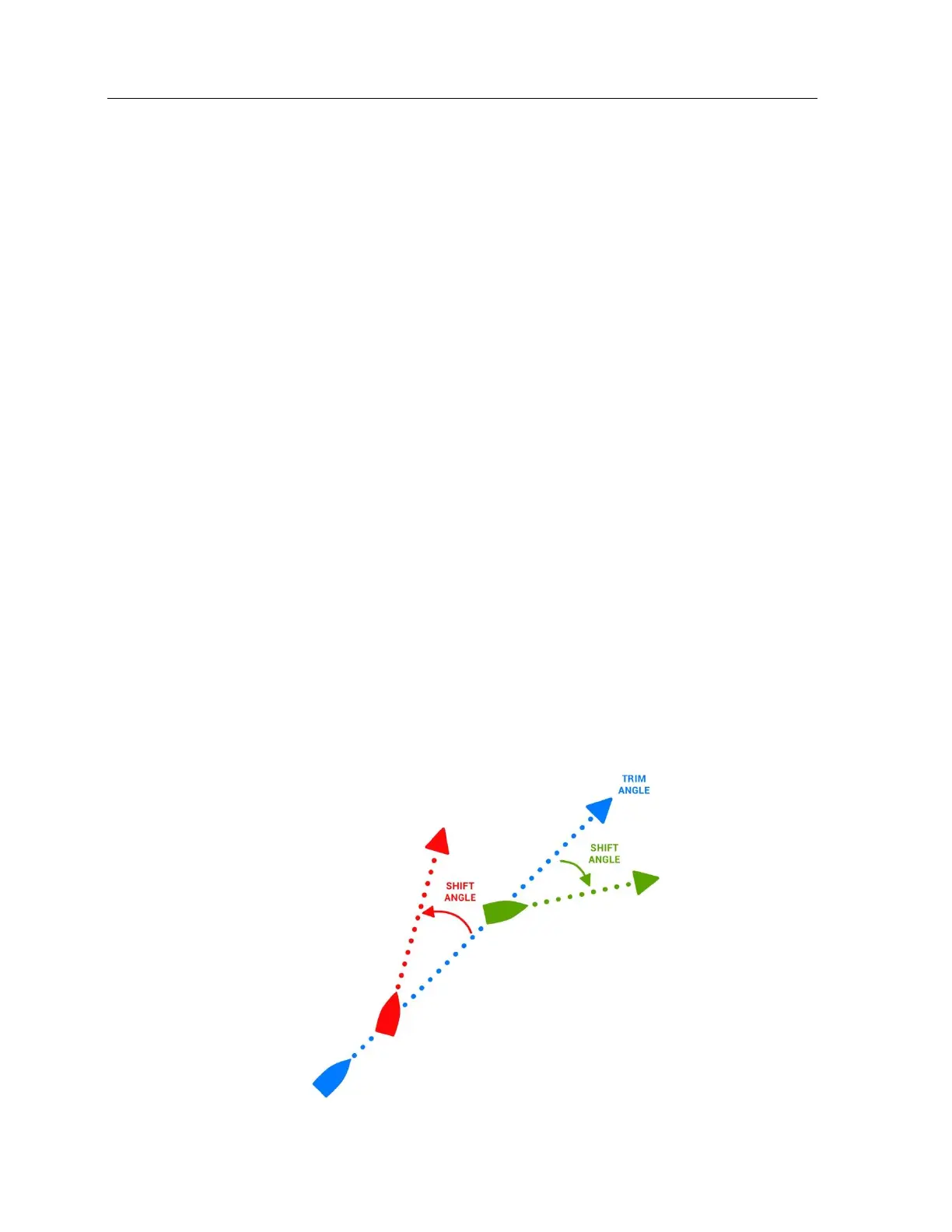
The shift tracking algorithm starts by detecting when the boat is sailing a steady course. This is
accomplished by comparing the current heading to a rolling average of previous heading measurements.
Once the current heading falls within a specified bound of this rolling average the boat is determined to
be sailing a steady course and a "trim angle" is set to the current heading.
When a trim angle is set the shift measurement will display the damped difference between the current
heading and this trim angle. The damping reduces the algorithm's sensitivity so as to only capture larger
variations in heading angle, ideally from wind angle changes, and not any smaller heading variations due
to wave action or other noise effects.
The trim angle remains constant until the current heading differs from the trim angle by more than 45
degrees. Once the trim angle is reset the shift angle will no longer display and the algorithm will again
start measuring for when the boat has reached a new steady course.


 To Next Page