23
3. Basic Concept and Management
This chapter will explain the basic features and how they work.
3-1. What is Ethernet?
Ethernet was originated and implemented at Xerox in Palo Alto, CA in 1973 and was successfully
commercialized by Digital Equipment Corporation (DEC), Intel and Xerox (DIX) in 1980. In 1992, Grand
Junction Networks unveiled a new high speed Ethernet with the same characteristic of the original
Ethernet but operated at 100Mbps, now called Fast Ethernet. This means Fast Ethernet inherits the same
frame format, CSMA/CD, software interface. In 1998, Gigabit Ethernet was rolled out and provided
1000Mbps. Now 10G/s Ethernet is being developed. Although these Ethernet have different speeds, they
still use the same basic functions. So they are compatible in software and can connect to each other
almost without limitation. The transmission media may be the only problem.
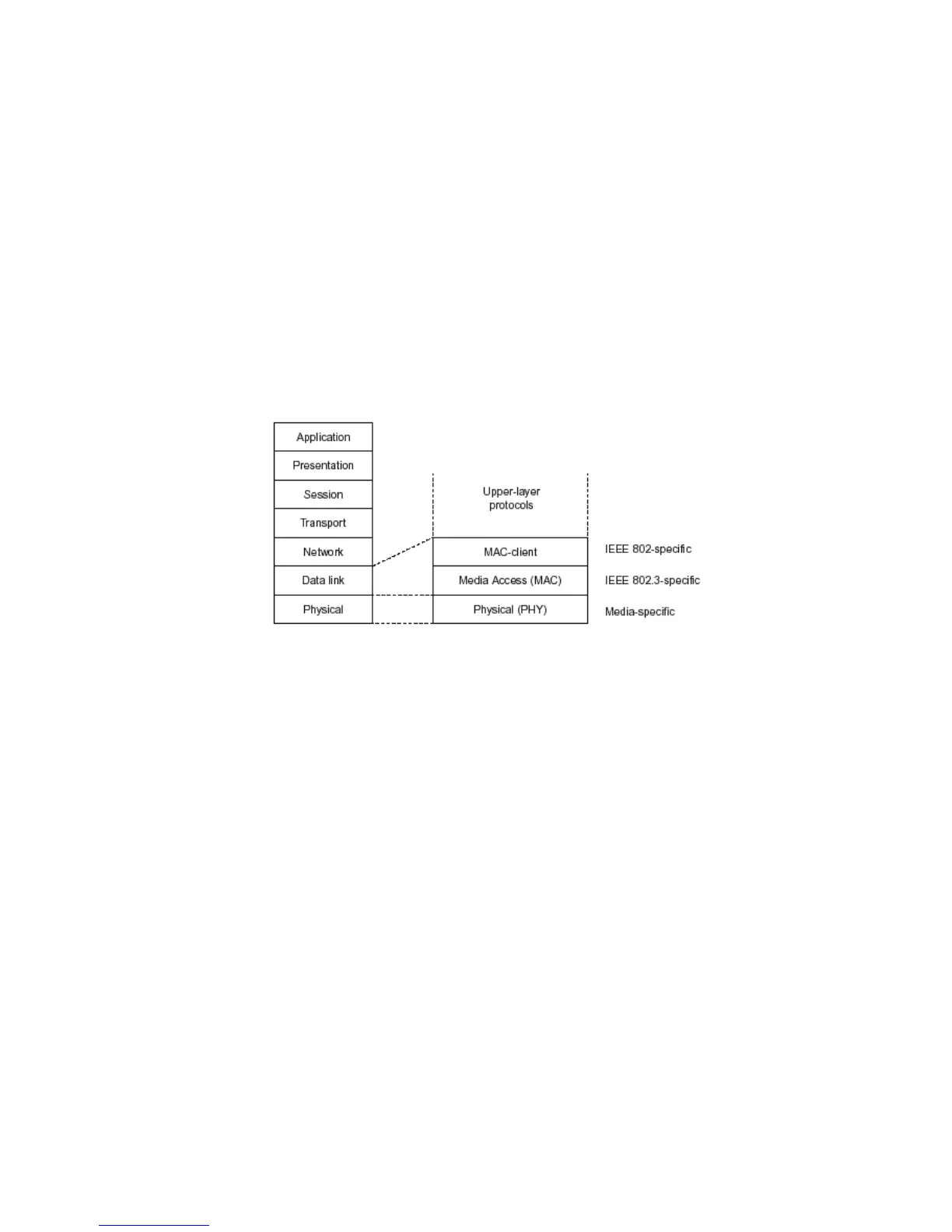
Fig. 3-1 IEEE 802.3 reference model vs. OSI reference mode
In Fig. 3-1, we can see that Ethernet is made up of three portions, including logical link control
(LLC), media access control (MAC), and physical layer. The Data link layer performs splitting data into
frame for transmitting, receiving acknowledge frame, error checking and re-transmitting when not
received correctly as well as provides an error-free channel upward to the network layer.



 To Next Page