27
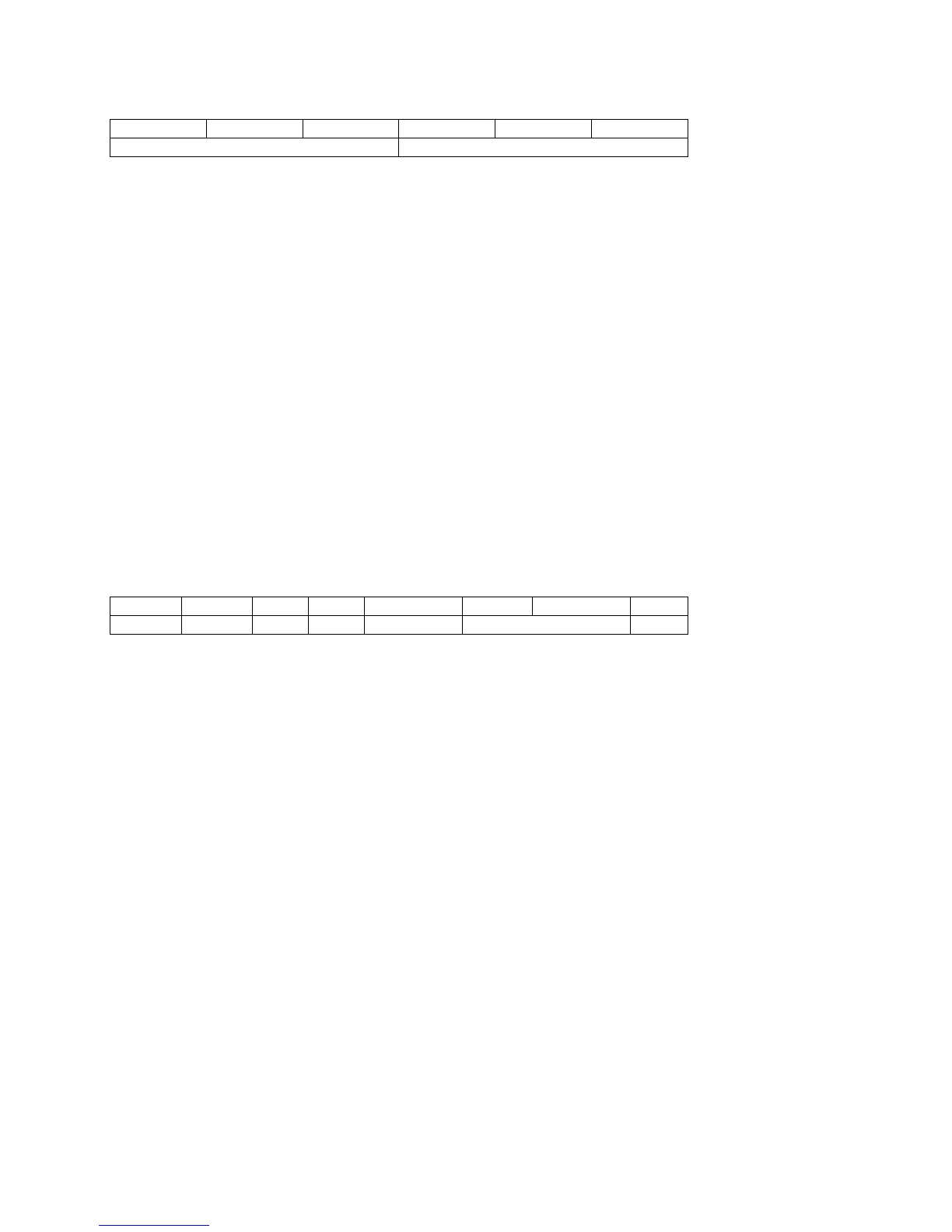
Bit 47 bit 0
1st byte 2nd byte 3rd byte 4th byte 5th byte 6th byte
OUI code Serial number
Table 3-3 Ethernet MAC address
The first bit of the first byte in the Destination address (DA) determines the address to be a Unicast
(0) or Multicast frame (1), known as I/G bit indicating individual (0) or group (1). So the 48-bit address
space is divided into two portions, Unicast and Multicast. The second bit is for global-unique (0) or locally-
unique address. The former is assigned by the device manufacturer, and the later is usually assigned by
the administrator. In practice, global-unique addresses are always applied.
A unicast address is identified with a single network interface. With this nature of MAC address, a
frame transmitted can exactly be received by the target an interface the destination MAC points to.
A multicast address is identified with a group of network devices or network interfaces. In Ethernet,
a many-to-many connectivity in the LANs is provided. It provides a mean to send a frame to many
network devices at a time. When all bits of DA are 1s, it is a broadcast, which means all network device
except the sender itself can receive the frame and response.
Ethernet Frame Format
There are two major forms of Ethernet frame, type encapsulation and length encapsulation, both of
which are categorized as four frame formats 802.3/802.2 SNAP, 802.3/802.2, Ethernet II and Netware
802.3 RAW. We will introduce the basic Ethernet frame format defined by the IEEE 802.3 standard
required for all MAC implementations. It contains seven fields explained below.
PRE SFD DA SA Type/Length Data Pad bit if any FCS
7 7 6 6 2 46-1500 4
Fig. 3-3 Ethernet frame structure
- Preamble (PRE) —The PRE is 7-bytes long with alternating pattern of ones and zeros used
to tell the receiving node that a frame is coming, and to synchronize the physical receiver
with the incoming bit stream. The preamble pattern is:
10101010 10101010 10101010 10101010 10101010 10101010 10101010
- Start-of-frame delimiter (SFD) — The SFD is one-byte long with alternating pattern of
ones and zeros, ending with two consecutive 1-bits. It immediately follows the preamble
and uses the last two consecutive 1s bit to indicate that the next bit is the start of the data
packet and the left-most bit in the left-most byte of the destination address. The SFD
pattern is 10101011.



 To Next Page