13
• Use your electronics and judgment to remain abreast of changing weather. Storms develop quickly and
you should be prepared to protect your passengers and vessel. See page 22 of the Sportsh, Cruisers,
Yachts Owner’s Manual for more ps on weather.
• Maintain a safe speed and respect other boaters as well as those on land. Obey all “No Wake Zones”
and be aware of smaller vessels. The wake you produce could endanger other cras and
their passengers.
• Know the limitaons of your cra and your experience. Understand the boat’s handling characteriscs
and do not aempt to operate the vessel in condions that are unsafe or beyond your experience level.
4.6.4 Returning
• Obey navigaonal markers and be aware of any dal changes since departure.
• Collect and dispose of refuse properly to maintain our waters for future generaons.
• Prepare your boat for loading before moving to the dock. Quickly pull your vessel from the water and
move away from the ramp to complete the preparaon for trailering.
• Verify that trailer systems are working properly and all items are secured before leaving.
• Wash the boat and perform general maintenance upon returning home. (See instrucons in Chapter 5).
As stated above, these are only general guidelines for safe boang. We recommend using these and any other
available resources to protect your passengers as well as your vessel. Checklists can be an important tool in
accomplishing this; see the example on pages 44 & 45 of the Sportsh, Cruisers, Yachts Owner’s Manual.
4.7 Trailering
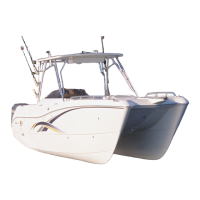
Due to the nature of the hull, catamarans require specialized trailers. Your dealer will be able to provide
one, as well as informaon on safe trailering pracces. Tow vehicles should be rated to handle the load and
stresses which accompany trailering your boat. A properly matched trailer should carry 5-10% of the total
vessel weight on the tongue. Roune inspecons should be performed on the vehicle and trailer prior to
each trip, and thorough checks scheduled on an annual basis.
4.8 Anchoring
World Cat supplies an anchor and anchor windlass as standard equipment on the 280DC-X. The anchor
we supply is known as a plow style. However, there are several types of anchors available, each designed
to operate in specic boom condions. Your dealer can provide informaon on which styles are most
eecve in your area. See page 56 of the Sportsh, Cruisers, Yachts Owner’s Manual for more informaon and
ps concerning anchoring.
!!! CAUTION
Never anchor your boat o the stern. The weight at the transom, combined with adverse sea
condions could allow water to enter the boat over the transom wall.



 To Next Page