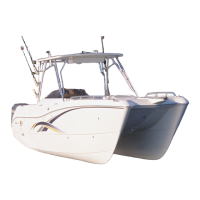
2020 World Cat 280DC-X Owner’s Manual
24
6.3 Fuel System
Due to the nature of the hull design, your World Cat is equipped with a port and starboard fuel system.
These systems act independently, providing fuel to the engine on their respecve side. Tanks are
constructed of polyethylene material to prevent corrosion.
All hoses are NMMA cered, with all ngs clamped securely against leaks. However, a comprehensive
check of all hoses and ngs should be completed at least annually, including those normally hidden from
view. Tighten all connecons, and replace deteriorated hoses, clamps, or ngs. The fuel / water separators
should also be replaced in accordance with the Yamaha owner’s manual maintenance schedule, or at least
annually. World Cat has provided inspecon access through removable inspecon ports in the cockpit sole,
in the cockpit liner below the fuel lls, and in the port and starboard mechanical rooms.
The fuel / water separators are located in the port and starboard a mechanical rooms. Inspect these
lters regularly, and replace when needed, or in accordance with the Yamaha owner’s manual maintenance
schedule. World Cat recommends that every boat carry a spare lter onboard for each motor. When
purchasing fuel from remote or unfamiliar sources, special aenon should be paid to the condion of the
fuel / water separators.
6.3.1 Fuel System Benets
• Automove-style refueling
• Automove Nozzle shut-o – system sends signal to the pump nozzle to shut o before there is any
spit-back through the ll opening
• Fuel nozzle retenon
• Overll protecon – reduces the possibility of accidental fuel spills
• Reduces hydrocarbon emission through the use of specially designed fuel ll. The fuel ll has a
permanently aached cap incorporang a posive closure mechanism with an audible click, to let
you know when the cap is sealed.
6.3.2 Fuel Tank
Your boat is equipped with two low permeaon crosslink Polyethylene fuel tanks with a usable fuel capacity
of 110 gallons per tank. The usable capacity of the fuel tank is dierent from the tank capacity marked on
the tank from the manufacturer. The dierence is the non-usable poron of the tank which results from
the fuel in the tank that is below the pickup tube and the ullage area that has been incorporated into your
tank. It is recommended that you follow all the instrucons regarding the lling of fuel tanks. Fuel tanks with
levels less than ¼ full can cause engine stalling problems due to fuel starvaon or by allowing sediment and
dirt to enter the fuel supply lines. Keep the tank full and monitor the fuel level oen to prevent this from
happening.
6.3.3 Fuel Vent
The fuel tank vent is integrated into the fuel ll deck ng (See g. 6.3.6) The vent serves as an over
pressure / vacuum release with an-surge and ame / spark arresng protecon. The fuel vent system also
plays an important role in controlling the “FULL” level of fuel with the use of FLVV (Fill Limit Vent Valve).
Grade Valves have been added to the tank which allows proper venlaon of the tank when the boat is
stored, or trailered, on a moderate incline, without fuel. Always inspect to insure that the fuel ll deck ng
is free of debris and in proper working condion.



 To Next Page