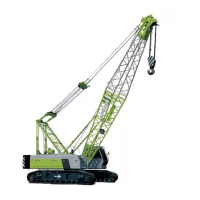
RT100 Rough Terrain Crane
A. After you do an inspection, start the engine.
B. If the temperature is above 0℃ (32℉), use the steps that follow to start the engine:
Move the gear selector to the neutral position.
Turn the park brake switch to “P”.
Turn the ignition switch to “I”.
Turn the ignition switch to stage “III” to start the engine.
C. Release the ignition switch when the engine starts. If the engine stops during the start-up
procedure, make sure that the engine comes to a full stop before you try to start it again.
D. If you cannot start the engine in less than a maximum of 15 seconds, wait for 2 minutes.
Then try to start the engine again.
E. After the engine starts, examine the indicators and gauges. If one of the indicators or
gauges shows you an out of tolerance indication, turn the engine OFF. Correct the
malfunctions before you start the engine again.
F. Do not increase the engine RPMs to a high level before the engine gets to the correct
7.3 AFTER THE ENGINE STARTS
A. When the engine is ON, examine the indicators and gauges, (at frequent intervals), to
find an indication of an out of range condition. Also, listen for sounds that are not usual.
B. When you operate the engine at idle for a long period of time, the battery can loose
power. If necessary, increase the engine idle speed to keep the battery fully charged.
This is important when you start the engine.
C. When it is necessary to stop the engine, operate it at idle speed (with no load on the
engine) for minimum of 5 minutes. This lets the engine coolant temperature decrease
gradually before the engine stops.
This cool down period is very important for a crane with a turbocharged engine.
This is because the turbocharged engine makes more heat than an engine that
dose not have a turbocharger.
If more data about the engine is necessary, look in the Engine Manufacturer’s



 To Next Page