PGC5007
PGC5007 Operating Instructions 2 Description
5 OI/PGC5007-EN, Rev C
2 Description
2.1 General
The Process Gas Chromatograph, Total Fuel Sulfur PGC5007 (Fuel Sulfur Analyzer), performs total sulfur measurements for
various hydrocarbon blends. It operates the same as the standard Process Gas Chromatograph PGC5000 described in
Operations Guide 9AKK104295F4814 and Technical Service Guide 9AKK104295D4816. It differs from the PGC5000 in having a
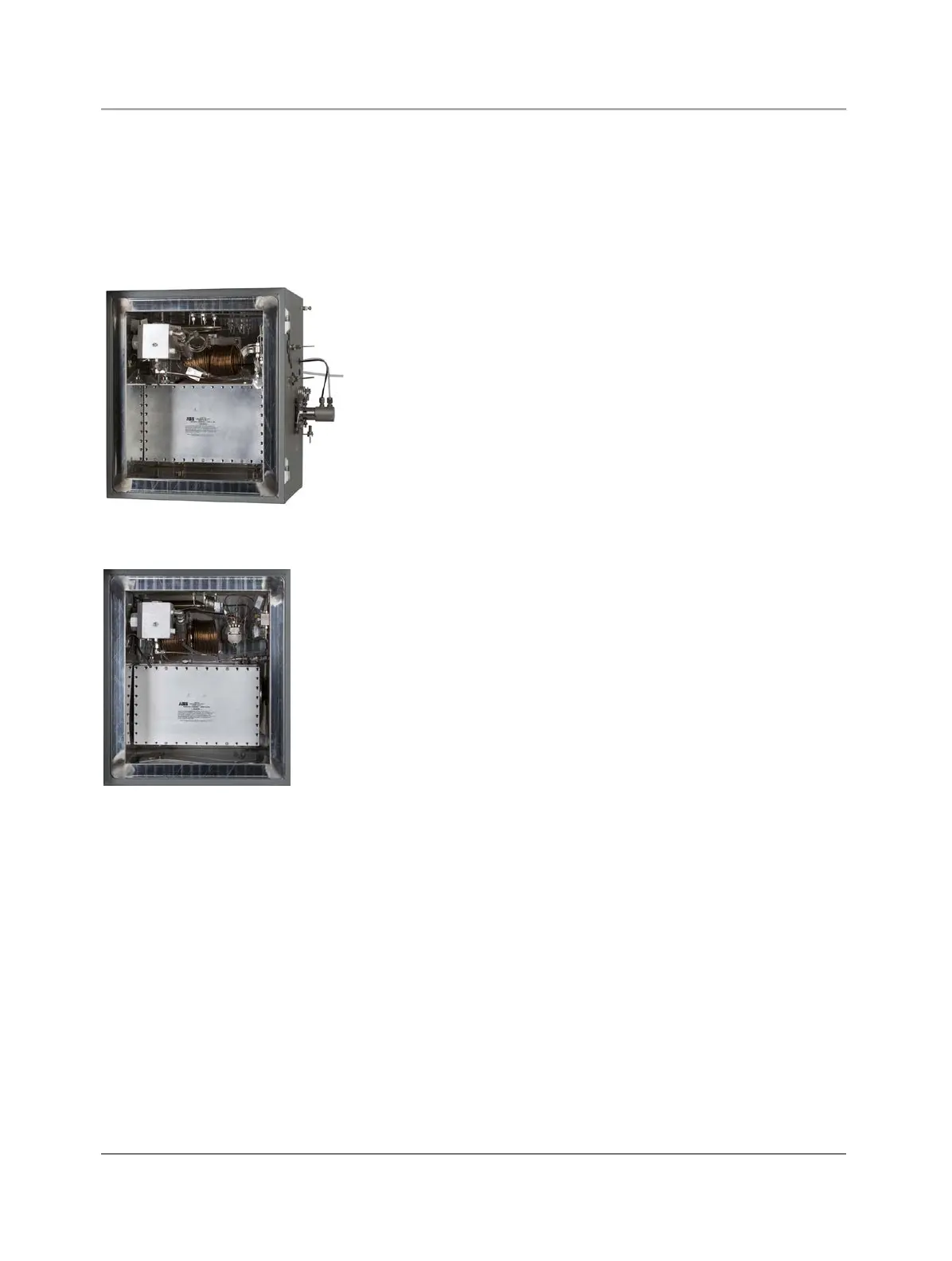
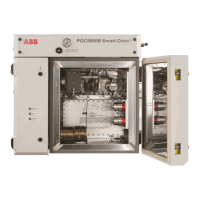
furnace contained within the isothermal Smart Oven™ and in how some of the operating features are utilized. Figure 2.1 shows
the liquid and vapor versions of the PGC5007.
Liquid Version
Vapor Version
Fig. 2.1. Oven Compartment
The standard detector for the Fuel Sulfur Analyzer is the flame photometric detector (FPD). The detector, located in the
isothermal section of the oven compartment, is explosion proof by design and is designed according to applicable standards.
This detector is the same as that used in the basic PGC5000 series B-Class and C-Class ovens.
The Digital Temperature Controller (DTC) controls the temperature of the liquid sample valve, the furnace, the detector, and
the isothermal oven. Temperatures are verified and set on the Master Controller’s Setup Tab. Refer to the Setup Tab in Section
6 of the PGC5000 Operations Guide.
2.2 Liquid version
The liquid version incorporates a liquid sample valve (LSV) as the input to the analysis. A total sulfur analysis cycle takes about
six minutes to complete, depending on the application, and consists of the following:
• The liquid sample valve injects
a fixed volume of sample into a vaporizing chamber.
• “Sweep gas” transports sample out of the vaporizing chamber.
• Carrier transports the sample into the furnace, where it oxidizes.



 To Next Page