b) Requirements on the cylinder lock:
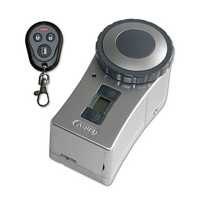
• Thedoorlockactuatorcanonlybemountedonatraditionalcylinderlock.Thiscylinderlockis
securedwithalongscrewinthelockofthedoor.
• Thedoorlockismounteddirectlyonthecylinderlock.Thereitturnsakeyinsertedpreviously
inthecylinderlock.
Itisthereforenecessarythatthecylinderlockprojectsabout8mm-15mmovertheinnertting
ofthedoor.
Mostly,however,thisisnotthecase,thecylinderlockisushwiththeinnertting.Itisnotpos-
sibletomountthedoorlockactuatorhere.Anewcylinderlockwhichtshastobemounted.
Asnotedabove,thecylinderlockisonlysecuredbyascrewwhichmakesreplacementvery
straightforward.
Replacing the cylinder lock (exact description in section 9):
• Openthedoor.
• Insertakeyintothecylinderlockontheinsideofthedoor.
• Unscrewthefasteningscrew(seeg.1and2)completely.
• Movethekeyalittletotheleftortheright(clockwiseoranticlockwise)untilthecylinder
lockcanbedrawnoutofthelock.
• Anewcylinderlockisinsertedintheoppositeorder.
Thecylinderlockmayneverprojectbeyondtheouterdoorttingontheoutside
of the door. This provides protection against burglary as the cylinder lock cannot
be turned in this manner, for example, with large gas-pipe pliers.
There are possibly additional protective systems integrated in the outer door
ttings(rotatablerosetteetc).Theouterdoorttingmaynotbeabletobedis-
mounted from the outside!
If this is not observed, you will lose the insurance protection of your household
and personal effects insurance in the case of burglary.
Somecylinderlocksmaynotbereplacedbyyouyourself.Thisapplies,forexample,to
largeresidentialcomplexeswhichhavespecialcylinderlocks.Yourkeywillnottthe
doorofyourneighbourherebutthecaretakercanopenallatdoorswithonesingle
”generalkey”.
Incaseofdoubt,caskyourlandlordwhetheryouarepermittedtoreplacethecylinder
lockornot.
• Ifyourequireanewcylinderlock,proceedinmeasuringthenewcylinderlockasdescribedon
thenextpage.


 To Next Page