5.3 Resistance Test Mode
A battery resistance test may be performed at user–set intervals. The test is similar to that
performed by the Albér Cellcorder. On a BDS–40, up to ten intertiers can be configured for this
measurement.
5.4 BDS–40 Features
This section describes standard and optional BDS–40 features:
♦ Scans all pertinent battery parameters, such as overall voltage, cell voltages, current,
and temperature.
♦ Performs a scheduled resistance test of all cells/jars and intertiers, and stores results for
trending analysis.
♦ Auto detects discharges based on Overall Volts or Discharge Current, and stores data
for real time or accelerated time playback.
♦ Signals if any parameter is outside user–programmed limits, energizes a Form C relay
contact, and calls a Central computer to report the alarm condition.
♦ Communicates with an external computer via USB, RS–232, modem, and LAN.
5.4.1 Alarm Features
The monitor may be set to call the Central computer to report an alarm condition when detected
automatically. The user can program high and low alarm levels on all voltage and temperature
parameters, and a high alarm level for resistance. When any parameter goes outside the normal
range, the monitor stores the event in memory, the Alarm LED lights, and an alarm relay with a
Form C contact energizes. The alarms may be set for latching or non–latching.
5.5 Materials
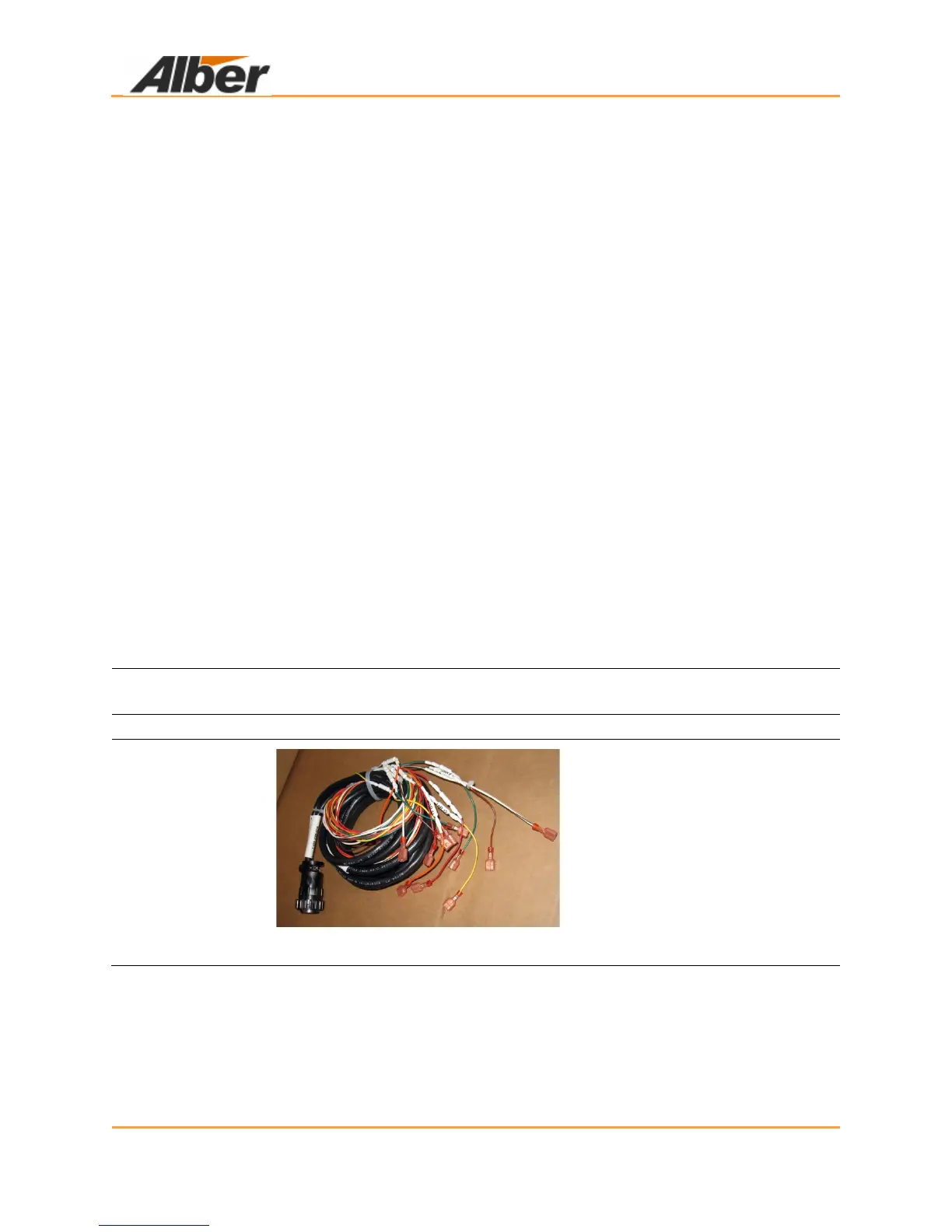
Sense Lead
Harness
pn 1101–710–
XXA–1101 to
740–XXA
Figure 1. Sense Lead Harness
Refer to drawings that were sent
with the system as harnesses are
configuration dependent. The
leads are labeled for easy
installation.
An example drawing is located at
the back of the manual: Wiring
Schematic, BDS–40 to (40) 12V
Modules, (10 Shelf) Battery,
BDS–2287–B960.



 To Next Page