2. OPERATING THE BOAT__PAGE 22
Anchoring:
When you anchor or land temporarily in a natural harbour, ensure sufficient water
depth. Drop the anchor at a sufficient distance from shore, allowing time for the anchor
to drop and grip and to release enough anchor rope/chain. The anchor rope/chain length
should be at least 4-5 times the water depth. Choosing the right type of anchor and
anchoring method requires boating experience, ask for advice when needed.
Storm anchor:
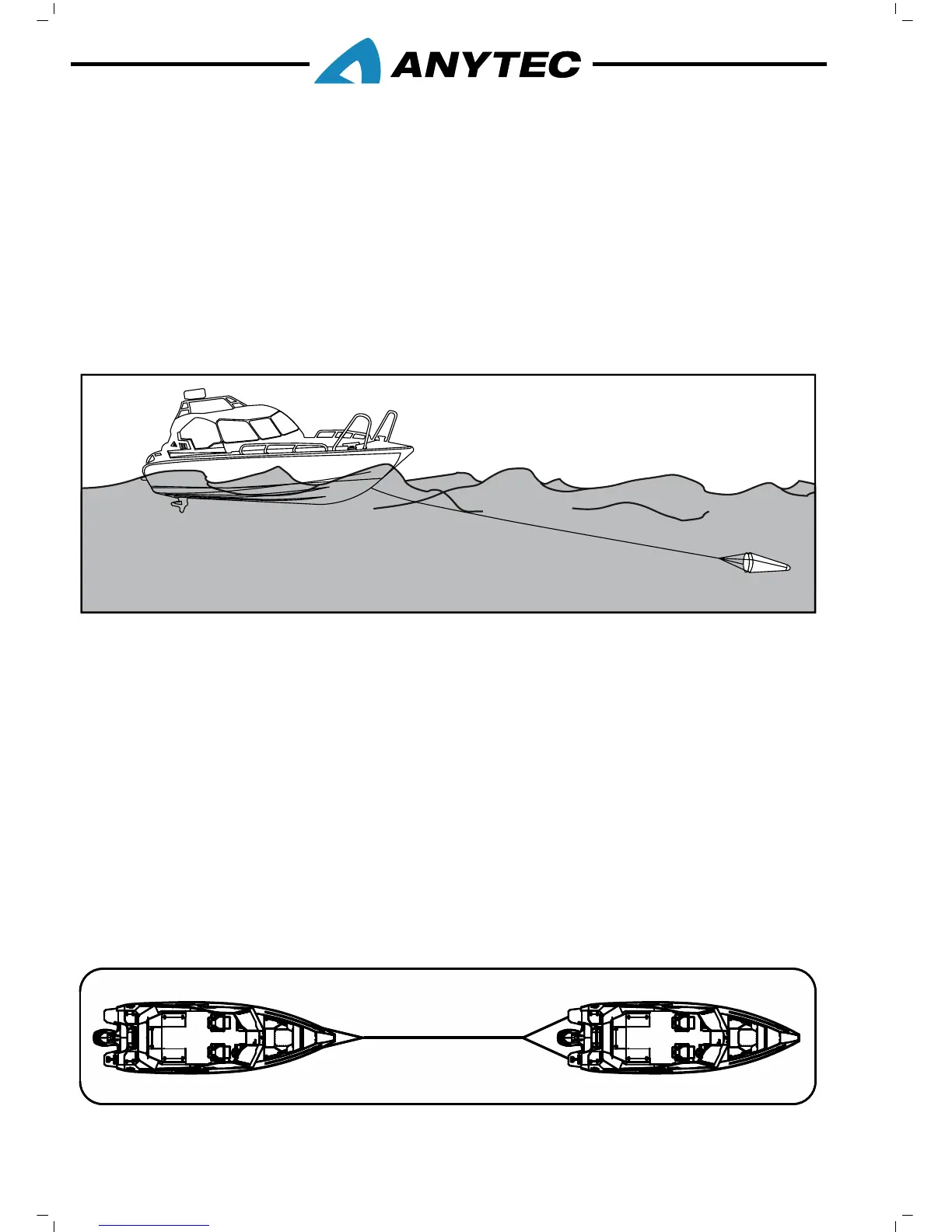
If you lose engine power at sea and waves are strong, keep the boat headed into the
waves by rigging a sea anchor off the bow (below principal figure). If there is no sea
anchor onboard, use a canvas bucket or any object that will offer resistance.
Principal figure only
Towing:
Towing of boats is a very demanding and risky operation, requiring specific skills and
experience. If possible use a professional towing company. If you have to tow, or be
towed on your own, be very careful and operate at very low speed.
If you tow another boat, use strong, floating towing rope. Begin by towing very carefully,
avoiding twitches, and do not overload the engine. Adjust the length of the rope so that
the boat can be steered in all situations. Boat's stability can be reduced when towing.
Owners/operators should also consider what action will be necessary when securing a
tow line onboard and how it can be released fast in case of emergencies. Note that if a
tow rope snaps under heavy load, it may cause damage to persons in its way, so take
necessary pre-cautions.
Principal figure only



 To Next Page