Operation Guide P341/EN O/B11
Installation CHAPTER 2
MiCOM P341 Page 7/10
Part Number Nominal Rating Operative Range
GJ0229 006 110Vdc 87 to 150Vdc
GJ0229 007 220Vdc 175 to 300Vdc
Table 2: External resistor boxes
If external resistor boxes are being used, they must be mounted vertically. Each
resistor box can be fastened to a suitably drilled blanking plate at least 10TE wide
using two M4 screws. This assembly can then be mounted adjacent to the relay,
preferably in the same tier if space allows.
Note: The screws used to mount the resistor box should be no longer
than the thickness of the metalwork to which it is being mounted
plus 8mm, otherwise the electrical clearance distances will be
compromised.
5.2 Panel mounting
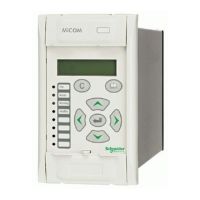
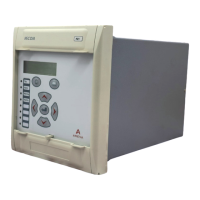
The relays can be flush mounted into panels using M4 SEMS Taptite self-tapping
screws with captive 3mm thick washers (also known as a SEMS unit). These
fastenings are available in packs of 5 (our part number ZA0005 104).
Note: Conventional self-tapping screws, including those supplied for
mounting MIDOS relays, have marginally larger heads which
can damage the front cover moulding if used.
Alternatively tapped holes can be used if the panel has a minimum thickness of
2.5mm.
For applications where relays need to be semi-projection or projection mounted, a
range of collars are available. Further details can be obtained from the Contracts
Department of ALSTOM T&D Protection & Control.
Where several relays are to mounted in a single cut-out in the panel, it is advised that
they are mechanically grouped together horizontally and/or vertically to form rigid
assemblies prior to mounting in the panel.
Note: It is not advised that MiCOM relays are fastened using pop rivets
as this will not allow the relay to be easily removed from the
panel in the future if repair is necessary.
Where an external dc supply (e.g. station battery) greater than 54V is being used to
energise the optically isolated inputs of a relay, resistor boxes mounted external to the
relay are available to reduce the voltage across the inputs. Table 2 details the two
versions of external resistor box that are available.
Note: Each box contains 8 resistors. Therefore one external resistor
box is required for each input board in the relay being used (i.e.
one external resistor box for each 8 optically isolated inputs).
If external resistor boxes are being used, they must be mounted vertically. Each
resistor box can be fastened to a suitably drilled blanking plate at least 10TE wide
using two M4 screws. This assembly can then be mounted adjacent to the relay,
preferably in the same tier if space allows. Alternatively, resistor boxes can be
fastened to the panel directly.
Note: The screws used to mount the resistor box to should be no longer
than the thickness of the metalwork to which it is being mounted
plus 8mm, otherwise the electrical clearance distances will be
compromised.



 To Next Page