Safety and regulatory informaon
Read all safety and regulatory informaon before installing your device and seng up your
home network connecon.
Important safety instrucons
Read this before you begin — When using your equipment, basic safety precauons should
always be followed to reduce the risk of re, electric shock, and injury to persons, including
the following:
■ Read all the instrucons listed here and/or in the user manual before you operate this
device. Give aenon to all safety precauons. Retain the instrucons for future
reference.
■ This device must be installed and used in strict accordance with manufacturer’s
instrucons, as described in the user documentaon that is included with the device.
■ Comply with all warning and cauon statements in the instrucons. Observe all warning
and cauon symbols that are axed to this device.
■ To prevent re or shock hazard, do not expose this device to rain or moisture. The device
must not be exposed to dripping or splashing. Do not place objects lled with liquids,
such as vases, on the device.
■ This device was qualied under test condions that included the use of the supplied
cables between system components. To ensure regulatory and safety compliance, use
only the provided power and interface cables and install them properly.
■ Dierent types of cord sets may be used for connecons to the main POWER supply
circuit. Use only a main line cord that complies with all applicable device safety
requirements of the country of use.
■ Installaon of this device must be in accordance with naonal wiring codes and conform
to local regulaons.
■ Operate this device only from the type of power source indicated on the device’s
marking label. If you are not sure of the type of power supplied to your home, consult
your dealer or local power company.
■ Do not overload outlets or extension cords, as this can result in a risk of re or electric
shock. Overloaded AC outlets, extension cords, frayed power cords, damaged or cracked
wire insulaon, and broken plugs are dangerous. They may result in a shock or re
hazard.
■ Route power supply cords so that they are not likely to be walked on or pinched by items
placed upon or against them. Pay aenon to cords where they are aached to plugs
and convenience receptacles; and examine the point where they exit from the device.
■ Place this device in a locaon that is close enough to an electrical outlet to
accommodate the length of the power cord.
■ Place the device to allow for easy access when disconnecng the power cord of the
device from the AC wall outlet.
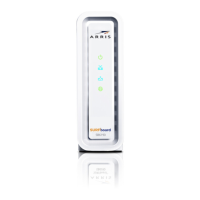
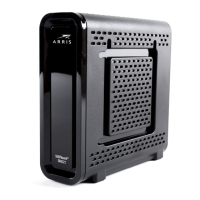
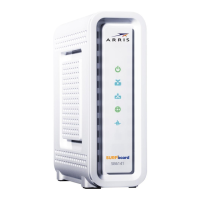
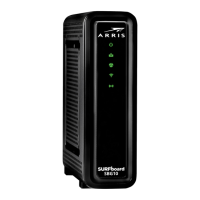
SURFboard
®
SB6183 DOCSIS
®
3.0 Cable Modem User Guide STANDARD Revision x.4 3




 To Next Page