Safety Information
Clinician Manual
97035873-01 11 of 75
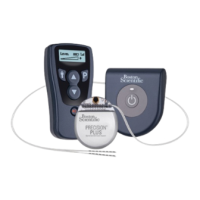
Stimulator Location. Never attempt to change the orientation or “ip” the Stimulator. Do not “nger” or
play with the Stimulator. If the Stimulator ips over in your body, it cannot be charged. If you know that the
device has turned, or if stimulation cannot be turned on after charging, contact your physician to arrange an
evaluation of the system. In some cases, the skin over your Stimulator may become very thin over time. If this
occurs, contact your physician.
Lead Location. In some instances a lead can move from its original location, and therapy at the intended
pain site can be lost. If this occurs, consult your physician who may able to restore therapy by reprogramming
the Stimulator in the clinic or repositioning the lead during another operation.
Device Failure. Stimulators can fail at any time due to random component failure, loss of battery functionality,
or lead breakage. If the device stops working even after complete charging (up to four hours), turn off the
Stimulator and contact your physician so that the system can be evaluated.
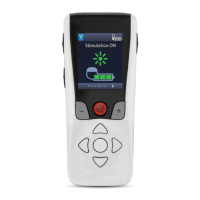
Operating Temperature. The operating temperature of the Trial Stimulator and Remote Control is 5–40 °C
(41–104 °F). For proper operation, do not use the Charger if the ambient temperature is above 35 °C (95 °F).
Storage, Handling and Transport. Do not expose the Remote Control or Charging System components to
excessively hot or cold conditions. Do not leave the devices in your car or outdoors for extended periods of
time. The sensitive electronics can be damaged by temperature extremes, particularly high heat.
If the Remote Control or the Charging System is to be stored for a period of time without batteries, the
storage temperature should not exceed -20 to 60 °C (-4 to 140 °F).
Handle the system components and accessories with care. Do not drop them or submerge them in water.
Although reliability testing has been performed to ensure quality manufacturing and performance, dropping
the devices on hard surfaces or in water, or other rough handling, can permanently damage the components.
(See “” on page 68.)
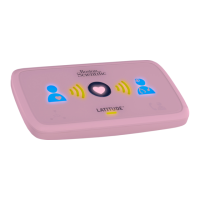
Component Disposal. Do not dispose of the Remote Control or Charger in re. The battery in these devices
can explode in re. Dispose of used batteries in accordance with local regulations. The IPG should be
explanted in the case of cremation, and returned to Boston Scientic. External devices to be disposed of per
local regulatory requirements. Please contact your healthcare professional.
Remote Control, Charging System, and External Trial Stimulator Cleaning. The components can be
cleaned using alcohol or a mild detergent applied with a cloth or tissue. Residue from soapy detergents
should be removed with a damp cloth. Do not use abrasive cleansers for cleaning. Do not clean any of the
accessories while they are directly or indirectly connected to a power outlet.
Cell Phones. While we do not anticipate any interference with cell phones, the full effects of interaction with
cell phones are unknown at this time. If there is a concern or a problem is encountered, the physician should
be contacted.
Adverse Eects
Potential risks are involved with any surgery. The possible risks of implanting a pulse generator as part of a
system to deliver spinal cord stimulation include:
• Lead migration, resulting in undesirable changes in stimulation and subsequent reduction in pain
relief.
• System failure, which can occur at any time due to random failure(s) of the components or the
battery. These events, which may include device failure, lead breakage, hardware malfunctions, loose
connections, electrical shorts or open circuits and lead insulation breaches, can result in ineffective
pain control.



 To Next Page