Rev F Troubleshooting Test Procedures 5-1
CHAPTER 5
Troubleshooting Test Procedures
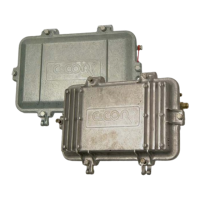
This chapter contains procedures that check all operational characteristics of an FlexNet
®
700 Series
Line Extender that is suspected of being faulty.
Overview—page 5-1
Quick Forward Outage Check—page 5-2
Power Troubleshooting —page 5-2
Forward Path Field Testing—page 5-3
Return Path Field Testing —page 5-4
Overview
These procedures check all operational characteristics of an E7 Line Extender that is suspected of being
faulty. Simplified troubleshooting flow diagrams are provided beginning on page 5-5.
The following are required for Forward and Return field testing:
✔ the operational gain of the E7 Line Extender (see C-COR Amplifier Specification Sheets)
✔ System Forward and Return High and Low Balancing Carrier Levels for the E7 Line Extender
being tested (see the System Map or Line Extender Data Sheet)
If available, historical Line Extender Data Sheets will aid in troubleshooting a faulty line extender.
Verify the following prior to beginning any test procedure:
✔ The line extender is grounded.
✔ All tap outlets, active unused ports, ends of cables, and branch points are terminated with a
75W impedance.
✔ A true-RMS, AC-coupled voltmeter is available for AC voltage measurements. Non-true-RMS
AC voltmeters will read up to 10% higher than actual value. DC voltage measurements will
not be affected.
Note: Most System Maps list the input and output signal levels at bandedge frequencies
established for 68º F (20º C). If necessary, refer to Calculating Balancing Carrier Levels
on page 4-5 and Temperature Compensation on page 4-5.
Tip: If available, historical E7 Line Extender Data Sheets will aid in troubleshooting a
faulty line extender.


 To Next Page