DISTRIBUTED I/OSECTION 3
The following power requirements must be adhered to, in order to ensure that the
operates optimally.
2.6. Power Redundancy Options and Requirements
Power Requirements
Nominal Supply Voltage 12 – 24 VDC
Input Max Voltage 24V
nominal current drain 40mA
Input Active Low, internally pulled High
Output Single Pole, double throw, potential free
TABLE 2
TABLE 3
3. Distributed I/O
The devices have built-in inputs and outputs and, once the network has been
establishedandtheadditionaldevicesadded,thenextstepistoconguretheI/O.
The key strength of the systemisthatinputsofonedevicecanbecongured
to drive the outputs of one or many devices. These relationships will be discussed in
more detail in the next section.
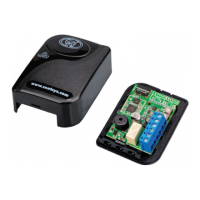
Each WiZo is equipped with one input and one output:
Inputs and outputs are used by electronic devices to interface and interact with people
and systems; in other words, the “outside world”. An input allows the outside world,
whetherapersonpushingapushbuttonor,forexample,aoatswitchonaJoJotank,to
send a signal. That signal indicates to the system that a change has taken place and that
change must translate into an action. The action takes place when the actuator or output
is activated.
Keep in mind that the output on the is a low power type output, and it is
used to ACTUATE the output system and not to drive the output system. This is referred
to as relay action, where a low-powered system drives or actuates a high-power system.
3.1. What are inputs and outputs?
Examples of inputs are:
• Pushbutton
• Float switch
• Proximity device, Alarm panels, Energisers, Gate motors.
Examples of Outputs are:
• A globe
• A motor
• A siren
the warranty, and/or destroy the WiZo in the process.


 To Next Page