26
Cellular Connectivity
A consistently strong cellular signal is needed before installers can activate the station. Do not rely
on cell phone applications to measure cellular signals when conducting site surveys. Ensure the
signal at the installation site is consistently strong. If RSRQ is measured at -10 dB or better, then
RSRP can be -90 dBm or better. If RSRQ cannot be measured or is not adequate, RSRP must be -85
dBm or better.
Note that these numbers are all negative, so -70 dBm is stronger than -85 dBm, and -90 dBm is
weaker. Use a cellular signal detection device (such as a Snyper, Octopus, or equivalent) to take
signal strength readings at the exact proposed charging station locations.
If the signal is below -85 dBm, take cellular readings at the location where a cellular signal booster
antennas will be installed, to ensure enough signal exists to be boosted. Install repeaters to boost
the strength of the cellular signals. Repeaters are often required when installing charging stations in
an underground garage or enclosed parking structure.
When repeaters are needed to boost signal, ChargePoint strongly recommends installing multi-
carrier and multi-band units where allowed by local code. Weak or sporadic signal can affect crucial
aspects of the charging station, including: accuracy in reporting, ability for drivers to use their mobile
app, ability for customer support to troubleshoot problems, and support for advanced features such
as Power Management or Waitlist. Strong signal is also required for the Assure maintenance and
management program.
Note: Do not use microcells or femtocells, as they are inadequate for this use case.
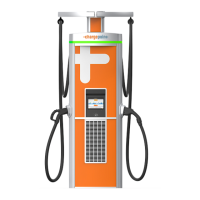
In the US, the Express 250 supports AT&T 4G/LTE. There must be viable AT&T signal on one or more
of the supported bands listed below. For other regions, contact your ChargePoint representative for
more detail on carrier support.
• LTE 1900 (B2)
• LTE 1700 (B4)
• LTE 850 (B5)
• LTE 700 (B17)
• LTE 700 (B13)



 To Next Page