2 – 29
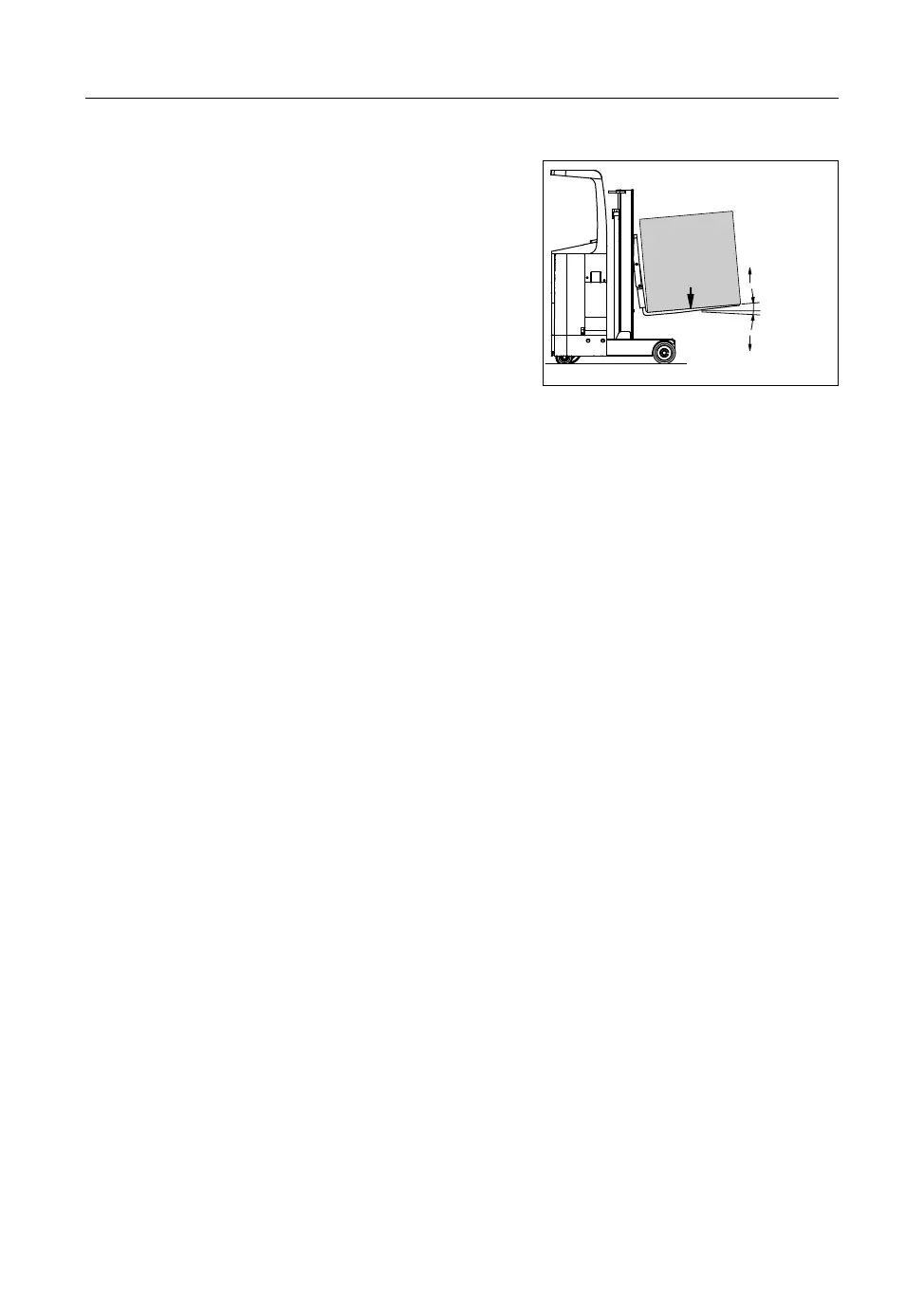
1 Push the load so as that the load is
surely loaded inside of the fork.
2 If the load is too much leaned to the
front of fork even under max. load,
unexpected force is applied to the mast
or fork and the machine can be
damaged.
3 If the load is laterally leaned to one side,
unexpected force is applied to the
machine and the load can be slided to
one side while traveling. Therefore, avoid
the eccentric load of right and left.
4 When loading, give attention to the operation of valve lever.
5 Specially if you tilt the mast forward suddenly, strong impact is occurred and
it can cause the overturn of machine.
20.2 STABILITY OF MACHINE
The stability of forklift is generally regulated but this is assured under the extremely
limited working conditions only. Therefore, there is no guarantee for stability of
machine under various working conditions.
Followings are the limited working conditions.
1 The machine must be used in the place where even and firm ground or floor.
2 When Traveling, travel in standard load or standard non load condition.
3 When loading or unloading, put the mast vertically and do not tilt any more.
When unloading, operate the machine at the low speed. To obtain the stability,
the machine must be kept in good maintenance condition.
Note 1) Standard non load condition when traveling
Condition when the top of fork is lifted up 30cm from the ground and
the mast is tilted backward to the utmost.
Note 2) Standard load condition when traveling
Condition when the max. load is loaded in the standard load center,
the top of fork is lifted up 5~10cm from the surface of the staddle
leg and the fork is tilted backward to the utmost.
20. LOAD AND STABILITY OF MACHINE
Tilt
backward
Tilt forward


 To Next Page